The forgotten legacy of the Hejaz Railway: A symbol of connection in the Middle East




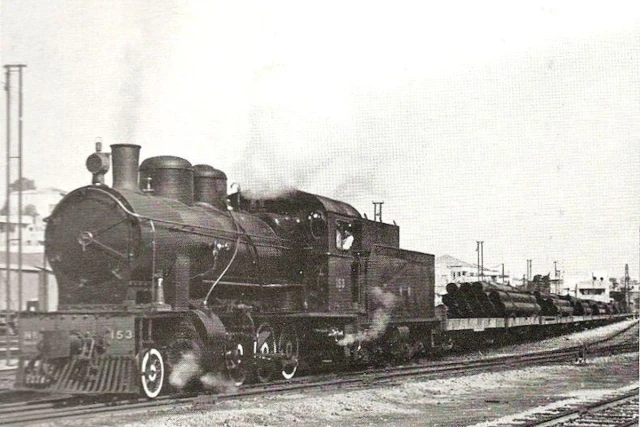
There used to be a train route throughout the Middle East called the Hejaz Railway, running from Damascus in Syria, through Lebanon and Jordan, and down to Medina in Saudi Arabia. It also contained lines connecting with Israel, or the territory of Palestine as it was called back then, and some of the infrastructure remains today.
The Hejaz Railway was built during the time of the Ottoman Empire under Sultan Abdul Hamid II and was completed in 1909, but the concept came much earlier. A railway connecting the countries of the Middle East was the brainchild of a British man called Colonel Chesney. He first proposed the idea in 1836 as a trade route to move goods from India, and it was eventually built some 70 years later based on his plans. However, it remained operational only until World War I.
The Arabic word Hejaz comes from "separation," and refers to the northwest strip of land in Saudi Arabia, alongside the Red Sea and reaching up to Eilat in present-day Israel. Yet, by linking the peoples of the Middle East, the railway had more to do with connection than separation, a concept also manifested in the many bridges constructed as part of the project.
There were some 2,000 bridges and overpasses along the Hejaz Railway route, spanning multiple barren valleys according to UNESCO, some of which are still standing in northern Israel.
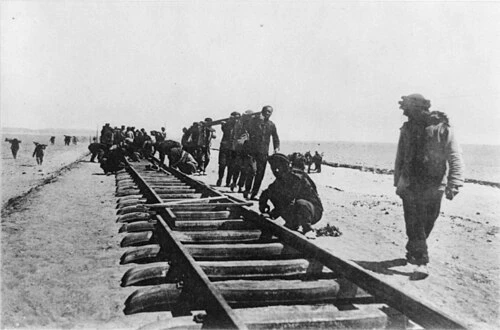
While Chesney’s vision concerned trade, the Hejaz Railway was ultimately constructed to help Muslims reach Mecca and Medina, which were previously accessible only by long camel journeys, as part of the yearly Hajj pilgrimage. The line was extended over to Haifa with what was known as the Jezreel Valley Railway, inaugurated in 1905.
Kibbutz Gesher (meaning “bridge”), located just south of the Sea of Galilee, was founded in 1939 and was a pivotal place for the infrastructure connecting neighboring countries. It is located at the site of three historic bridges, one built in 1904 as part of the Hejaz Railway, which still has some of the old trains sitting on the tracks to give visitors a sense of an age gone by.
There is another much older bridge from Roman and Mamluk times, which crosses into Jordan, and another from the time of the British Mandate, built as part of the Haifa-Baghdad highway.
However, just as the railway took many decades and disagreements before it came into being, the historic Hejaz line fell into decline due to various conflicts and most of the infrastructure was destroyed. Train service came to a halt after the Arab Revolt in 1914, and the route from Daraa in Syria to Haifa was rendered unusable when bridges were destroyed during Israel's War of Independence in 1948.
Today, a museum stands at the former terminus in Haifa’s port, which once served as a major hub for the Hejaz Railway and linked routes to Egypt, Libya, and Lebanon. Beginning in 1916, the Egyptian Expeditionary Force (EEF) constructed a rail line from Kantara on the Suez Canal to Haifa, connecting it to the existing Ottoman network and later to the Haifa–Beirut–Tripoli railway built along the coast during the British Mandate.
The construction of the Hejaz Railway presented new employment opportunities that attracted people from all over the Middle East. According to the Institute for Palestine Studies, records from the Islamic Court in Haifa identify multiple people by name who came to work on the railway. It also shows that Haifa’s population rose from approximately 1,000 in 1800 to about 23,000 by 1914 as a result.
In parallel, there were also plans developed in the 19th century for a railway from Jerusalem to Jaffa port, similarly contested and controversial, with suspicions over who would benefit from such a route and why.
The Ottomans were concerned that the British, who were making suggestions about the route, were acting in their own interests against the Turks, while Jewish proponents feared it would make life easier for Christian missionaries. A line was eventually constructed running from Jerusalem to Jaffa, but it was repeatedly attacked and did not remain viable for long.
Today, the relics of these railways have either been preserved or restored. There is a modern line running along the coast as it once did, now going from Nahariya, through Haifa, and down south to Beersheva. The old Jezreel Valley Railway route from Haifa was recently reopened in 2016, now serving Beit Shean, and the Jerusalem to Jaffa route has also been resurrected.
Since 2018, public trains have been running once again to Tel Aviv and Herzliya from Jerusalem’s new Yitzhak Navon station, named after Israel’s fifth president and a nod to Yosef Navon, who proposed the route back in the late 1800s.
But will we see the restoration of railways that link Israel with neighboring countries as they once did? Large murals beside the railway museum in Haifa depict scenes from the Ottoman period, bearing the words “Fertile Crescent Route” and “Reconnecting the Middle East,” yearning for a time when travel to Syria and Saudi Arabia will be possible.
You never know – stranger things have happened.
You might also like to read this: