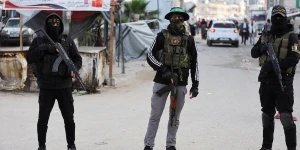
How supposedly harmless ‘cigarette smuggling’ into Gaza became a national security threat that helps Hamas rebuild
Terror groups are earning millions of shekels per month through cigarette sales





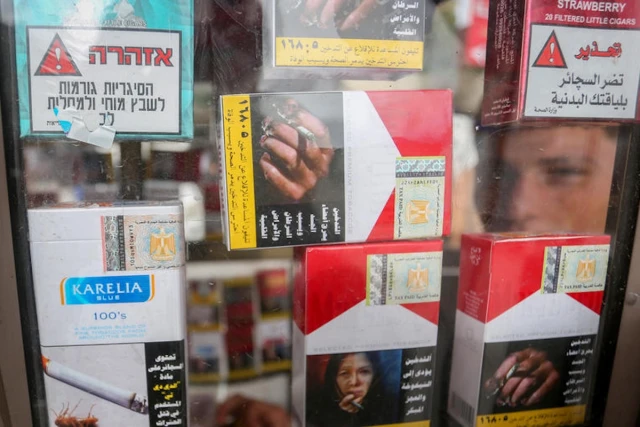
Another sensational security affair has hit Israel this week, as a court revealed that the brother of the Shin Bet chief, who is responsible for preventing exactly these crimes, is suspected of participating in a smuggling ring that transports highly dangerous goods into Gaza.
These highly dangerous goods are – packs of cigarettes.
Despite the security establishment recently declaring a “war” against weapons smuggling into Gaza, the smuggling of cigarettes may actually be the more dangerous phenomenon.
Unhealthy but supposedly harmless, thousands of packs of cigarettes have been fueling Hamas’ worrying resurgence in the Gaza Strip, despite the IDF’s ostensibly impermeable siege of the enclave over the past months.
But the tight control of the Israeli military has, paradoxically, enabled the smuggling operations to take place.
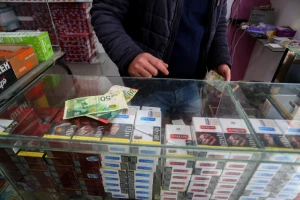
Cigarettes, as in other contexts such as prisons or postwar regions, have become a form of fungible currency in Gaza. Easy to acquire, conceal, smuggle, tax, and sell, they have generated millions of shekels for Hamas.
“Cigarettes today are in higher demand in Gaza than drones or other dual-use items like batteries, which Hamas needs for reconstruction, because Israel has banned the import of tobacco into the territory. At the height of the war, cigarette packs were being sold for up to 1,000 shekels in Hamas-controlled areas, where the group taxes everything that enters,” senior IDF officials told Ynet News.
“The high tax revenues – including from cigarette sales – flow directly into Hamas’ coffers, allowing it to pay the salaries of thousands of terrorists and tens of thousands of officials, strengthen its military capacity and prepare for the next round (of war). Whether it’s cash or cigarettes being smuggled into Gaza, the result is the same: the enemy grows stronger in the midst of war,” they warned.
Military officials have explained that unclear conditions on the ground in Gaza have enabled the smuggling.
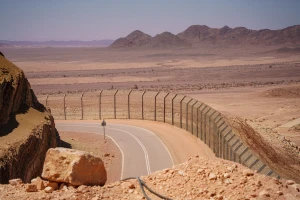
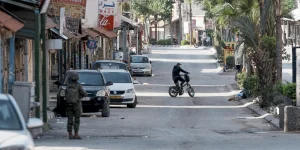
Smuggling attempts have often occurred in buffer zones along the Yellow Line, a kind of 'no-man’s land' that is, nonetheless, regularly crossed by IDF trucks carrying equipment and construction materials for IDF outposts and roads, as well as humanitarian aid trucks crossing the ceasefire lines into Hamas-held areas.
In the case involving Bezalel Zini, brother of the Shin Bet Director David Zini, IDF soldiers and reservists are suspected of being part of a smuggling ring including Israeli citizens and Palestinians from Judea and Samaria [West Bank], as well as Gaza.
As a source in the Gaza Strip explained to Ynet News, the smuggling mechanism is based on a network of traders and intermediaries, without the direct involvement of Hamas, which exerts governance at the end of the smuggling chain by levying taxes.
Smuggling operations have included not only cigarettes but also drugs and other equipment. Among other things, Captagon drugs were smuggled while concealed inside cartons of iPhone devices or truck wheels, the source said, noting that in one case, approximately 10,000 Captagon pills were smuggled at once.
The soldiers are accused of either concealing cigarette packs themselves or permitting their transport in IDF trucks, enabling them to be smuggled into Gaza, and then into the hands of merchants.
“The defendants and their accomplices knew that the smuggled goods could reach terrorist elements, including Hamas,” the indictment noted.
The prosecutor’s office explained that Zini, who is suspected of having played only a minor part in the operation, was responsible for the logistical framework of a reserve unit operating in the enclave and, therefore, held permits for convoys of vehicles entering the Strip.
The enormous profits for Hamas can be inferred from the size of the bribes paid out to the Israeli soldiers involved.
According to the indictment, Zini is charged with three rounds of smuggling, involving about 14 cartons of cigarettes, which earned him NIS 365,000 in cash. The other two named suspects are charged with five rounds of smuggling each, earning them NIS 4.3 million and NIS 815,000, respectively.
“All defendants were charged with offenses of aiding the enemy during wartime, prohibited dealings in property for the purposes of terrorism, obtaining something by fraud under aggravated circumstances, and taking bribes. [The other two suspects] were also charged with giving bribes. In addition, the defendants were charged with tax offenses and offenses under the Counter-Terrorism Law,” the indictment stated.
According to an analysis conducted by the Israeli security establishment and published by Army Radio this week, Hamas has earned millions of shekels through cigarette smuggling in the last few months alone.
The price of one pack containing 10 cigarettes was around NIS 20 before the war that began in October 2023 cut off regular supplies.
Mohammad Joudeh, a resident of the Jabalia refugee camp in northern Gaza, described the situation in an interview with Ynet News: “They say Gaza is starting to recover, and in the end, you find yourself standing at a cigarette stall asking for three cigarettes for 10shekels. In the past, three packs of ‘Royal’ were sold for ten shekels. There were even four cheap packs for seven shekels, even if they smelled like diesel.”
But then, prices began to ramp up continuously, reaching NIS 900 for one pack and NIS 45 for a single cigarette by April 2024.
At this point, smuggling intensified, and prices dropped to NIS 700 per pack several months later. Smuggling continued to get worse until prices fell to a low of NIS 100 per pack in December 2025, after the ceasefire had enabled massive amounts of cigarettes to enter the enclave, hidden in the large number of aid trucks entering daily.
In recent weeks, however, the growing discourse about intercepting smuggling in Israel has led to new fears and a corresponding price increase, with prices once again reaching NIS 400-450 per pack.
Operating at the end of the smuggling chain, Hamas is earning hundreds of shekels per pack of cigarettes through direct sales and heavy taxes, Army Radio reported.
Israel’s security system has now awoken to this new danger, highlighted by the charging of Zini and others with “aiding the enemy,” which, in the past, had been reserved for actions with a more direct impact on national security.
Summing up the danger posed to Israel’s security by cigarettes, Shin Bet and the police stated, “Hamas and other terrorist organizations have been working to rehabilitate and strengthen their military,” as well as civilian administration systems.
In this context, smuggling poses “a significant threat to the security” of Israel, by contributing “to Hamas’ military buildup and the restoration of its capabilities through the smuggling of goods that support production systems, as well as the smuggling of technological equipment and capabilities – and even the potential smuggling of weapons.”
The statement also stressed that the routes that are established through cigarette smuggling could later become “platforms for advancing offensive military activity against Israel and against our forces operating in the Gaza Strip.”
You might also like to read this: