Saudi Arabia’s shift from supporting the UAE to Qatar could spell trouble for Israel, warns former US official




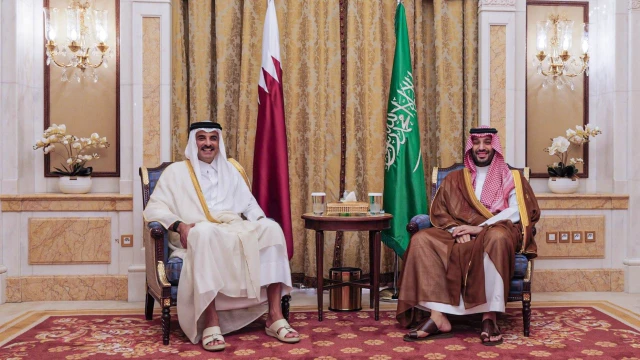
Though it once seemed inevitable that Saudi Arabia would soon sign the Abraham Accords, recent rhetoric against Israel and the United Arab Emirates (UAE) coming out of the kingdom now signals otherwise.
“Recent Saudi rhetoric suggests Riyadh prefers partnership with Hamas over Israel,” former Pentagon official Dr. Michael Rubin surmised. Certainly, the messages coming out of Saudi Arabia are disheartening for those hoping for peace.
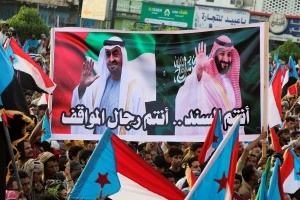
As Saudi connections with the UAE weakened and then seemed to break down over their policies in Yemen last December, Rubin opined that although Saudi Crown Prince Mohammed Bin Salman is willing to drive the Muslim Brotherhood out of his own country, he supports – and even depends on it – in others.
“Riyadh's policy in Yemen relies inter alia on Yemen's Muslim Brotherhood-affiliated Al-Islah Party, which is part of the central government that has Saudi support even though inside Saudi Arabia, the Muslim Brotherhood is designated as terrorists,” he explains.
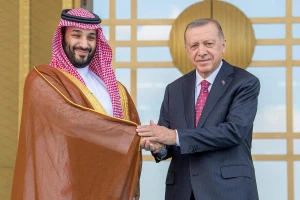
Rubin describes the Saudi pivot away from punishing Qatar for empowering the Muslim Brotherhood and towards friendship with the Turkey-Qatar block as creating a new “Axis of Ikhwan” (brotherhood). This new anti-UAE and anti-Israel alliance seeks to contain, if not roll back, the Abraham Accords, according to Rubin.
Saudi state media has taken a distinctly anti-Israel stance recently, according to an analysis piece in the Wall Street Journal, which presented a plethora of examples.
“Wherever Israel is present, there is ruin and destruction,” an editorial in Riyadh Daily claimed last month.
“Oh God, deal with the Jews who have seized and occupied, for they cannot escape your power,” declared Sheikh Saleh bin Humaid, an imam at the Grand Mosque in Mecca, in a recent sermon.
Arab News, another Saudi outlet that has been relatively moderate on the Jewish State in recent years, strongly criticized Israel last week, saying, “Israeli incursions, settlement expansion, arrests and military raids across the Occupied Territories have systematically eroded trust in diplomacy.”
“No political process can survive when one side experiences daily dispossession while the other enjoys impunity," the editorial continued.
And Israel is not alone in being the object of criticism. In another column, the UAE is targeted by Saudi writer Ahmed bin Othman Al-Tuwaijri, who called Abu Dhabi “the Israeli Trojan horse in the Arab world.” This has come despite the fact that the United Arab Emirates joined a statement condemning Israel’s “repeated violations of the ceasefire in Gaza.”
As the negative coverage in Saudi media has intensified, the Anti-Defamation League (ADL) has also spoken out, voicing its concern that this was fanning antisemitic sentiment and destroying hopes for regional peace.
“(The) ADL is alarmed by the increasing frequency and volume of prominent Saudi voices - analysts, journalists, and preachers – using openly antisemitic dog whistles and aggressively pushing anti-Abraham Accords rhetoric, often while peddling conspiracy theories about ‘Zionist plots,’” the ADL said.
“This is harmful on many levels, diminishing the prospect of peaceful coexistence in the region and weakening regional initiatives promoting tolerance, understanding, and prosperity,” they added.
However, according to many analysts, the flipped script is not just about anti-Israel sentiment. Clashes over trading opportunities and regional influence led Saudi Arabia to be at odds with the United Arab Emirates, a key player in the Abraham Accords.
The two states are backing opposing sides in conflicts in Yemen and Sudan while vying for dominance over Red Sea trade routes, according to reports from the European Council on Foreign Relations. Saudi Arabia has the opportunity to exploit the deep anger felt towards Israel around the Middle East in order to gain influence and isolate the UAE.
Saudi officials denied that the hostile rhetoric against Israel was coordinated with the government, but as Daniel Shapiro, a former US deputy assistant secretary of defense for the Middle East, told the Wall Street Journal, “It does raise a question of whether [Mohammed bin Salman] is committed to the path of moderation both Trump and Biden have invested in.”
MEMRI reported that in addition to anti-Israel incitement, Saudi Arabia is also now expressing harsh criticism of the Abraham Accords, and that it is “framing them as serving Israel at the expense of Arab stability and even as religious capitulation rather than a political move.”
Yet simultaneously, Saudi officials recently indicated that they remained open to normalization under certain conditions during a visit to Washington last week. Mark Dubowitz, who participated in a meeting with Bin Salman's brother and Saudi Defense Minister, Khalid Bin Salman, said Saudi officials were aware that recent rhetoric was straining relations with the U.S.
“The Saudis understood that this was creating serious problems for them in Washington,” he said, and confirmed that the Saudi officials had committed to easing tensions with Israel.
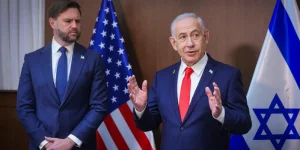
Prime Minister Benjamin Netanyahu warned at a press briefing last week, “We expect from anybody who wants normalization or peace with us that they not participate in efforts directed by forces or ideologies that want the opposite of peace.”
You might also like to read this: