'Iran cannot be trusted', PM Netanyahu tells US envoy Witkoff during 3-hour meeting ahead of US-Iran talks
Netanyahu reiterates demand for Hamas disarmament, no PA role in Gaza as ceasefire violations continue



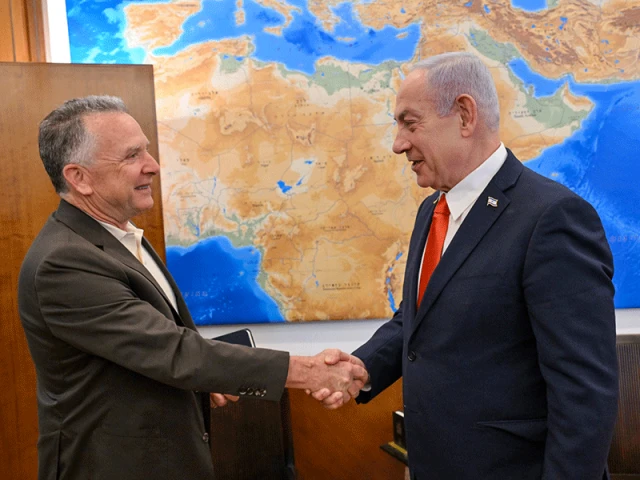
The Iranian regime cannot be trusted, Israeli Prime Minister Benjamin Netanyahu clarified in a high-level meeting with U.S. Special Envoy Steve Witkoff on Tuesday, as he visited Israel ahead of negotiations between the Islamic Republic and Washington that are set to commence in Oman on Friday.
In statements released after the meeting, the Prime Minister’s Office said, “Ahead of Envoy Witkoff's departure to meet with a representative of Iran, the Prime Minister clarified his position that Iran has proven time and again that its promises cannot be relied upon.”
The meeting, which lasted over three hours, was described as "positive and productive," according to i24 News, which added it was also attended by U.S. Ambassador to Israel Mike Huckabee, Defense Minister Israel Katz, Mossad chief David Barnea, IDF Chief of Staff Lt.-Gen. Eyal Zamir, IDF Intelligence Chief Shlomi Binder, and Air Force Commander Tomer Bar.
According to the report, Zamir presented Witkoff with an extensive briefing and an in-depth intelligence overview, conveying Israel's assessment that the regime is stalling for time and has no intention of giving up its nuclear project as part of the negotiations.
He also noted that, should the regime attack Israel, the IDF would launch an immediate response of "extraordinary magnitude" with strikes on “unexpected targets.” Israeli officials also told Witkoff that there couldn't be concessions on the issue of the regime's ballistic missiles, which are also a risk to regional stability, i24 News reported.
The discussion between Netanyahu and Witkoff came as U.S. negotiators were scheduled to meet with their Iranian counterparts in Oman for talks, which Tehran hopes will avert a potential U.S. military strike.
The talks were originally scheduled to take place in Istanbul on Friday, but reports on Tuesday evening said Washington had agreed to move from multilateral talks involving several Gulf states, to bilateral talks between the Islamic Republic and the U.S. only.
Tensions between the U.S. and Iran remain high. On Monday, President Donald Trump reaffirmed that he would like to see a deal reached between the two countries, but warned that “bad things” could happen if no deal is achieved.
“And if we could work something out, that'd be great,” Trump said at the White House. “And if we can't, probably bad things would happen.”
On Tuesday, Iranian Supreme Leader Ayatollah Ali Khamenei again blamed the U.S. and Israel for provoking the protests against the regime in late December and January, which were ended with a bloody crackdown that left thousands of Iranians dead.
“The recent sedition was orchestrated by Zionists & the US. I was informed through a certain channel that the CIA & Mossad deployed all of their resources into the field! Nevertheless, they were defeated. The sedition's plan was developed abroad, and it was managed from abroad,” Khamenei’s account posted to 𝕏 on Tuesday.
Later that same day, U.S. Central Command said it shot down an Iranian drone that approached the USS Abraham Lincoln in the Arabian Sea with “unknown intent.”
🚨 BREAKING: US fighter jet just SMOKED an Iranian drone. F-35 takes out a Shahed-139 that was aggressively closing in on the USS Abraham Lincoln in the Arabian Sea!
— Gunther Eagleman™ (@GuntherEagleman) February 3, 2026
CENTCOM confirms: The unmanned Iranian drone maneuvered toward the carrier with “unclear intent” about 500 miles… pic.twitter.com/4PTh1fdCZJ
Also on Tuesday, the Wall Street Journal reported that six Iranian gunboats attempted to halt and board a U.S.-flagged oil tanker in the Strait of Hormuz.
A senior diplomatic official later told Israel’s Channel 12 News that Netanyahu shared several Israeli demands ahead of the negotiators. Among the demands are: that Iran transfer its highly-enriched uranium to another country; that it halt all nuclear enrichment; that Iran cease its ballistic missile program; and halt funding of anti-Israel proxy groups in the Middle East.
With the exception of a possible halt to nuclear enrichment, these terms are widely believed to be unacceptable to the Iranian regime.
Additionally, the Prime Minister's Office (PMO) said that Netanyahu reaffirmed Israel’s insistence that Hamas be disarmed before pursuing reconstruction of the Gaza Strip.
“The Prime Minister reiterated the uncompromising demand for the disarmament of Hamas, the demilitarization of the Gaza Strip, and the fulfillment of the war objectives prior to the reconstruction of the Strip,” the PMO statement said.
Netanyahu also reiterated Israel’s insistence that the Palestinian Authority play no role in the governance of Gaza.
“The Prime Minister clarified that the Palestinian Authority will not be part of the administration of the Gaza Strip in any way, and updated US Ambassador Huckabee on the grave violations discovered in the Strip in the use of UNRWA bags to conceal weaponry,” the statement said.
One IDF soldier was critically wounded after gunmen from the Hamas-controlled side of the Yellow Line fired on Israeli soldiers on Tuesday night, in another apparent ceasefire violation by Palestinian gunmen.
You might also like to read this: