US envoy Witkoff & Iranian FM Araghchi to meet in Istanbul on Friday to discuss de-escalation, possible nuclear deal
Conflicting reports over Iranian readiness to transfer uranium out of the country


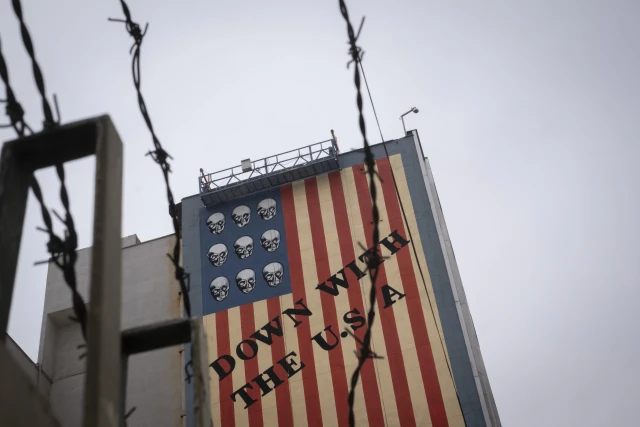
Representatives from the U.S. and the Iranian regime are expected to meet in Turkey on Friday for talks about de-escalating the standoff between the countries, according to multiple media reports.
Iranian and U.S. officials told Reuters that White House Special Envoy Steve Witkoff, who is set to visit Israel on Tuesday, and Iranian Foreign Minister Abbas Araghchi will meet in Istanbul.
Foreign ministers of Turkey, Qatar, Egypt, Oman, the UAE, Saudi Arabia and Pakistan are also set to attend the summit, Axios reported, amid a flurry of diplomatic activity from several states in the region to avert U.S. strikes that could engulf the entire Middle East in an escalation.
Speaking to reporters in the Oval Office on Monday, U.S. President Donald Trump doubled down on his military threats against the regime, while reiterating his preference for a diplomatic solution to the crisis triggered by the regime killing tens of thousands of people in a crackdown on mass protests last month.
“We have ships heading to Iran right now, big ones – the biggest and the best – and we have talks going on with Iran and we’ll see how it all works out,” said Trump.
“If we can work something out, that would be great and if we can’t, probably bad things would happen. I’d like to see a deal negotiated. I don’t know that that’s going to happen,” he added.
The IRGC-affiliated Fars News Agency in a post on its X account on Monday published a photo of the UAE’s Al Dhafra Air Base, which houses thousands of US forces, without further comment. pic.twitter.com/hMYIM8ISzs
— Iran International English (@IranIntl_En) February 3, 2026
Meanwhile, Iranian President Masoud Pezeshkian, who doesn’t have a final say regarding diplomacy, confirmed he had instructed Araghchi to participate in the talks “provided that a suitable environment exists – one free from threats and unreasonable expectations – to pursue fair and equitable negotiations, guided by the principles of dignity, prudence, and expediency.”
Two regional officials told the New York Times (NYT) that the regime is indicating a readiness to suspend its nuclear program, which is reportedly among the main U.S. demands.
But they added that the regime would prefer to return to a U.S. proposal made during talks last year, to create a regional consortium that would produce nuclear power using Iran’s enriched uranium.
The secretary of Iran’s National Security Council, Ali Larijani, discussed the idea of shipping its uranium stockpile to Russia during a recent visit to Moscow, the officials added.
Ali Shamkhani, a senior adviser to Iran’s Supreme Leader Ali Khamenei, said transferring Iran’s enriched uranium abroad is off the table, adding that Tehran is prepared for a potential war and would strike Israel if the United States attacks Iran.
— Iran International English (@IranIntl_En) February 2, 2026
“We are prepared for a possible… pic.twitter.com/GKJXtqqMRl
However, Jason Brodsky, Policy Director at the think tank United Against Nuclear Iran (UANI) noted on 𝕏 that “First Ali Bagheri, Larijani's deputy at the SNSC, and now Ali Shamkhani, Khamenei's representative on the Defense Council, says Iran's regime will not ship its stockpile of enriched uranium out of Iranian soil. If this is the Iranian position, the talks will be over before they begin.”
Shamkhani told Hezbollah-affiliated broadcaster Al Mayadeen that transferring enriched uranium to another country was “definitely off the table,” reiterating that “If the US attacks, we will certainly strike Israel.”
But Iranian Foreign Ministry spokesman Esmaeil Baghaei said Tehran is considering “the various dimensions and aspects of the talks,” adding that “time is of the essence for Iran as it wants the lifting of unjust sanctions sooner.”
Spot on. https://t.co/f7009iOqnI
— Lindsey Graham (@LindseyGrahamSC) February 2, 2026
The Wall Street Journal cited people informed about the talks that the discussions in Turkey are meant to lay the groundwork for further negotiations, with talks being held in two tracks, one of which would focus on the nuclear program specifically, while the other would address a range of other demands, including limits on the missile program and support for regional proxies.
The news of planned talks with the regime caused some consternation and confusion among Trump’s supporters after his harsh rhetoric threatening military strikes. According to several reports, the president’s hesitancy is caused by the fact that he has so far not been presented with strike options that would topple the regime without causing a regional escalation.
Commenting on the reported attendance of several regional foreign ministers, Mark Dubowitz, CEO of the Foundation for Defense of Democracies (FDD), said, “What could go wrong when most of those attending are not on America’s side? This is worse than the P5+1.”
“Let’s not save this medieval Iranian terror regime with self-defeating and ultimately suicidal negotiations and diplomacy,” wrote journalist Mark Levin, who has often been quoted by Trump in recent weeks. Sen. Lindsey Graham, who has long called for military action against the regime, approvingly commented (to Levin), “spot on.”
Meanwhile, in Israel, officials believe Trump wants to exhaust every diplomatic avenue to build justification for broad military action, enabling him to argue that the regime left him no choice, according to Ynet News.
Israeli media reported that the security establishment believes the president’s threats, as well as the massive military buildup, have already taken him beyond the “point of no return” regarding military action.
Nevertheless, Israel is reportedly concerned that Trump could be tempted into a deal that focuses only on the nuclear issue, leaving the missile threat against Israel untouched.
You might also like to read this: