IDF Chief Zamir meets Pentagon officials over the weekend for secret strategic discussions on Iran
Zamir warns that US strike on Iran could happen within two weeks to two months



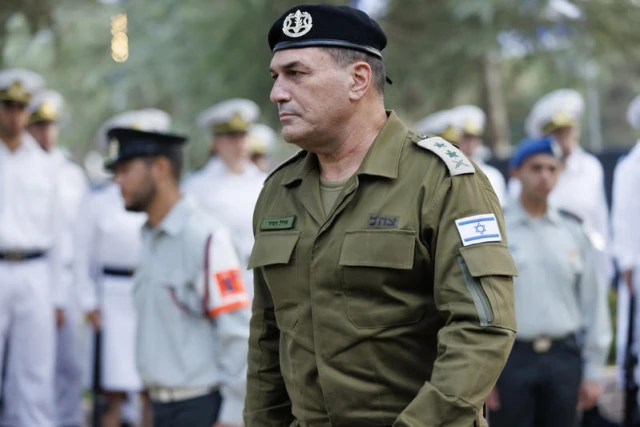
Israel’s military chief traveled to Washington, D.C., over the weekend for intensive discussions with U.S. officials as the White House continues to weigh a possible military strike on Iran while bolstering its military presence in the region.
The Israeli government initially said only that IDF Chief of Staff, Lt.-Gen. Eyal Zamir had held talks with U.S. officials, without specifying the location. On Sunday evening, the IDF cleared for publication that he had traveled to the United States over the weekend.
Reuters reported that the meetings took place at the U.S. Pentagon on Friday, led by Zamir and U.S. General Dan "Raizin" Caine, chairman of the Joint Chiefs of Staff. “There is no substitute for a four-eyes conversation,” Israeli security officials told Channel 12 News.
Israel's Kan News also reported that Zamir was accompanied by the incoming Israel Air Force commander, Brig.-Gen. Omer Tischler, the commander of the Operations Brigade in the Military Intelligence Directorate, the head of the Planning Directorate, the head of the Foreign Relations Division, and other senior Israeli officers during the meetings.
Many Middle East developments over the past week as the U.S. military buildup continues:
— Ian Ellis (@ianellisjones) February 2, 2026
- Additional strike assets en route (F-35As in Rota, EA-18Gs in CENTCOM)
- NSA Bahrain cleared out: all forward-deployed ships (LCS, USCG) got underway
- Deploying THAAD battery + Patriots
-… pic.twitter.com/PwRC7bXCwb
At the Pentagon, Zamir presented the U.S. military with Israeli intelligence on Iran’s efforts to rehabilitate its military and its ballistic missile program. Last week, IDF Military Intelligence Chief Maj.-Gen. Shlomi Binder was in Washington, reportedly bringing with him specific intelligence on Iran that the U.S. military had requested.
Reports in Israeli media stated that Iran is close to restoring its estimated 2,500-missile stockpile, which it had before the 12-Day Israel-Iran War last June.
Over the weekend, two Western officials told The Washington Post that despite the damage to Iran’s missile program, Tehran still has sufficient power to inflict significant damage on the U.S. assets and allies in the region.
While Israel destroyed many missiles and missile launchers, the Iranian regime has been investing significant resources into recovering its ballistic missile program, believing it to be the nation’s most effective threat against Israel.
Army Radio reported on Sunday that Zamir expects that a U.S. strike on Iran could take place within the next two weeks to two months. Shortly after his return to Israel, Zamir met with Defense Minister Israel Katz.
“Following the series of meetings that IDF chief of staff recently held in the United States, the two are discussing, among other things, the regional situation assessment and the IDF’s operational readiness for any scenario,” Katz’s office said in a statement on Sunday evening.
Defense Minister Israel Katz says he is holding a meeting with IDF Chief of Staff Lt. Gen. Eyal Zamir after the latter returned from a whirlwind weekend visit to Washington DC for discussions with American officials on Iran.
— Emanuel (Mannie) Fabian (@manniefabian) February 1, 2026
"Following the series of meetings the IDF chief of… pic.twitter.com/Y47MD4iCJ7
Shortly afterwards, Israeli Prime Minister Benjamin Netanyahu held a meeting with top defense and security officials, including Zamir, Katz, and Mossad Director David Barnea, Israeli media reported on Sunday evening.
The IDF has repeatedly stressed that it is prepared and ready for any scenario, including a surprise attack by Iran. However, it has also urged the Israeli public to refrain from spreading rumors and to rely only on official announcements by the Home Front Command regarding new safety instructions.
U.S. President Donald Trump has continued to say he prefers a negotiated deal, which would limit Iran’s nuclear program and possibly its ballistic missile program, even as the U.S. military has increased forces in the region.
According to reports from multiple Israeli media channels, the defense sector is concerned that a deal with Iran would limit Israel from striking the regime's ballistic missile program more than it would limit the regime's development of such a program.
There is also concern that a deal between the U.S. and the Islamic Republic might allow Iran to keep the 400 kg of highly enriched uranium that it already had in its possession at the start of the 12-Day War. Analysts have warned that this amount of uranium could be enough for around 10 nuclear weapons, should the regime decide to make a sprint for weaponization.
Meanwhile, The Wall Street Journal reported on Sunday that the U.S. has been further bolstering its air defense systems in the Middle East, including THAAD and Patriot systems, ahead of any potential retaliation in the event of a U.S. strike or a potential pre-emptive attack by the Iranian regime.
You might also like to read this: