The story that began in Genesis is not over


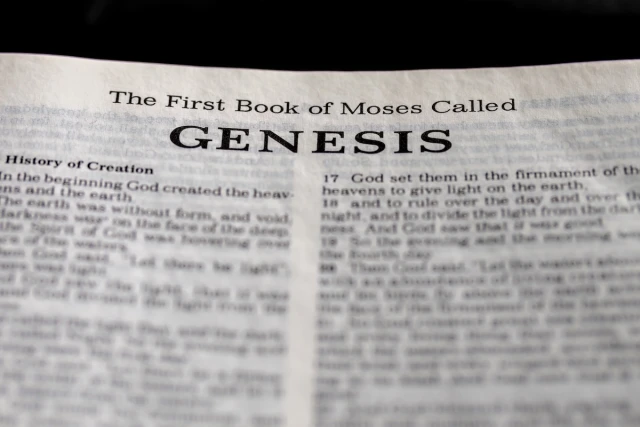
For many Christians, there is a disconnect between the Bible and today. In fact, for some, there is a disconnect between the Old and New Testaments. This perceived gap leaves many wondering what God’s story has to do with them today. The stories of the Old Testament seem ancient, full of unfamiliar names, laws, and events. The New Testament, by contrast, sometimes feels like a “different book,” with new promises, new people, and a new focus.
The truth is so much richer and compelling! The Bible is not a collection of unrelated, random stories but one continuous narrative that stretches from eternity past to eternity future, is anchored in a promise made to Abraham and his descendants back in Genesis, and weaves together covenants, kings, prophets, and ultimately the Messiah, Jesus Christ.
Most importantly, God’s story—His grand plan to redeem humanity—did not end with the close of the Old Testament but continues today.
And we are called to be part of it.
Story of the Bible
The Bible tells the story of God’s love for the world, His plan to redeem that world, and the battle against that plan. Central to this plan is the calling and role of the Jewish people, initiated in Genesis 12:
Now the Lord had said to Abram, “Get out of your country, from your family and from your father’s house, to a land that I will show you. I will make you a great nation; I will bless you and make your name great, and you shall be a blessing. I will bless those who bless you, and I will curse him who curses you; and in you all the families of the earth shall be blessed.” … Then the Lord appeared to Abram and said, “To your descendants I will give this land.” (vv. 1–3, 7 NKJV)
God’s choice of the Jewish people is not because He loves them more than others. He did not line up all the people groups on earth and choose one over the other. Rather, because of His great love for all humanity, and to keep His promise made to Abraham, He created a people—a nation—through whom He would carry out His redemptive plan. Moses wrote:
The LORD did not set His love on you nor choose you because you were more in number than any other people, for you were the least of all peoples; but because the LORD loves you, and because He would keep the oath which He swore to your fathers, the LORD has brought you out with a mighty hand. (Deuteronomy 7:7–8)
Though He made this promise to Abraham and his descendants in Genesis, God’s story of redemption actually began far earlier. Ephesians 1:4–5 says that before the creation of the world, we were predestined to be adopted as sons through Christ Jesus. Revelation 13:8 confirms this eternal existence of God’s plan when referring to the “Lamb slain before the foundation of the world.” This means that Jesus’ substitutionary death on the cross was always God’s plan.
God’s plan of redemption began in eternity.
The New Testament
Sadly, many Christians today believe God’s work with the Jews ended in the Old Testament, and the New Testament launched a new plan with new people: the church. There is not a separate Old Testament plan and New Testament plan—Plan B. Jesus’ ministry, death, and future return are all part of Plan A found in the Old Testament covenants and prophecies and carried through the New Testament.
In Romans 11, when speaking of the Jewish people, the apostle Paul said that the gifts and calling of God are irrevocable (v. 29), despite their resistance to the gospel. God was not surprised by Israel’s rejection of Jesus—He used their rejection to carry out His plan (v. 11).
Israel’s rejection allowed the gospel to go to a people who were “not My people” but whom Paul said would now be called “sons of the living God” (Romans 9:25–26). For this reason, he admonished Christians to approach the Jewish people in humility and give them honor, even if they did not believe or receive the gospel message:
As far as the gospel is concerned, they are enemies for your sake; but as far as election is concerned, they are loved on account of the patriarchs. (Romans 11:28 NIV)
The Jewish people are still chosen by God by covenant. He is faithful, and He will remain true to His promises. He is greater than human weaknesses and failures. He knows the end from the beginning, and He will fulfill His will.
Since the New Testament
The New Testament portrayed a vibrant Jewish presence living in the Land. Ancient Jewish communities still existed throughout the Roman world dating back to the Assyrian and Babylonian exile. Within 40 years of the death of Jesus, another exile was under way at the hands of the Romans. The newfound Christian church also found itself increasingly spread throughout the Roman Empire.
While the destruction of the temple in AD 70 that ignited Israel’s broader exile was carried out by the Roman Empire, the Bible frames this moment within a larger covenantal context. God had sovereignly promised if Israel had obeyed His word, He would set them “high above all nations of the earth” (Deuteronomy 28:1). However, He also warned His people of judgment if they turned from Him:
If you do not carefully observe all the words of this law that are written in this book … the LORD will scatter you among all peoples, from one end of the earth to the other. (v. 64)
God was not abandoning or replacing Israel but disciplining in covenant faithfulness.
Over the next 1,800 years, the two faiths developed in very different directions. Christianity became increasingly Gentile, and eventually, the church became severed from its Jewish roots, going so far as to teach contempt for the Jewish people. Israel was indeed scattered to the four corners of the earth, where she experienced varying degrees of oppression wherever she went.
It is an agonizing history of exile and persecution that culminated in the tragedy of the Holocaust.
However, throughout Scripture, God promised to bring His people back to the land He promised to them through Abraham, in Genesis 12:1–3, 7:
For I will take you from among the nations, gather you out of all countries, and bring you into your own land. (Ezekiel 36:24)
God—the sovereign creator of the universe and master storyteller—has kept His word and miraculously brought the Jewish people back to their homeland in our day. We are living in a generation that is watching this happen before our very eyes! He is fulfilling everything He promised Abraham, Moses, and King David, just as the Hebrew prophets predicted.
Conclusion
The story that began in Genesis is not over. And what God planned in eternity past, long before Genesis was written, will not end until eternity comes.
What a privilege it is to be in this generation. God is bringing His people back to the land and setting the stage for His final act in this redemptive story.
The day you get this in your gut is the day the Bible becomes the most exciting book on the planet.
It is also the day you will want to step into the story.
This article was originally posted here on April 19, 2022.
You might also like to read this: