Israeli defense tech recovery boosts country’s economy after two years of war




The gradual recovery of the Israeli defense tech sector is boosting the country’s economy after more than two years of war with Iran and its regional terrorist proxies, Hezbollah, Hamas, and the Houthis. The tech sector, the growth engine of the Israeli economy, has faced multiple serious wartime challenges, including brain drain, workers’ military reserve duty, and air traffic suspensions.
“High-tech companies had to overcome massive staffing cuts, because 15 to 20 percent of employees, and sometimes more, were called up,” Israel Innovation Authority (IIA) director Dror Bin said in an interview with the news agency AFP.
Bin added that in late 2023 and 2024, “air traffic, a crucial element of this globalized sector, was suspended, and foreign investors froze everything while waiting to see what would happen.”
While the Israeli tech sector accounts for only 11.5% of all jobs in Israel, it generates 57% of the country’s total exports, according to an IIA report published last September.
American-brokered ceasefires with Hezbollah and Hamas have contributed significantly to Israel’s tech sector’s gradual recovery.
Investments in the Israeli tech sector grew by 45% following the Gaza ceasefire in October 2025, according to a December report compiled by the LeumiTech (Bank Leumi branch) and IVC.
“The past year reflects the strength and continued growth of Israeli tech, despite a prolonged period of uncertainty and upheaval in the local and global arena,” LeumiTech CEO Maya Eisen-Zafrir stated in December.
A significant portion of the investments comes from abroad. The growing investments, therefore, signal renewed global confidence in the Israeli economy and its vibrant tech industry.
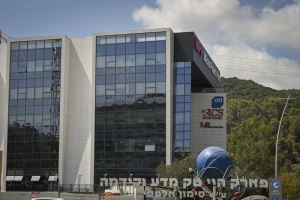
American tech giant Nvidia announced in December 2025 its intention to invest $US1.5 billion to construct a large server farm in northern Israel, which could host up to 10,000 employees. Once the facility is complete around 2031, it will reportedly become Nvidia’s largest laboratory center outside the United States.
“Investors are coming to Israel nonstop,” Prime Minister Benjamin Netanyahu stated at the time, welcoming the large Nvidia investment.
The past two years of war have also led to a dramatic increase in defense-sector startups. The number of defense-focused startups in Israel almost doubled from 160 to 312 between July 2024 and April 2025, according to a Start-Up Nation Central report.
The Israeli Defense Ministry’s Director General, Amir Bara, revealed in December that, out of 300 startups cooperating with the ministry, “over 130 joined our operations during the war.”
Menachem Landau, who heads the defense tech investment company Caveret Ventures, assessed that the prolonged war pushed the ministry “to accept products that were not necessarily fully finished and tested, coming from startups.”
“Defense-related technologies have replaced cybersecurity as the most in-demand high-tech sector,” Landau assessed.
“Not only in Israel but worldwide, due to the war between Russia and Ukraine and tensions with China,” he added.
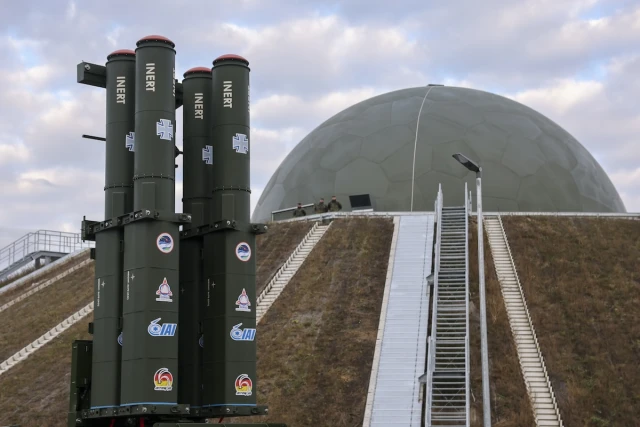
Last month, Germany signed an expanded $US3.1 billion agreement with Israel Aerospace Industries for the delivery of the Israeli-developed Arrow 3 aerial defense system.
Baram welcomed the growing defense ties between Germany and Israel.
“The Arrow 3 contract expansion represents another significant milestone in our deepening strategic partnership with Germany, our key European ally. This landmark deal, valued at over $US3 billion, embodies the Israel Ministry of Defense' strategy to expand defense exports,” he stated.
You might also like to read this: