IAEA confirms that the Arak heavy water plant struck by Israel has been destroyed
Arak reactor was source of international concern over its dual use capabilities, ability to produce plutonium




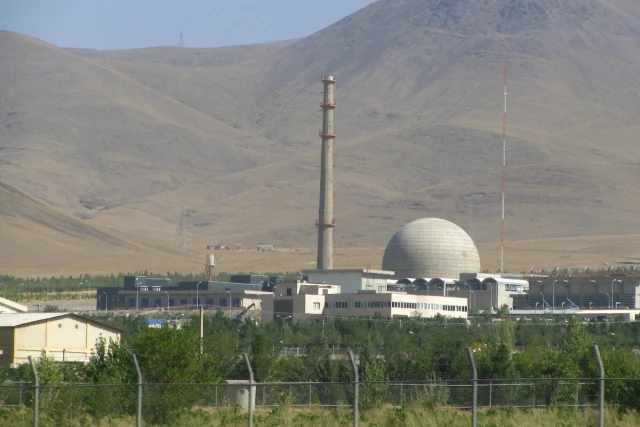
The International Atomic Energy Agency (IAEA) said on Sunday that the Khondab heavy water production plant in Arak, central Iran, has been taken out of service due to recent strikes.
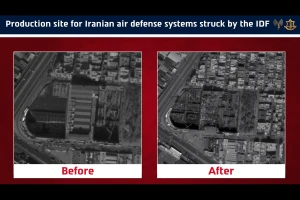
The IDF announced the strike on the site last Friday, noting that the heavy water reactor could be used to produce plutonium, which, alongside uranium, is one of the main ingredients in nuclear weapons.
Israel also struck the facility, which is officially known as the Khondab Heavy Water Research Reactor, during the June 2025 12-day war with Iran.
In its announcement, the IDF said that Iran’s nuclear weapons program “poses an existential threat to Israel and the entire world.”
🎯 STRUCK: Arak Heavy Water Plant in Central Iran—A Key Plutonium Production Site for Nuclear Weapons
— Israel Defense Forces (@IDF) March 27, 2026
The IDF will not allow the Iranian regime to continue advancing its nuclear weapons program, which poses an existential threat to Israel and the entire world. pic.twitter.com/wdFQ03TQZr
The IDF said that repeated reconstruction attempts by the regime indicated that the Islamic Republic was trying to rehabilitate its nuclear program.
“Repeated reconstruction attempts by the Iranian terror regime at the site were later identified. Therefore, the IDF has struck the facility once again,” the military said.
As it has done several times throughout Operation Roaring Lion, the IDF issued warnings to Iranian residents to flee the area ahead of the strikes.
On Sunday, the IAEA confirmed that the Khondab nuclear facility sustained significant damage and is no longer operational.
Iran declared the facility had been attacked on March 27, the same day the IDF announced its strike.
In a social media post, the IAEA said the plant did not contain any declared nuclear material, meaning the risk of radiation exposure following the strike is practically nonexistent.
Based on independent analysis of satellite imagery and knowledge of the installation, the IAEA has confirmed the heavy water production plant at Khondab, which Iran reported had been attacked on 27 March, has sustained severe damaged and is no longer operational. The installation… pic.twitter.com/omnomOmsNQ
— IAEA - International Atomic Energy Agency ⚛️ (@iaeaorg) March 29, 2026
While Iran had acknowledged the attack on Friday, it did not disclose the extent of the damage.
Heavy water is a unique material used to fuel nuclear reactors, such as the inactive reactor at Arak, which was originally designed to produce weapons-grade plutonium, the IDF stated.
The nuclear complex is located near the city of Arak in Markazi Province, about 250 kilometers (155 miles) southwest of Tehran. It consists of two main facilities: a heavy water production plant (HWPP) and the IR-40 reactor, with a thermal power capacity of 40 megawatts. The site has been a point of concern in the international community over its dual use capabilities.
Despite being modified in order to reduce the weaponization risk after the 2015 Joint Cooperative Plan of Action (JCPOA) under then-President Barack Obama, the site was never fully converted to prevent the production of plutonium.
Concerns about the facility increased after President Donald Trump withdrew the U.S. from the JCPOA in 2018, and Iran retaliated by placing restrictions on inspections by the IAEA at the site.
The IDF statement noted that the heavy water “can also be used as a neutron source for nuclear weapons” and that “despite explicit international commitments, foremost among them the nuclear agreement, the Iranian terror regime has systematically avoided converting the reactor to prevent the production of weapons-grade plutonium, and even deliberately ordered that the conversion not be completed.”
You might also like to read this: