The world may criticize Israel, but it still invests in it
.jpg "Maayan Hoffman")




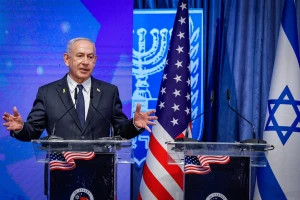
Prime Minister Benjamin Netanyahu spent at least one-third of his speech to the Conference of Presidents of Major American Jewish Organizations last week touting Israel’s economy. Another third focused on the eighth front, the battle against rising antisemitism and anti-Zionism, which are accusing Israel of genocide and turning the country into a so-called pariah state.
It was a sharp contrast. On the one hand, the prime minister projected strength and economic resilience. On the other hand, a world in which Israel is increasingly vilified in headlines, on campuses, and in international forums.
Those who actually understand what is happening inside Israel’s economy say the reality is more complex. While anti-Zionists may refuse to acknowledge it, their rhetoric has not translated into meaningful economic isolation. In fact, many indicators suggest that Israel’s economy continues to grow stronger.
As one respected economist told All Israel News, calling Israel a pariah state is a misnomer, just like saying Israel committed genocide.
“Either Israel is the most ineffective genocide perpetrator of all time in the world or it’s a bunch of bulls**t,” he said.
The widespread perception of Israel as a pariah state is mainly driven by media narratives, according to Yoel Israel, founder and CEO of WadiDigital and host of the IsraelTech podcast.
“When it comes to what people need the most, Israel is the only country that has it,” he said. “When it comes to defense, both cyber and kinetic, Israel is the leader, and if you want to live and survive, you need to be able to work with and partner with the Jewish state.”
He added that opposing Israel not just undermines a country’s defense capabilities but also signals where it stands morally.
Consider this example. It was reported last week that after Spain canceled a €285 million deal to procure Spike LR2 anti-tank missiles from Rafael in protest of the war in Gaza, it would now likely purchase the same weapons through the German company EuroSpike.
According to Globes, Rafael owns 20% of EuroSpike, which produces a European variant of the Spike LR2.
“The Sánchez government justified the deal by saying that the components of MELLS are manufactured in Europe,” Globes reported.
In other words, even when political leaders signal distance from Israel, the underlying economic and security ties frequently remain intact.
At the Conference of Presidents, Netanyahu underscored what he described as the resilience and strength of Israel’s economy in the aftermath of the war.
“The most important thing that is happening is that people are coming to us,” Netanyahu said. “Nations are coming to us, companies are coming to us. Enormous economic powers are coming to us. Israel has been ranked by The Economist, not a particular fan of me or the State of Israel in recent years, but it ranked the Israeli economy among the three most vibrant economies in the world just now.”
Indian President Narendra Modi is expected in Israel this week for an economic and diplomatic visit. Netanyahu also pointed to what he described as a shift in Latin America, with countries such as Argentina, Ecuador, Paraguay, Bolivia, and Panama seeking closer partnerships. Asia, too, he said, remains open to Israel.
“They’re coming because Israel is a powerful engine. It’s a juggernaut on innovation and technology that is changing the world,” Netanyahu said. This, he noted, comes after two years of war and Israel being “savaged in the international media” and by the United Nations.
“Our stock market is at an all-time high,” the prime minister said. “The shekel versus the dollar is almost at a 30 year high. Inflation is going down. There’s very little of it. Interest rates have gone down – not enough, more – but it’s at 4% now, it’ll go down further. And the investments in Israel are huge.”
According to the prime minister, Israel’s economic success stems partly from responsible fiscal management and partly from the way the war brought out the country’s prowess. He pointed to Israel’s “high-tech, deep-tech capabilities that astonish the world.” What Israel demonstrated technologically on the battlefield, he argued, also transfers to the civilian sphere, and the world understands that.
Netanyahu’s claims are supported by data released at the end of last year by the Israel Innovation Authority in its annual Status Report on Israeli High-Tech. The most recent report was produced in partnership with the international firm Dealroom.
According to the findings, Israel is the leading deep-tech fundraising hub in the Western world besides the United States. The country is home to around 1,500 deep-tech companies that raised more than $28 billion between 2019 and 2025. Among them are nearly 40 unicorns and centaurs, operating in fields ranging from artificial intelligence and medical devices to cybersecurity and AgriFood.
In 2024, Israel ranked as the fifth-largest hub globally, raising $10.6 billion, trailing only San Francisco, New York, London, and Boston.
Moreover, the report found that Israel attracts around 20% of global cyber investments and 10% of global investment in medical devices and AgriFood. High-tech accounts for more than 50% of all Israeli exports.
At the same time, the report acknowledged challenges. High-tech output has remained stagnant for two years, the number of R&D employees has declined, and venture capital fundraising has decreased, the report said.
Among the recent successes are Google’s acquisition of the Israeli startup Wiz for $US32 billion and the announcement of Palo Alto Networks’ acquisition of the Israeli company Koi Security for $400 million.
“The numbers are off the charts,” said Hillel Fuld, an American-Israeli technology advisor.
Fuld told All Israel News that the situation can also be viewed from a theological perspective. He said the story of the Jewish people’s economic success can be found in the Bible. In Egypt, for example, the more Pharaoh persecuted the Israelites, the more they flourished.
“The more enemies bring darkness, the brighter our light shines,” Fuld said. “The more they terrorize us, the more we innovate.”
Fuld argued that Israel over-delivered during the war because “the Jewish people have a mentality of survivordom” and “we know how to be resilient in the face of persecution and adversity.” He noted that with nearly half the country called up for reserves, many would have expected the economy to crash. Instead, the Tel Aviv Stock Exchange has become one of the world's strongest-performing exchanges.
“The Jewish people are supernaturally resilient, because we've had many generations of practice,” Fuld concluded.
At the same time, several leading local economists told All Israel News that Israel’s performance is not only a matter of faith or destiny. They stressed that the economy is doing well because it was carefully built over decades, with deep systemic resilience. Still, they warned against complacency.
As one expert put it, “We don’t want to be in the situation of the Titanic that was leaving the port and being so happy and self-confident that they neglected to look out for icebergs.”
In other words, government, industry, and academia must continue collaborating to preserve Israel’s competitive edge. More smart decisions will be required to ensure that in the next war, and there will likely be another one, the economy remains no less resilient than it has been over the past two years.
For now, perhaps the real test is not whether Israel is labeled a pariah, but whether the world can afford to treat it like one. So far, the answer appears to be no.
You might also like to read this: