Three Jewish babies born in Nazi concentration camps, now in their 80s, recall survival against all odds



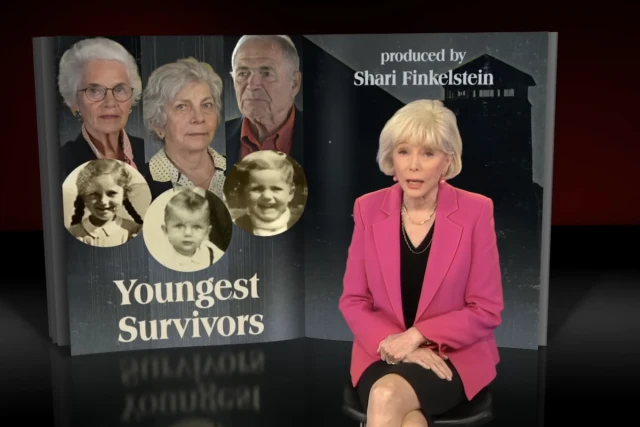
The Nazi regime sent three young Jewish women – Anka, Priska, and Rachel – to Auschwitz in 1944. The married women, from Poland and Czechoslovakia, managed to hide their pregnancies from their captors and later gave birth shortly before the concentration camps were liberated in 1945.
More than 80 years later, their children – now in their 80s – Eva Clarke, Hana Berger-Moran, and Mark Olsky recalled their mothers’ miraculous survival in an interview with CBS’ 60 Minutes reporter Lesley Stahl.
Clark, Berger-Moran, and Olsky revealed that they only learned of each other in 2010.
“We found each other,” Olsky said in the interview.
“We should have been together from day one,” Clarke and Berger-Moran said.
Berger-Moran revealed that her mother’s last conversation with her father was through a barbed-wire fence.
“He told her, ‘Be careful and think only good thoughts.’ He repeated it again and again,” she recalled.
British author Wendy Holden, who covered the unique story in her book “Born Survivors,” revealed that the young mothers succeeded in hiding their pregnancies from the Nazis by wearing loose clothing that had belonged to other Jewish prisoners who were killed.
They were eventually transferred to a labor camp in Freiberg, Germany. Clarke spoke to CBS about the difficulties that her young mother Anka encountered “during the six months there.”
“She became more and more hungry, and it was clear she was going to give birth. If the Germans had discovered it, they likely would have sent her back to Auschwitz to kill her,” her daughter said.
Although Allied forces were advancing in 1945 and Nazi soldiers were killing many of the remaining prisoners, the camp guards – for reasons that remain unclear to this day – did not execute the three women. Instead, they were forced onto a train without food or water and transported for 16 days to the Mauthausen concentration camp in Austria.
During the journey, Rachel, Olsky’s mother, gave birth surrounded by dying prisoners. Anka delivered her daughter after arriving at the camp. The women survived only because Mauthausen had reportedly run out of the gas used to murder Jewish inmates.
“If the train had arrived a few days earlier, none of us would have survived,” Clarke said. Only days later, the Mauthausen camp was liberated by soldiers of the U.S. Army’s 11th Armored Division, part of Gen. George Patton’s Third Army.
Berger-Moran and her mother returned to Czechoslovakia after the war, while Clarke was raised in Britain. Olsky’s family lived in Germany and Israel before settling down in Chicago. The Nazis killed all three fathers.
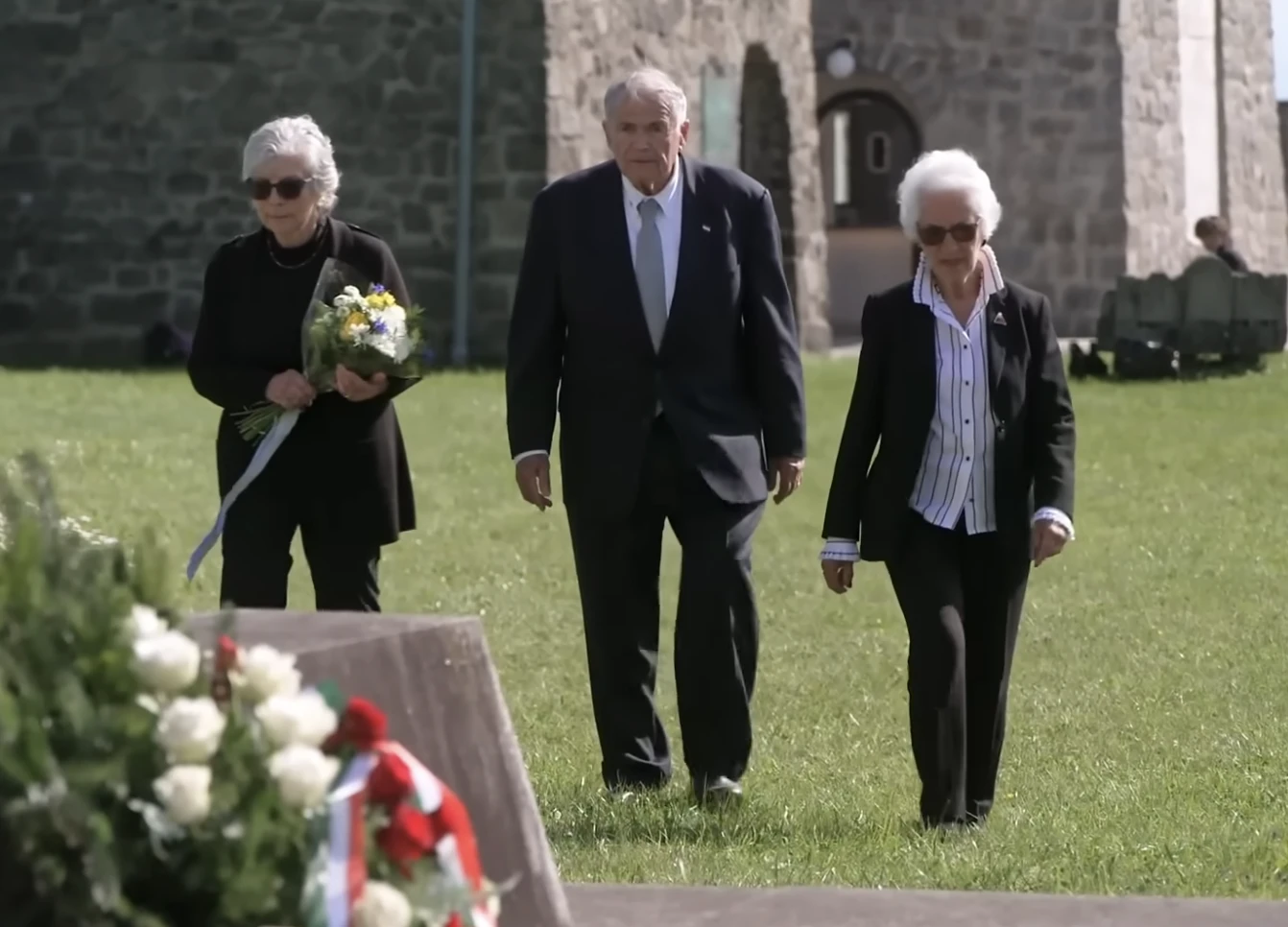
The three surviving children, who between them have 11 grandchildren, only met again in person at the Mauthausen memorial site in May 2010, shortly after their 65th birthdays.
“We sat, talked, laughed, and cried – and compared the three stories,” Clarke said.
There are still fewer Holocaust survivors to bear witness to the tragic chapter of Jewish history. Most recently, Eva Schloss, a Holocaust survivor and Anne Frank’s stepsister, died at the age of 96.
Want to help more people find our reporting from Israel? Leave a quick Google review of our website HERE .
You might also like to read this: