As 196,000 Holocaust survivors remain, Israel shifts duty of remembrance from institutions to individuals




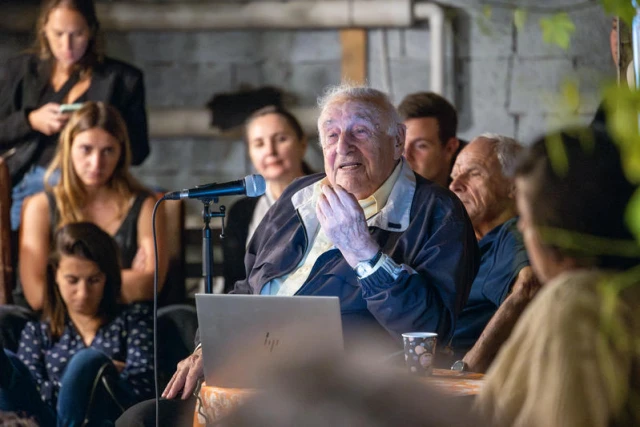
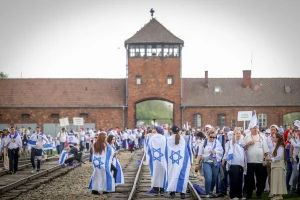
The number of living Holocaust survivors worldwide has fallen to about 196,000, the Claims Conference reported ahead of this year’s International Holocaust Remembrance Day. In response to the dwindling numbers, Israeli organizations are shifting Holocaust memory from institutions to individuals, emphasizing direct, personal engagement with living survivors while they are still here.
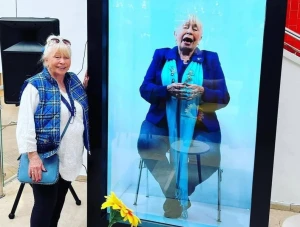
About half of the world’s living Holocaust survivors – spread across 90 countries – now live in Israel, with about 16 % in the United States and roughly 17 % in Western Europe, the report found. Many of those countries focus on preserving survivor testimonies through technology: from recorded testimonies to holograms of Holocaust survivors, first demonstrated at the Illinois Holocaust Museum and Education Center in 2017.
With such a high concentration of Holocaust survivors, Israeli initiatives are increasingly focused on intimate gatherings that foster direct connection and engagement with survivors. One grassroots example, Shabbat Metukah (Sweet Shabbat), brings volunteers into thousands of survivor homes every Friday, delivering food, challah and candles to observe the day, but also breaking bread together.
For those working closely with survivors, preserving history is not an archival task – it’s about the relationships they build and the stories they carry forward. Tali Rozen, assistant department head of Hebrew Language Instruction at Hebrew University, has walked alongside a handful of Holocaust survivor families for the past five years. “They really love the connection and look forward to it every week. I’ve also grown very attached to them over the years,” she says.
Survivor testimony takes many forms, Rozen explained. “There are those who told me their story from the beginning, some have shared bits and pieces over time, and others haven’t touched the subject at all.” She added, “For some of them it’s too difficult, or they were very young and don’t remember so much.”
About 97% of the Holocaust survivors alive today were children during the genocide. Having been born in 1928 or later, their ages now range from 79 to over 100, with a median age of 87.
“What the organization does, that human connection, is so important,” Rozen emphasized.
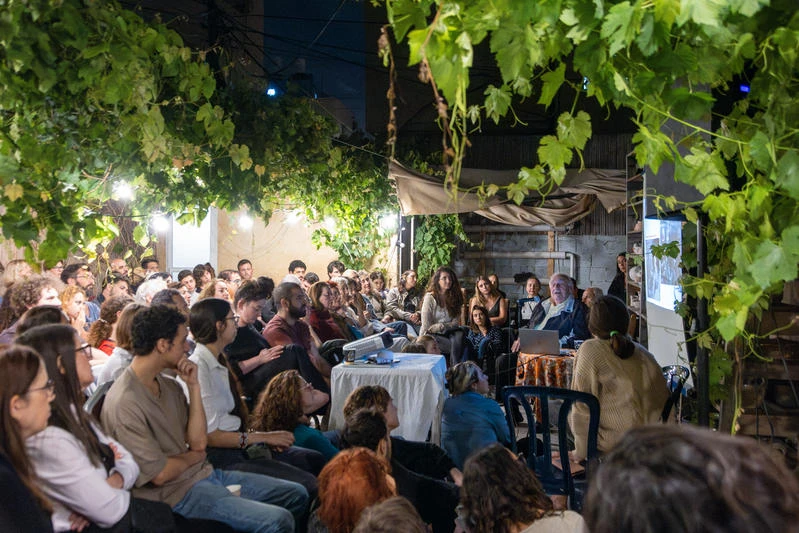
Perhaps the most widely known example of human connection with Holocaust remembrance in Israel is Zikaron BaSalon (“Memory in the Living Room”). What began as a few living-room gatherings empowering Holocaust survivors to open up to their own descendants has grown into a global movement of hosts, participants and speakers who complement official ceremonies and museum technology with smaller, more personal conversations.
These gatherings have become a common way to mark Yom HaShoah, Israel’s national Holocaust Remembrance Day. A 2024 survey by the Geocartography Institute found that over 2 million Israelis took part in Zikaron BaSalon that year alone.
With 90% of living Holocaust survivors projected to be gone within the next 15 years, initiatives like Zikaron BaSalon and Shabbat Metukah pass on the responsibility of remembrance to the next generation.
You might also like to read this: