Hamas' pre-war media propaganda campaign revealed in documents seized by IDF in Gaza
Elements of the propaganda campaign were carried out successfully during the Gaza War



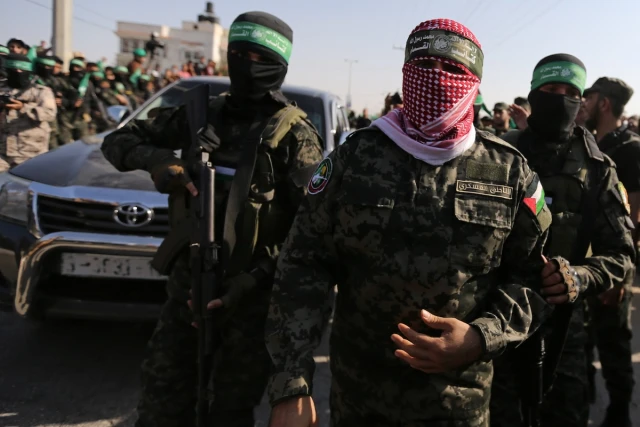
Records recovered by the IDF in Gaza show that Hamas exercised extensive control over supposedly independent Palestinian news outlets.
A new report from the Meir Amit Intelligence and Terrorism Information Center, based on seized documents, shows a multiyear plan to subordinate Palestinian media outlets to a coordinated propaganda campaign aimed at influencing Israelis and fomenting negative sentiment toward Israel internationally.
The documents demonstrate that Hamas had administrative and financial control over several Palestinian news outlets, which were presented as being “independent” media.
The report published by the Meir Amit Center shows the level of detail and planning behind the propaganda campaign, which Hamas viewed as an integral part of its fight against Israel.
One of the documents used to make the report, titled “The 2022 Operational Plan of the Islamic Resistance Movement Hamas – Gaza District,” shows the plans for the terror group’s media activities between 2022 and 2025.
Among the activities of the plan were the dissemination of fake news, the funding of targeted ads to Israeli audiences, the operation of satirical pages to mock Israeli leaders and national symbols, and attempts to demoralize and spread doubt in the Israeli public.
Additionally, the plan included an aggressive campaign targeting Arab countries and elements that promote normalization with Israel, including the creation of “blacklists” and public denunciations.
The media campaign plan was approved by the department’s director, Ali al-Amoudi, a close associate of Yahya Sinwar, who was also released (from Israeli captivity) with Sinwar in the 2011 Gilad Shalit prisoner release deal. The two figures had got to know each other while imprisoned together before their release.
Despite his important role in creating the media department and drafting the detailed 25-point plan, al-Amoudi was rarely seen in public. He was reportedly killed in a series of strikes on Hamas senior figures two months into the Oct. 7 Gaza War.
The media defined three of its most important projects as: strengthening the Palestinian narrative; creating a media discourse targeting the foreign audience; and strengthening the psychological warfare of the media against adversaries and enemies.
The plan defined 25 media activity areas, each with its own plans and tables, along with tasks and subtasks, and estimated pricing for each activity.
The documents reveal that Hamas generally divided up its target audiences into four distinct groups: the Palestinian people, the broader Arab and Muslim world, the international community outside the Middle East, and the Israeli public. It identifies ways to adapt the framing of each message to each target audience.
For example, while Islamic-jihadist terminology might be appropriate for the Palestinian or Muslim audience, the same message would employ humanitarian or justice-focused terminology when targeting the broader international community.
The documents also demonstrate how Hamas chose each media outlet for disseminating different messages. A message for the Palestinian or broader Muslim/Arab audience might be released through official Hamas-owned outlets such as Al-Risalah, Felesteen, Al-Aqsa TV, and Al-Aqsa Radio, the Palinfo website (Palestinian Information Center), the Izz al-Din al-Qassam Brigades website, and official Telegram channels.
However, when the terror group wanted “independent” outlets to carry the message, it would be published on sites such as the Shehab and Safa news agencies, local radio stations, or through “independent” Palestinian journalists on social media. Many of these so-called independent journalists were given training in the use of the tools and in improving their English-language abilities by Hamas.
The documents revealed that the latter agencies were financially dependent on Hamas and received detailed instructions from Hamas regarding media activities.
Normalization with Israel was a topic of particular concern for Hamas, and the plan called for an aggressive strategy of disparaging the idea through recruiting Arab journalists to oppose the idea in editorials and opinion pieces, urging media figures to call for boycotts, social media campaigns against normalization, and even creating “whitelists” and “blacklists” of public personalities based on their stance on normalization.
While al-Amoudi was killed early in the war, many of the strategies defined in his plan were carried out during the conflict, as seen in the multiple stories attempting to depict humanitarian crises in Gaza, or the release of footage showing the targeting and killing of IDF soldiers during the war. Each of these programs used elements of the plan developed under al-Amoudi.
You might also like to read this: