Fitch affirms Israel’s ‘A’ credit rating with negative outlook amid war with Iran


The international ratings agency Fitch decided on Friday to maintain Israel’s “A” credit rating amid the ongoing war against the Islamic Republic of Iran.
"The wars since October 2023 are likely to have a prolonged impact on Israel's potential growth, which is also hampered by long-standing structural challenges," Fitch said in an official statement.
The agency also predicted that Israel’s Operation Roaring Lion offensive against Iran, which has devastated much of Tehran’s military capabilities, would likely reduce the longer-term security threats against Israel.
Fitch noted that Israel’s "fractious domestic politics" could affect fiscal consolidation. The agency said part of this stems from the fact that many Israeli governments have not completed full terms. The current Netanyahu government, however, has served nearly its full four-year mandate. New elections in Israel are scheduled for October.
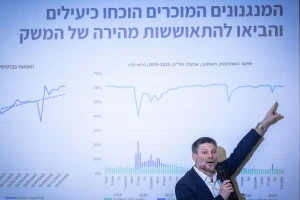
The Israeli economy has displayed remarkable resilience despite over two years of war with Tehran and its regional terrorist proxies Hamas in Gaza, Hezbollah in Lebanon and the Houthis in Yemen.
Last month, the credit agency Moody upgraded Israel’s credit rating from negative to stable, arguing at the time that the geopolitical risks “materially eased from very high levels” following the formal ceasefires with Hamas and Hezbollah.
“While Israel’s geopolitical and security environments remain fragile, the signs of resilience of the economy to the conflicts of the past two years and the evidence of a large but also controlled impact on government finances indicate that the credit risks are now balanced,” Moody said.
The agency further noted Israel’s comparatively strong GDP growth despite the ongoing geopolitical risks in the Middle East.
“Israel’s credit strengths and resilience are evidenced by the relative robustness of GDP growth and continued strong growth and investment in the country’s advanced technology sector, which has continued despite the heightened geopolitical tensions in recent years.”
Hezbollah recently violated the ceasefire by attacking Israel, but the group remains severely weakened and the fighting has had a limited impact on Israel’s economy. Fitch expects military spending to stay high in 2026 amid ongoing operations against Iran and Hezbollah, warning that the budget deficit could widen and potentially risk a downgrade if the conflict escalates further. The agency said Israel is unlikely to reduce its deficit before 2027.
Over the weekend, the Houthis rebel group entered the war by firing ballistic missiles toward Israel. No injuries or damage were reported. The group said the attack was in response to ongoing U.S. and Israeli strikes on Iran.
Senior Houthi official Omar Ma’rabouni said the attacks would “complicate the scene for the Americans and Israelis, which is already complex.”
You might also like to read this: