While Israel fights Iran and Hezbollah, is Hamas rising again?
.jpg "Maayan Hoffman")



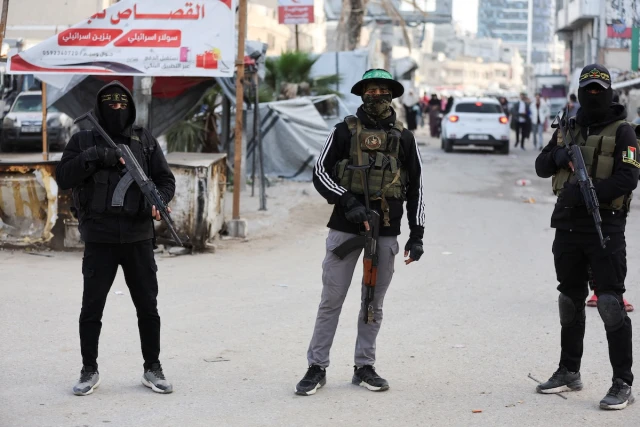
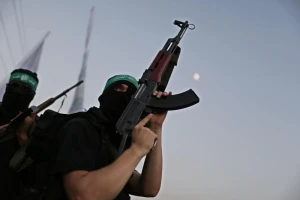
Hamas is rebuilding and retraining even as Israel fights a widening war against Iran and Hezbollah. What that means for Israel’s security is still unclear. The country is not far removed from the worst massacre in its history, carried out by Hamas and its supporters from Gaza less than three years ago.
That trauma still shapes every strategic decision Israel makes today, from how it deploys its forces to how it defines victory in a multi-front war.
At the same time, Israel’s northern border is once again under heavy fire. Drones and rockets are striking communities just one year after residents returned home following nearly two years of displacement caused by Hezbollah, which joined Hamas in its war against Israel.
In the south, many residents have managed to return to their homes and, for now, are living in relative quiet. There are far fewer Iranian rockets reaching the south than the center of the country. However, that quiet comes after two decades of Hamas rocket fire on southern communities and repeated promises by the Israeli government that, after more than two years of war, the border would finally be secure.
Instead, the IDF says its forces remain on high alert along the Gaza border with Israel. Military officials warn that Hamas could attempt to attack troops in Israeli-controlled territory on the other side of the so-called yellow line, or even launch attacks inside Israel itself.
Fewer than three months ago, there was talk of a wider vision for rebuilding Gaza, one that would move the territory forward without the funding and indoctrination that drove terrorism. But experts now say that vision is not taking hold in the 47% of the Strip where Hamas still operates.
Israel currently controls roughly 53% of Gaza. Yet Hamas appears to be regaining strength, with reports suggesting it has reestablished authority over more than 90% of the areas where it remains present.
“Obviously, there is no disarming of Hamas at all at the moment,” according to Brig.-Gen. (Res.) Amir Avivi. “Hamas is rebuilding itself, training again, producing rockets, organizing their forces.”
Avivi told ALL ISRAEL NEWS that while Israel is carrying out pinpointed attacks against some of what Hamas is building, “it’s not a lot.” The broader strategy, he said, is to focus first on Hezbollah and Iran and only afterward return to Gaza to dismantle Hamas.
“I don't think this war will end without reaching the goals in Gaza,” Avivi said. “That’s crucial, but first we’ll have to deal with Iran and Hezbollah.”
At the same time, there are growing concerns about whether Israel can sustain a prolonged, multi-front war. Reports indicate that the IDF has raised “10 red flags,” warning that the military could face serious stress if the manpower shortage is not addressed. IDF Chief of Staff Lt. Gen. Eyal Zamir reportedly warned during remarks to the Israeli Security Cabinet last week that there may not be enough soldiers to fight extended wars on multiple fronts.
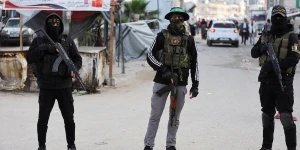
These warnings came on the same day as several incidents were reported in Gaza, underscoring Hamas’s continuing efforts to rebuild. In central Gaza, the IDF carried out a strike against members of Hamas’ elite Nukhba unit during a training session, the same unit that led the October 7 massacre. The IDF said at least four terrorists were killed during the gathering, which it identified as an attempt to restore Hamas’ capabilities. The attack was carried out by the Air Force using a drone.
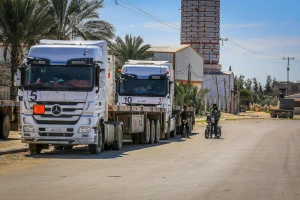
In a separate incident, Israel's Coordinator of Government Activities in the Territories (COGAT) reported an attempt to smuggle hundreds of bottles of engine oil through the Kerem Shalom Crossing. The oil was hidden inside a humanitarian aid shipment of cooking oil coordinated through the United Nations Development Programme. COGAT described the incident as “a serious violation of the aid entry mechanisms,” adding that Hamas continues to exploit humanitarian channels for terrorist activity and military buildup.
COGAT explained that engine oil is considered a restricted dual-use item because it can be used to maintain military infrastructure, including lubricating tunnel ventilation systems, operating rocket launchers, and powering vehicles or generators.
Author and analyst Dr. Einat Wilf echoed Avivi’s assessment, saying that Hamas is rebuilding in the parts of Gaza it controls.
“We know they are training,” she said in an interview with ALL ISRAEL NEWS. “They are probably also finding a way to rearm. They are getting funding. The trucks are entering. So in half of Gaza, where Hamas controls, they are essentially engaging in rebuilding their power, and at least for them, they're heading back to where they were before.”
Wilf said the only mitigating factor is that Hamas does not control the entire Strip, as Israel continues to hold roughly half and maintain its presence there. However, she expressed uncertainty about whether Israel will ultimately return to fully dismantling Hamas once the current war subsides.
She said the outcome in Gaza will depend heavily on Israeli leadership, with some contending that the current situation is “good enough” as long as Israel stays vigilant, while others are pushing for a more extensive vision that includes dismantling the United Nations Relief and Works Agency for Palestine Refugees in the Near East (UNRWA) and pursuing long-term deradicalization of the Strip.
At its core, the debate reflects a deeper question about Israel’s long-term strategy: containment or transformation.
Wilf added that if the Islamic regime in Iran falls, Israel would need to seize that opportunity to cut off the flow of aid and support that could enable Hamas to rearm and rebuild. For now, she stressed, no such shift is taking place.
“Basically, the areas that Hamas controls, it's rebuilding, I’m assuming rearming, definitely retraining, in the area it controls,” Wilf said.
You might also like to read this: