Clarifications on Jeremiah 49 and Iran

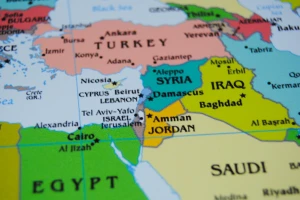
Some evangelical commentators have suggested that Jeremiah 49:34-39 regarding Elam pertains to the current situation in Iran. Those that have made that assumption, interestingly, have expressed a degree of uncertainty about that interpretation. This article may not be a popular message, but the thing about the prophet Jeremiah is that his message was not popular in his day. It is noteworthy that about 80% of Bible prophecy has already been fulfilled. Jeremiah 49 is to be taken with clear-mindedness in the context of Scripture.
Erroneous Analogies
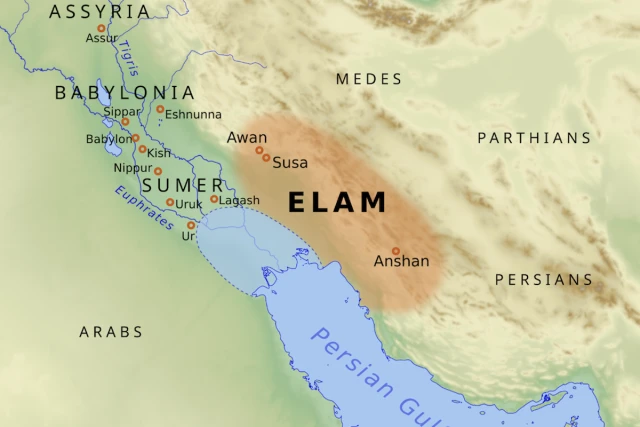
The suggestion that the bow in verse 35 is analogous to ballistic missile launchers may seem valid superficially, however it indicates a gross misunderstanding of the weapon systems. With the bow and arrow, the bow is what propels the arrow. In contrast, Iranian ballistic missiles are self-propelled and the missile launcher is simply a stand for the missile. Neither is “the mainstay of their might” analogous with nuclear weapons in this case. The understanding is that Iran did not yet have a nuclear weapon and that the attacks were a preventative measure. Geographically, ancient Elam was a small fraction of modern-day Iran. Iran is more comprehensively referred to as Persia, as in Ezekiel 38:5.
Scriptural Context
Jeremiah 49 happened long ago. The context of Jeremiah 49 is that Elam is grouped with other nations which were also subdued by the Babylonians. You cannot lift Elam out of context and dismiss the others with which Elam is grouped. Verse 28 even mentions Nebuchadnezzar king of Babylon attacking. And then the last verse, Jeremiah 49:39, says that He will restore the captives of Elam, in the Hebrew. Unfortunately, some translations have the word “fortunes” of Elam, but the word is captives in the Hebrew. He restored them from Babylonian captivity. This is noteworthy because several nations were absorbed into the Babylonian empire never to be restored. One very notable exception of course, is Israel. Elamites are mentioned as being among the gentiles present at Pentecost in Acts 2:9. That time is referred to as the last days in Acts 2:17, as is the time of Jesus’ ministry referred to as the last days in Hebrews 1:2. Furthermore in context, Jeremiah chapter 50 is all about the eventual fall of the Babylonian empire and the significance thereof.
Conclusion
This article is in response to a challenge by Joel Rosenberg regarding the interpretation of the Jeremiah 49:34-39 passage about Elam. I realize that we may not agree on this. To restate in conclusion, this article may not be a popular message, but the thing about the prophet Jeremiah is that his message was not popular in his day. Scripture is to be taken in context literally and objectively, and furthermore we don’t want to miss the essence and application of Scripture. Scripture interprets Scripture. As it says in 2 Timothy 3:16, All scripture is given by inspiration of God, and is useful for teaching, rebuking, correcting, and training in righteousness, and indeed that can be done in a loving way.
You might also like to read this: