When the night seems long: Hope from Habakkuk in the weariness of war


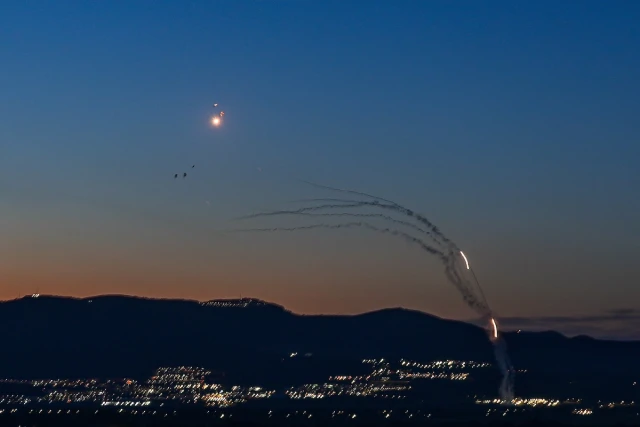
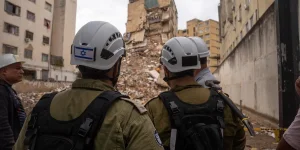
As the current Iran War, known to Americans as Operation Epic Fury and to Israelis as Operation Roaring Lion, rages on many of our friends living in Israel are becoming weary and some are near the point of total exhaustion. At this writing they have spent every night for a month going back and forth from their bedrooms to bomb shelters, often as many as six to eight times an evening. Iranian missiles have fallen in every part of their country killing several and wounding many. The repeated scream of siren warnings sends them running to shelters at all hours of the day and night.
Being surrounded by hostile nations bent on their destruction is nothing new for those living in the state of Israel. Wars and conflicts have been a part of every generation since the birth of the modern Israeli state in 1948. Beginning with the War of Independence in 1948 they have had a succession of conflicts which have called every single generation of their young people to don the uniform of the Israeli Defense Forces and defend their homeland. Following 1948 came the Suez Crisis in 1956, the Six Day War in 1967, the Yom Kippur War in 1973, the First Lebanon War in 1982, the First Intifada in 1987, the Second Intifada in 2000, the Second Lebanon War in 2006, the Gaza War in 2023, and the Twelve Day Iranian War in 2025. Presently the current Iranian War is raging throughout the region. The ever present threat of another war from any of seven fronts constantly hangs over this small state like a cloud. They do not have the luxury of losing one single war. Their very survival is dependent upon victory in each and every conflict they face.
For the Jews amnesia is not an option. The very existence of the Jewish State is due to the fact that they have long memories. Their present situation is not new for them. Twenty six hundred years ago they faced a similar situation with the threat of annihilation which brought them to a state of utter despair and desperation. The Prophet Habakkuk poured out his heart to the Lord. In those days Jews in Jerusalem were not running to bomb shelters taking cover from incoming ballistic missiles. But they faced utter destruction as King Nebuchadnezzar and his Babylonian army besieged the city of Jerusalem, ultimately destroyed it, and took the brightest young Jewish minds back into Babylonian captivity.
Habakkuk prayed asking God what many Jewish people are asking today. “Oh Lord, how long shall I cry and you will not hear?…and You will not save?” (Habakkuk 1:2). With his focus consumed on the situation he bombarded God with questions—Where are you God? Why don’t you do something? He was asking what many are asking today as they hunker in their bomb shelters. Perplexed by this moral dilemma, Habakkuk wondered how God, who called the Jewish people the “apple of His eye,” allowed such pain and suffering to come their way.
But there is hope from Habakkuk in the midst of the very noise of war. He progresses in his book of prophecy from placing all his focus on the situation, asking questions that seem to have no reasonable answers, to looking through through the present difficulty. It was then he began to find comfort and clarity. In chapter two of his prophecy he climbs up in a watch tower, a place of elevated perspective, to “wait to see what He will say to me” (Habakkuk 2:1). Perspective is important. And so is the fact that we still have a God who speaks to us through His word.
The Jews have a perfect illustration of this in their patriarch Joseph. From the human perspective everything that happened to Joseph was bad. Jealousy is bad, being thrown in a pit by your brothers is bad, being sold to the Ishmaelites is bad, lying to your father with the fake news that you are dead is bad, being sold as a slave in a foreign land is bad, being seduced by the master’s wife is bad. Then, when you rejected her advances being falsely accused of attempted rape when you were completely innocent is bad. Finally, being thrown in an Egyptian prison without any due process is bad. Every thing that happened to Joseph from the human perspective was bad. But what did He say when later he revealed himself to his brothers? “God sent me before you to preserve life” (Genesis 45:5). And in Genesis 50:20 he declared, “You meant it for evil but God meant it for good.” How could he say such things? In a word, perspective. Joseph was looking from God’s view point much like the progression we see in the three chapters of the book that bear Habakkuk’s name. Focusing on his problem only brought confusion for Habakkuk. But now, He, like Joseph, begins to view his situation from God’s perspective.
The Jews have a long history of God’s deliverance. The most recurring phrase in all the Bible, appearing on most every page, simply says, “And it came to pass.” Climbing up into their own “watch tower,” Jews seem to keep an eternal perspective and believe that this too shall pass. They know there is hope in the noise of war. Like Habakkuk who reminds us that the “the Lord is in His holy temple” (Habakkuk 2:20) they know that their God has not abdicated His throne. As we read in the prophet Daniel, “The most high still rules over the affairs of men” (Daniel 4:17). Yes, and as the prophet Hanani said to King Asa, “The eyes of the Lord run to and fro throughout the whole earth, to show himself strong in behalf of those whose hearts are fixed on him” (2 Chronicles 16:9). Our Jewish friends have a divine resiliency about them that even in the midst of the weariness of war enables them to hold to the hope to which their ancestors clung down through the centuries, “Next Year in Jerusalem!” They still pray and believe with King David for the “peace of Jerusalem” (Psalm 122).
Habakkuk closes his prophecy with a word of hope to our Jewish friends today in the very midst of the uncertainty of a raging war. Hear him, in the middle of his own similar conflict exclaiming, “Though the fig tree should not blossom, nor fruit be on the vines, the product of the olive oil fail, the fields yield no food, the flock be cut off from the fold, and there be no cattle in the stalls, yet I will rejoice in the Lord; I will joy in the God of my salvation. The Lord God is my strength; He makes my feet like deer’s feet; He leads me to my high places” (Habakkuk 3:17-19). He could say those two “I wills” in verse 18 ( I will rejoice and I will joy) because of the two “He wills” in verse 19 (He will make my feet like deer’s feet to scale over all obstacles and He will lead me to the high places).
God has not abdicated His throne. He is the same God who still declares to the Jewish people, “You are a people holy to the Lord…the Lord your God has chosen you for His cherished possession out of all the peoples of the earth…for you were fewest of all the peoples…but it is because the Lord loves you that He brought you out with a mighty hand and redeemed you” (Deuteronomy 7:6-8).
One of the most repeated commands of the Torah is to remember. When Joshua led them through the Jordan into the Promised Land he did not head straight to conquest the city of Jericho but first stopped at Gilgal. There he built an altar so the people of Israel would always remember how God had led them through the wilderness. For two thousand years of exile, suffering through thousands of pogroms in thousands of different places, the Jewish people, scattered to the four corners of the earth, had long memories. They remembered the Passover each year and ended their Seder meal with the hope that they would share it “next year in Jerusalem.”
This word from the ancient prophet Habakkuk is a call to our Jewish friends today, in the midst of their present struggles and hardships, hunkered in their safe rooms in the noise of war, to remember that they are still the apple of God’s eye and He promised that “He who touches Israel touches the apple of God’s eye” (Zechariah 2:8). Like the Assyrians and Babylonians in bygone days discovered and the Iranians of today soon will as well—it is a dangerous thing to poke God in the eye!
Habakkuk is challenging all of us from the words of the ancient text—“Although the vision tarries…wait for it…it will surely come” (Habakkuk 2:3). In God’s kingdom we live by promises, not by explanations. There was once a Syrian general named Naaman who almost missed his cure for leprosy because He was looking for an explanation and God gave him a promise. God has given us many precious promises. In times such as this it does us well to get up in our own watch tower, look at the situation from God’s perspective, and even though the vision of a brighter day may tarry for awhile…wait for it. The promise is “it will surely come!”
To my friends in Jerusalem tonight, when you see the moon over the Holy City and the stars, still running in clocklike precision, twinkling in space may you remember God’s promise to you through the words of the prophet Jeremiah, “Thus says the Lord who gives the sun for light by day and the fixed order of the moon and the stars by night…if this fixed order departs from before me, declares the Lord, then shall the offspring of Israel cease from being a nation before me forever” (Jeremiah 31:35-36). Take hope. As long as the stars and moon appear in the sky Israel is safe in the arms of God.
And a final word to all our Jewish friends. We evangelicals are not going away. Not now. Not ever. We have your back. We fight with you daily on the 8th front of the war of public opinion. As Ruth said to Naomi, “Your people shall be our people and your God our God.” When the world lies about you, we will shout the truth even louder. When the world seeks to isolate you we will come closer to you. When you feel alone we will comfort you as we are exhorted to do through the prophet Isaiah.
When the night seems long take hope…even in the midst of the noise of sirens and the weariness of war. God has not abdicated His throne.
Am Yisrael Chai is our cry as well as yours. The people of Israel live!
You might also like to read this: