Ukraine agrees to cooperate with Gulf states on aerial defense as Iran war continues




Ukraine announced on Saturday that it had agreed to cooperate on aerial defense with the United Arab Emirates and Qatar amid ongoing Iranian missile and drone attacks.
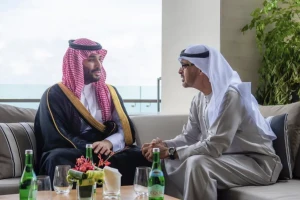
"We are talking about a 10-year partnership. We have already signed the agreement with Saudi Arabia, and we have just signed a similar 10-year agreement with Qatar," Ukrainian President Volodymyr Zelenskyy stated after meeting with top Arab Gulf leaders. Zelenskyy and UAE President Mohammed bin Zayed Al Nahyan reportedly agreed to cooperate on aerial defense and security.
The Arab Gulf states have been hit hard by Iranian drones in the ongoing war. Tehran has launched over 2,000 missile and drone attacks on its Gulf Arab neighbors. Ukraine has, in the past four years, acquired extensive experience in intercepting Russian Shahed drones, which Moscow initially received from Iran. Over 200 Ukrainian military experts have already been dispatched to the Middle East to advise the Gulf states and boost their aerial defenses against Iranian drones in particular.
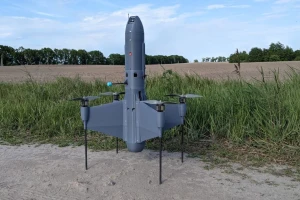
The Arab Gulf states are increasingly interested in acquiring Ukrainian interceptor drones to boost their aerial defenses against Iranian drones. The Ukrainian STING interceptor drones are viewed as a cost-efficient alternative to the far more expensive American Patriot air defense missiles. While the U.S. aerial defenses are more sophisticated, they cost millions of dollars to operate, and therefore are not financially viable in a longer-term conflict, since Iranian Shahed drones cost only between $20,000 and $50,000 each.
Iran’s strategy has relied on overwhelming U.S. and Israeli aerial defenses with relatively inexpensive drones and missiles, each costing tens of thousands of dollars. By comparison, Ukrainian interceptor drones cost only about $2,000 each. This huge cost gap means that intercepting Iranian drones can be far cheaper than the price Iran pays to launch them, potentially making the attacks economically unsustainable.
Operational since last June, Ukrainian drones have reportedly intercepted around 3,000 Russian Shahed drones. Thanks to their simple design and low production cost, Ukraine can reportedly manufacture more than 10,000 units per month.
“When it comes to shooting down massive Shahed attacks, only Ukrainian experience can really help with this today,” the Ukrainian president Zelenskyy recently stated.
"We've received requests in our inbox," an official of the Ukrainian defense company Wild Hornets confirmed, adding, "but we're not reacting to them for now."
The Ukrainian company signaled that it is currently focusing on boosting Ukrainian aerial defenses amid the war with Russia. However, the company stressed that it is ready to export its technology if the Ukrainian government requests it.
The agreement between Ukraine and the Arab Gulf state could be mutually beneficial. In exchange for Ukrainian interceptor drones, the Arab Gulf states would provide Ukraine with energy supplies. Zelenskyy said Ukraine uses 700,000 liters of diesel per month. An agreement with the Gulf states could therefore secure much of Ukraine’s energy needs.
Meanwhile, Israel has reportedly successfully intercepted about 90% of the Iranian drones fired at Israel. However, the Iranian drone threat remains a serious challenge to the Arab Gulf states due to their geographic proximity.
You might also like to read this: