Arab Gulf states seek Ukrainian interceptor drones amid Iranian attacks



Arab Gulf states are increasingly turning to Ukrainian interceptor drones to bolster their air defenses against ongoing Iranian attacks. The regime in Tehran has launched more than 2,000 missile and drone strikes against its Arab neighbors during the current war with the United States and Israel.
Ukraine has gained considerable experience countering such threats after Russia deployed Iranian-made Shahed drones against its cities.
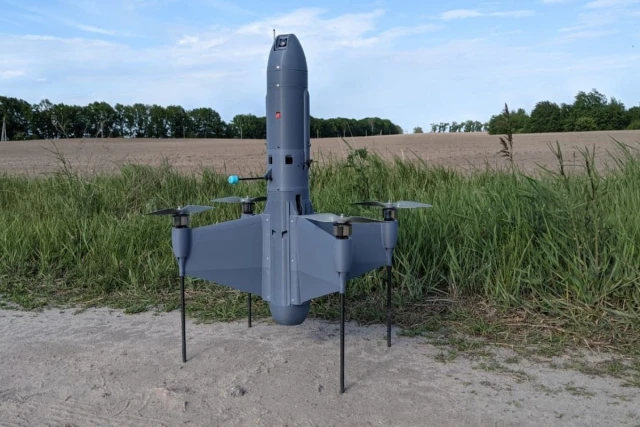
One result of that experience is the development of STING interceptor drones by the company Wild Hornets, which are emerging as a viable low-cost alternative to multi-million-dollar U.S. Patriot air defense missiles. These systems have already proven effective in countering Russia’s drone attacks.
"You can't describe it in words - you need to feel it," explained the test pilot Paskudnyk, a Ukrainian call sign that means “nasty guy.”
The Ukrainian-made STING interceptor drones can fly at speeds of up to 280 kilometers (174 miles) per hour and have a range of around 37 kilometers (23 miles), which falls within typical engagement distances in the Gulf region. In addition, the STING is equipped with a 360-degree antenna that allows it to detect hostile drones from all directions.
Paskudnyk explained that the STING controls can be adapted for first-person-view drones (FPV).
"If you already know how to fly an FPV drone, then moving to this device is a matter of three or four days," he explained.
Ukraine announced last week that it was sending Ukrainian drone experts to help the Arab Gulf states against the Iranian Shahed drones.
“When it comes to shooting down massive Shahed attacks, only Ukrainian experience can really help with this today,” Ukrainian President Volodymyr Zelenskyy argued.
“Ukraine has the greatest experience in the world in countering attack drones, and without our experience, it will be very difficult for the Gulf region, the entire Middle East, and partners in Europe and America to build strong protection,” Zelenskyy wrote in a post on 𝕏.
Ukraine’s experience with drones is partly rooted in the growing military ties between Russia and Iran. In 2023, Tehran and Moscow agreed to build a drone factory in Russia. In response, Ukraine developed innovative and cost-efficient interceptor drones to counter the threat. The Ukrainian government has said that Gulf Arab states and Washington have specifically sought Ukrainian expertise in countering Iranian-made Shahed suicide drones.
The STING interceptors have reportedly successfully intercepted over 3,000 Russian Shaheds since becoming operational in June 2025. Due to its low cost and relatively simple structure, the Ukrainian company can produce over 10,000 units per month.
In addition to their proven efficiency, the Ukrainian STING interceptors cost only around $2,000, a fraction of the multi-million-dollar American Patriot missiles. Furthermore, the Ukrainian interceptors are significantly cheaper than the Iranian Shahed drones, which cost between $20,000 and $50,000 each.
The deployment of the Ukrainian interceptors in the Arab Gulf states will therefore make it significantly more expensive for Iran to launch attacks compared to the cost of intercepting those drones.
The Wild Hornets representative stressed that the company’s main priority is to provide aerial defense for the Ukrainian military. However, it noted that it would export drones abroad if asked by its government.
"We've received requests in our inbox," the company representative said, "but we're not reacting to them for now."
Ukraine reportedly hopes that in exchange for cost-efficient Ukrainian interceptors to the Gulf states, Washington will agree to provide Ukraine with American Patriot missiles.
You might also like to read this: