The secret of the mountain: Why finding Mount Sinai remains an unsolved mystery





For more than 3,000 years, the events at Mount Sinai have stood as the defining moment of the biblical narrative. It is the site where a group of former slaves was forged into a nation, entering into a sacred covenant with the Lord.
Yet, despite its central role in the Bible and its enduring legacy, the precise geographical location of this "Mountain of God" remains one of the greatest mysteries in biblical archaeology. Explorers, scholars, and pilgrims have scoured the deserts of the Middle East, each championing different peaks. Can we confirm that any of those options is truly well-founded?
The pivotal importance of Mount Sinai in the Bible
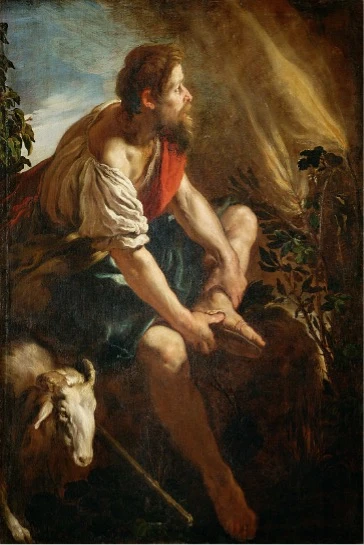
To understand why the search for Mount Sinai is so persistent, one must recognize its overwhelming importance in scripture. Mount Sinai is the setting for approximately two-thirds of the Torah, beginning with Moses’ encounter with the Lord in Exodus 3, continuing with the sons of Israel arriving at the mountain in Exodus 19, and concluding with their departure in Numbers 10. It is the stage for the most significant theophany – a divine manifestation – in Israel’s history, where God appeared in fire, smoke and thunder to deliver the Law.
It was at the foot of this mountain that Moses, serving as an intermediary, received the statutes that would govern the life and worship of the Israelites for generations. The mountain represents the "birthplace" of Israel as a distinct people. The covenant established there – characterized by the preamble of deliverance from Egypt and the stipulations of the Law – was the foundation of the nation's identity. But the Sinai narrative is not limited to the books of the Torah. References and allusions to the giving of the Torah at Sinai are abundant throughout the Hebrew Bible. Starting with Joshua and Judges, continuing with Samuel and Kings, the prophets and the psalms, all mention the narrative of the Lord appearing to Israel at Sinai and the formation of the nation.
So where is Mount Sinai?
Despite the many references to Mount Sinai throughout the Bible, its location remains obscured. Only once do we read of Elijah visiting the mountain, and then never again is it approached. Its memory is spiritual and theological, but in no way a place of pilgrimage.
Being far out of reach of the Israelites, Sinai is also called by different names: Mount Horeb and The Mountain of God are certainly synonyms of Mount Sinai. But some scholars suggest that other names, like Mount Paran, Seir and Edom, may also refer to the same mountain (see Deut. 33:2 and Judges 5:4-5).
Tracking down the location of Mount Sinai may seem a straightforward task with all the detailed information in the books of Exodus, Numbers, and Deuteronomy. However, when scholars tried to gather all that information, it seemed no single site could address it all.
To this day, there is not a single archaeological find that scholars can relate to Mount Sinai and the sons of Israel encamping below it. Many books were written, and documentaries made, suggesting strict identifications that are based on good evidence. But scholars are not in agreement with any of those, and many of these are widely disputed.
The leading candidates in a plethora of theories
From the 4th century to the 20th century, there was one place identified with Mount Sinai. But in the last hundred years, many alternative locations have been proposed. While each mountain offers intriguing possibilities, they all lack archaeological evidence from the correct period, which prevents any of them from being confirmed.
Here are some of the leading site identifications:
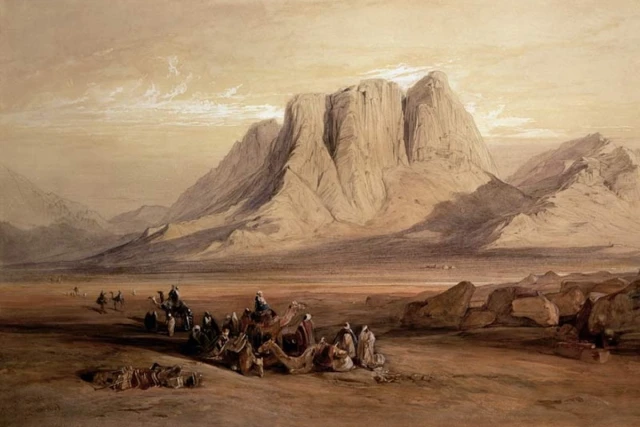
• Jabal Musa (Southern Sinai Peninsula): This is the traditional identification, supported by a history dating back to the fourth century A.D. Located in the rugged granite massif of southern Sinai, it is the site of St. Catherine’s Monastery. Scholars often favor this region because its water economy is uniquely capable of supporting a large nomadic population for an extended period.
A nearby peak, Ras Safsafah, is also a popular candidate; it overlooks a wide plain called er-Rahah, which provides a natural amphitheater where the entire assembly of Israel could have gathered in full view of the mountain.
• Jebel al-Lawz and Mount Badr (Saudi Arabia): In recent decades, theories placing Mount Sinai in ancient Midian (modern-day Northwest Saudi Arabia) have gained significant traction in popular media. Proponents often point to Galatians 4:25, where the Apostle Paul mentions "Mount Sinai in Arabia," arguing that this must refer to the Arabian Peninsula. Some favor Jebel al-Lawz due to its "blackened peak" and local traditions, while others suggest Mount Badr to explain the smoke and fire of the Exodus via volcanic activity.
• Har Karkom (Southwest Negev): Archaeological surveys have identified more than 1,200 ancient sites around this mountain, including what some interpret as a stone altar and twelve pillars. However, these remains date primarily to the third millennium B.C., which is much earlier than the likely timeframe of the Exodus, leading many to reject it.
• Northern Sinai Sites: Mountains like Gebel Helal have been proposed by those who believe the Israelites took a northern route along the Mediterranean coast. However, these peaks are often considered too close to fit the "11-day journey" from Mount Sinai to Kadesh-Barnea, described in Deuteronomy 1:2.
The problem of proof
Despite the passion behind these theories, the scholarly community remains at an impasse. The primary obstacle is the total absence of direct archaeological evidence from the Late Bronze Age – the era most likely associated with the Exodus – at any of these sites.
While it is tempting to demand stone ruins or inscriptions, historians remind us that nomadic and semi-nomadic populations are largely "archaeologically invisible." The Israelites in the wilderness lived in tents and used perishable materials like goats' hair and animal-skin. Such items do not leave an "archaeological footprint" in the shifting desert. Even major Egyptian military encampments from the same era, which were far more substantial and stayed in place for months, have left no trace behind.
Furthermore, geographical arguments often contradict one another. For example, while the Saudi Arabian candidates satisfy those who look for "Arabia," they struggle to reconcile the biblical "eleven-day journey" to Kadesh-Barnea. Traveling from deep in the Arabian Peninsula would require a rate of speed nearly impossible for a group traveling with women, children, and livestock.
Why can't we track back to Mount Sinai?
If Mount Sinai was so important, why did its location fade into obscurity? There are several probable reasons why the exact site is so difficult to trace today:
1. Nomadic transience: The very nature of the Exodus was a journey through a "land not sown." Because the Israelites never intended to build a permanent city at Sinai, they left no monuments or urban layers for future generations to uncover.
2. Elastic terminology: Terms like "Arabia" changed significantly between the time of the Old Testament and the era of the New Testament. In the Roman period, the entire Sinai Peninsula was considered part of Arabia, meaning that a biblical reference to "Sinai in Arabia" would not have pointed specifically to the Saudi Arabian peninsula as it does today.
3. Descriptive rather than proper names: Many of the toponyms in the wilderness itineraries appear to be descriptive rather than proper names of sites. "Horeb" simply means "dry" or "desolate," and "Sinai" may be related to the word for a "bush" as with the burning bush: “Sene.” Besides, the wilderness itinerary lists station names referencing specific past occurrences instead of place names. For example, Sukkoth, means booths; Marah means bitter after the bitter water; Kibroth Hattaavah are the graves of lust, and so on.
But above all stands the theological process in the Bible, of moving from the place where God gave the Law to Israel, into the land of Canaan, where Israel should permanently live. The journey through the wilderness was a trial that shaped the nation, leading them toward the ultimate place where they would worship God – Jerusalem.
Once Solomon’s Temple was built, it became the new place of God’s dwelling, and the Ark – containing the tablets from Horeb – was housed there. As the focus of worship shifted to the permanent Temple, the remote desert peak lost its practical relevance.
In the end, perhaps the mystery of Mount Sinai's location is intended to keep our focus on the message rather than the place.
“A time is coming when you will worship the Father neither on this mountain nor in Jerusalem… a time is coming and has now come when the true worshipers will worship the Father in the Spirit and in truth, for they are the kind of worshipers the Father seeks.” (John 4:21,23)
You might also like to read this: