Ancient ‘Pilgrimage Road’ ascending to Temple Mount now open to the public






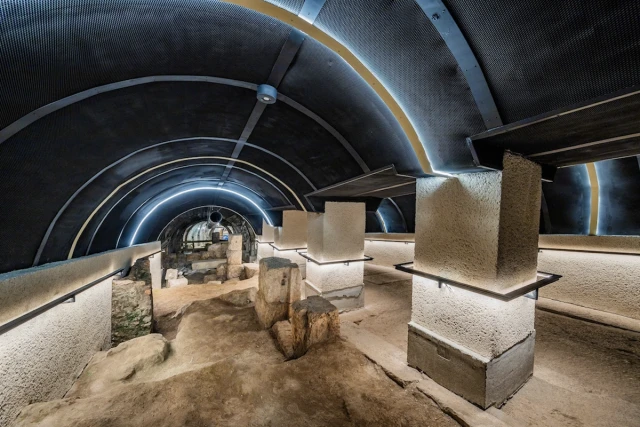
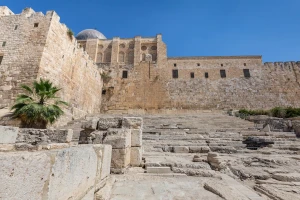
The first-century Pilgrimage Road leading up to where the temple once stood has finally been opened to the public, allowing visitors to retrace the steps of ancient Israelites coming to worship.
Many have caught a glimpse of the ancient paved path with broad steps, which was discovered underground near the Temple Mount in 2004. Some have even had the privilege of walking in the footsteps of Jewish pilgrims who came to worship God during the Second Temple era. But this week, after 13 years of painstaking work, the City of David, together with the Israel Antiquities Authority (IAA), announced that it is now open to everyone.
“We have been waiting for this moment for 2,000 years,” they said. “For many generations, the road was buried under layers of destruction. In recent years, we have been privileged to re-expose its entire length in a joint project between the City of David and the Israel Antiquities Authority.”
In Exodus 23:14–17, the Israelites were commanded to visit the temple three times a year for Passover, the Feast of Weeks (Shavuot) and the Feast of Tabernacles (Sukkot). They would travel from all over the country to worship – offering sacrifices and joining together for the Pilgrimage Feasts of the Lord, known as “regilim” – and millions would have ascended the shallow-stepped path up to the temple.
Archaeologists have uncovered many ritual baths (mikvaot) around the southern side of the temple that pilgrims would have used to become ritually pure before their ascent. Some of the Southern Steps leading up to the Temple Mount are also original, dating back to the time of Jesus. Those wishing to walk the path of ancient Jewish pilgrims will now be able to follow the road all the way up from the Pool of Siloam in the City of David to the Temple Mount area.
Also known as the Stepped Street, archaeologists identified the ancient paving stones after a sewage pipe burst in the Palestinian neighborhood of Silwan next to the City of David in 2004. A portion of the path had already been discovered by British archaeologists in the late 19th century, but in the years following the burst-pipe incident, excavations began in earnest. Eventually, the entire 600-meter (1,970-foot) thoroughfare, trodden by thousands of feet, was revealed.
Archaeologists discovered numerous coins and a “special weighing table,” giving insight into the practice of purchasing animals for sacrifices, as it was much easier for pilgrims to carry coins rather than livestock on their journey to Jerusalem. Many other artifacts were found in a drainage channel beneath the road, where it seems Jewish rebels hid from the Romans.
According to the City of David, “cooking pots, oil lamps, hundreds of bronze coins from the Great Revolt and even a sword belonging to a Roman legionnaire, were all discovered in the channel.” They also explain that the road was “most likely built by the Roman Governor Pontius Pilate, also known for sentencing Jesus to crucifixion.”
Israeli Prime Minister Benjamin Netanyahu, U.S. State Secretary Marco Rubio, and U.S. Ambassador to Israel Mike Huckabee all attended the event with IAA Director Eli Escusido, Jerusalem Mayor Moshe Lion, and other government and high-ranking officials, the Jerusalem Post reported.
While Netanyahu said the Pilgrimage Road represented the ancient bond between the Jewish people and Jerusalem, Huckabee described the event as a moment that “lets the stones speak.”
David Friedman, the former U.S. Ambassador to Israel, also congratulated the joint effort on 𝕏, describing the Pilgrims’ Road as “one of the world’s most significant archaeological discoveries and proof that the Bible is a matter of fact, not simply faith.”
Want to help more people find our reporting from Israel? Leave a quick Google review of our website HERE .
You might also like to read this: