UAE & Saudi Arabia narrowly avoid crisis over Yemen dispute as Emiratis agree to withdraw forces
Withdrawal follows Saudi airstrike on Emirati-affiliated shipment of equipment



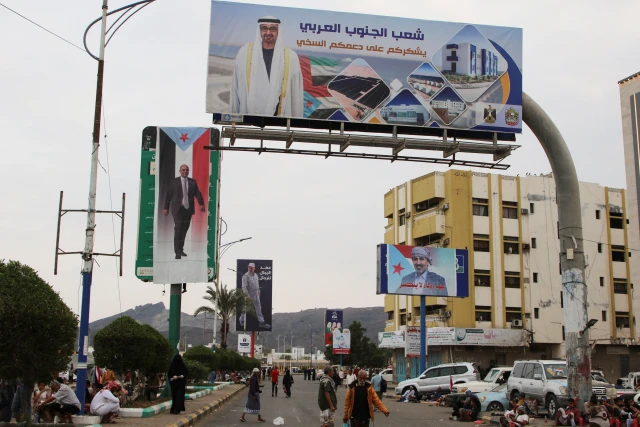
The Middle East narrowly avoided a major crisis on Tuesday, as the United Arab Emirates (UAE) announced the withdrawal of its forces from Yemen under massive diplomatic pressure and after an airstrike from Saudi Arabia on its forces.
The developments of the last days constitute a shocking deterioration of relations between the two countries that have been close allies for the last decades.
Saudi Arabia had set a 24-hour deadline for the UAE to withdraw its troops from Yemeni territory on Tuesday in a highly unusual and sharply worded statement. The kingdom said its national security was a “red line” and noted “that the steps taken by the sisterly United Arab Emirates are extremely dangerous.”
This came after the Saudi Air Force bombed a shipment it claimed was meant for the UAE-affiliated forces of Yemen’s Southern Transitional Council (STC), which opposes the Saudi-backed and internationally recognized government of Yemen, the Presidential Leadership Council (PLC).
The background to this deterioration is the years-long and ongoing Yemeni civil war. When the Houthis took over large parts of the country in 2015, the government fled to the southern port city of Aden.
Saudi Arabia set up a coalition, which prominently included the UAE, to fight against the Houthis ostensibly on behalf of the Yemeni government. However, the war reached a stalemate that largely continues until today.
Meanwhile, the Yemeni government transitioned into the Presidential Leadership Council, which, as of late 2025, included representatives of the STC, which represents the interests of the southern part of Yemen and includes voices calling for a return to independence for the region.
The PLC is mainly backed by Saudi Arabia, while the STC has become allied with the UAE and is dependent on arms shipments from the Emirates.
In late December, forces of the STC took over large parts of the territory of southern Yemen, overrunning PLC forces to capture the Hadramawt and Mahrah provinces on the Saudi border that include areas with large oil reserves. They also seized the presidential palace in Aden.
The STC argued that this move was necessary to restore stability and was aimed at fighting the Houthis, as well as other terror groups like ISIS and al-Qaeda.
According to Al Jazeera, the STC now controls about 52% of Yemen’s territory, while the Houthis continue to hold around a third of the country, including most population centers. This left the PLC with currently around 10%.
However, Saudi Arabia apparently did not agree with the STC’s arguments, despite itself being interested in fighting the Houthis.
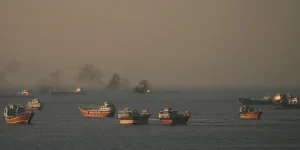
Early on Tuesday morning, Saudi Arabia bombed a dock in the port of Mukalla, after two UAE-affiliated ships had allegedly entered the port without coordinating with the anti-Houthi coalition.
Saudi Arabia argued they had unloaded large quantities of weapons and combat vehicles “to support” the STC, while the UAE denied this and argued the shipment contained vehicles meant for its own forces.
The strikes targeted the dock and didn’t cause casualties or collateral damage, according to Saudi Arabia.
After the airstrike, the UAE said it “categorically rejects any attempt to implicate it in the tensions between Yemeni parties and condemns the allegations of pressuring or directing any Yemeni party to carry out military operations that threaten the security of the brotherly Kingdom of Saudi Arabia or target its borders”.
Despite this, it later announced it would “voluntarily” withdraw its forces from Yemen, leaving the STC in a tenuous position but averting a full-blown crisis for now.
Secretary of State Marco Rubio quickly addressed the deterioration between two important U.S. allies, urging “restraint and continued diplomacy with a view to reaching a lasting solution”.
According to the state department, Rubio called the Saudi and UAE foreign ministers to discuss the tensions in Yemen and other issues affecting security in the Middle East.
Despite the escalation apparently being averted for now, the last months have brought to light Saudi-UAE tensions across several arenas, including Yemen, but also Sudan, where the two countries are also backing rival sides.
This intensifying competition also threatens to pull Israel into it, as the Israel-UAE alliance has strengthened while efforts to normalize with Saudi Arabia are stalling.
Several UAE-backed actors have recently sought relations with Israel. A diplomatic source told Kan News that the STC is seeking recognition and support from Israel, arguing that support for the establishment of a state in southern Yemen, with Aden as its capital, could strengthen the parties’ shared interests.
This could also be seen in the reactions to Israel’s recognition of Somaliland, which Saudi Arabia condemned while the UAE, which is the most important backer of the breakaway region, kept silent.
You might also like to read this: