High-stakes chess in the Red Sea: Why Israel recognized Somaliland





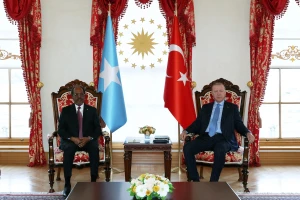
In a surprising move, Israel’s leadership decided to draw even more international condemnation by recognizing the breakaway state of Somaliland as an independent state last weekend, becoming the first UN member state to do so, alongside Taiwan.
Despite the mostly negative reactions, this has the potential to be a strategic boon to the Jewish state, strengthening existing alliances while checkmating the Iranian regime’s last (nearly) untouched proxy force in the region.
However, it is also not without significant risks, as no other country has so far joined Israel’s recognition, while U.S. President Donald Trump quipped, “Does anyone know what Somaliland is, really?”
What’s Somaliland?
Somaliland is the northwestern province of the internationally recognized Republic of Somalia, a country that has been mired in a civil war for over 30 years.
For those mocking why Israel would engage Somaliland: look at the map.
— Mark Dubowitz (@mdubowitz) December 26, 2025
Somaliland sits on the Gulf of Aden, next to the Bab el-Mandeb—a chokepoint for global trade and energy. Across the water are Iran-backed Houthis firing on Israel & shipping. Somaliland offers stability,… pic.twitter.com/N7o4L5T1jd
Large parts of Somalia are currently controlled by terror groups affiliated with al-Qaeda and Islamic State (ISIS), while the government is dependent on foreign support from the U.S., but also from Egypt, Turkey and Qatar.
The country sits astride the Horn of Africa, opposite Yemen on the Gulf of Aden and near the Bab al-Mandab strait, where strategic shipping lanes usually carry roughly 12% of global trade – when the Yemeni Houthis don’t attack ships there.
The former British colony of Somaliland had joined the formerly Italian-ruled portion to declare independence and establish the state of Somalia in 1960. However, the regional government declared it would break away from the union at the start of the civil war in 1991.
Old map of Somaliland.
— Max 📟 (@MaxNordau) December 28, 2025
It was always Somaliland.
It was never Somalia. pic.twitter.com/ZmKPVBjpJe
Since then, the fledgling country has built itself into the only stable, democratically ruled and relatively peaceful – albeit dirt-poor – country in its corner of the world.
Its population of roughly six million people is nearly 100% Sunni Muslim, and mostly part of the Isaaq clan that Somaliland argues was subjected to a genocide at the hands of the central government in the late 1980s, which killed up to a claimed 200,000 people.
Notably, the father of U.S. Rep. Ilhan Omar, who is currently involved in a scandal surrounding Somali immigrants in Minnesota, was among the leading figures of this alleged genocide.
When the Somali regime, led by Siad Barre, committed a massacre against the people of Somaliland, the world was silent. But Israel was not silent.
— Danny Danon 🇮🇱 דני דנון (@dannydanon) December 29, 2025
In 1990, Israel’s then-ambassador to the UN, Yohanan Bein, sent a letter to the UN Security Council warning about the massacre… pic.twitter.com/wsrvNBaGQc
Israel’s announcement of recognition
Despite the lack of formal recognition, Somaliland has good relations with several countries, chief among them the United Arab Emirates and neighboring Ethiopia. A 2024 strategic memorandum of understanding granted the landlocked Ethiopia access to the strategic port of Berbera, which is being developed with the help of the United Arab Emirates.
However, the hints that Ethiopia would become the first to recognize Somaliland’s independence have not materialized, and so, Taiwan – which itself is widely not seen as a legitimate state – was the only country to recognize Somaliland until now.
But over the past year, Israeli Foreign Minister Gideon Sa’ar, former National Security Advisor Tzachi Hanegbi and the Mossad began an intensifying dialogue, sending teams for visits and hosting Somaliland’s leaders several times, according to press reports.
Sa’ar even recently revealed that Somaliland’s president made a secret visit to Israel. Finally, Prime Minister Benjamin Netanyahu approved the announcement of recognition in October, and the countries drafted a joint declaration, waiting for the right moment, as Somaliland prepared for potential revenge attacks by the Houthis in Yemen, Ynet News reported.
When the time came, near-universal condemnations followed. “They are all high-minded when it comes to Palestine and efforts to recognize a Palestinian state. Here, when there is a state that emerged from terrorism and from a desire to destroy another people, they object,” an Israeli political source told Ynet.
Somaliland’s unique strategic location
In addition to concerns of justice, the reasons for Israel’s risky move to be the first country to recognize a breakaway, Muslim and Arab state, go much deeper.
“Look at their strategic location and you’ll understand everything,” the same Israeli source told Ynet.
The Gulf of Aden and the broader region of the Horn of Africa have been at the center of a highly complex regional tug of war for power and influence for some years now.
Israel's historic recognition of Somaliland as a sovereign state, just announced today, cracks open a highly strategic region: direct access to Berbera port, enhanced Red Sea security amid lingering Houthi threats, countering Iranian influence, and reliable diversification of… pic.twitter.com/tYPjiSOJQz
— Velina Tchakarova (@vtchakarova) December 26, 2025
To make complicated matters (overly) simple – at the moment, this conflict pits the UAE, Ethiopia, and now Israel, against a tenuous alliance of Egypt, Saudi Arabia, Iran, and Turkey, while the U.S. sits on the sidelines (for now).
The UAE was one of the first countries to recognize the strategic potential of Somaliland, establishing a military base in the city of Berbera while investing millions of dollars to build up its port into a trade hub capable of serving as an outlet for Ethiopia, as well as a waystation on the shipping lanes connecting East Asia to Europe through the Red Sea.
The UAE’s activities in Berbera reportedly include building a deep-water port, as well as a military base with an airstrip capable of serving as a transportation hub – for example, to supply forces that are currently fighting in nearby Sudan and Yemen and are affiliated with the UAE.
The Air Base in Berbera was built by the UAE. Many emirati-operated military cargo & government planes were observed landing in the region since 2023.
— MenchOsint (@MenchOsint) December 28, 2025
2023: 2025: https://t.co/Fj4Iqo5KFn pic.twitter.com/qDaLWU0B62
The interests of Saudi Arabia and the UAE have started to diverge in recent years in several areas. Since Saudi-affiliated forces are fighting against UAE-backed forces in Sudan and Yemen, Saudi Arabia also opposes the independence of UAE-supported Somaliland.
Also strongly opposing the UAE’s activities in Somaliland is Turkey (which has been a rival of Saudi Arabia). According to a report by the Israeli think tank INSS, “For Turkey, Somalia is a central ally in the Red Sea region, approaching the status of a client state.”
Therefore, Turkey wants to prevent Somaliland from breaking away from Somalia, taking hundreds of kilometers of coastline, as well as potential resources.
Big deal for Red Sea Security and expansion of Turkey’s footprint:
— Zineb Riboua (@zriboua) February 21, 2024
Today, Somalia’s Council of Ministers has approved a 10-year Maritime Security Agreement with Turkey, granting Turkey full authority over Somalia's territorial waters. pic.twitter.com/3HPAMY34lX
Egypt is opposed to Ethiopia due to a simmering conflict over the headwaters of the Nile River, and doesn’t want Somaliland to become Ethiopia’s main trade outlet to the sea. It is also on the Saudi side in the Sudan War and, therefore, doesn’t want the UAE to be able to supply its allies there from Somaliland.
Meanwhile, Iran wants to prevent Somaliland from becoming an Emirati, and possibly Israeli, base for surveillance or even direct military operations against the Houthis, its last proxy force that hasn’t been significantly weakened in recent years.
In this tangled web of alliances, the regional hegemon, which could decisively tip the scales to one side, sits on the sidelines.
The Trump administration has not publicly supported Israel’s recognition, despite signs that it is weighing the situation of Somaliland.
In May, U.S. military officials visited Somaliland, Republican Sen. Ted Cruz calling on the president to recognize Somaliland in August. The government expressed its desire to join the Abraham Accords, which is usually music to the ears of President Trump.
🚨 #SomalilandRecognition by Israel is another layer on the strategic landscape of the Red Sea.
— Alexandros Itimoudis (@qasireu) December 26, 2025
🇦🇪The UAE are already present in Berbera port, while securing the entrance of Bab el-Mandeb through the Socotra Island.
🇹🇷🇸🇴Turkey, with its military base in Somalia, is already an… pic.twitter.com/3VyPVTpc8m
However, the U.S. has long upheld a default position of supporting the territorial integrity of states. In addition, Egypt, Saudi Arabia, Turkey and Qatar are close allies in the region, which the U.S. doesn’t want to antagonize.
Why Israel’s risky move?
All this leaves the question of why Israel decided this was the time to enter this tangled web of overlapping conflicts, which has only earned it more criticism on the international stage without tangible benefits for now.
One aspect is to hurt its enemies, mainly Iran and the Houthis. The immediate threats issued by the Houthi leader demonstrate that the Yemeni terror group is concerned about Israel gaining a potential base of operations that would allow it to gather intelligence and possibly launch operations without first having to bridge the 1,700 kilometers (1,100 miles) with its Air Force or navy.
The same goes for Turkey, which is working to establish a military presence on Israel’s doorstep in Gaza and Syria. Expanding Israel’s influence in Somaliland will give Israel leverage to squeeze Turkey’s interests in the region.
The other side of the coin for Israel is expanding its alliance with the UAE while strengthening ties with Ethiopia, in addition to gaining a potential new Abraham Accords partner in Somaliland.
However, there is a danger that if Israel isn’t the first to trigger a diplomatic avalanche of recognition, it could be left alone on the ledge. Most crucial in this context is recognition by the United States.
As INSS warned several months ago, “an Israel–Somaliland agreement might appear to strengthen Israel’s regional standing,” but could also harm Somaliland through the significant backlash in parts of the Muslim world.
If this causes Somaliland to feel the need to walk back its warm embrace of Israel, it could contribute to the efforts by Israel’s enemies to make normalization a toxic proposal, tarring efforts to broaden the Abraham Accords for years to come.
Yoni Ben Menachem, a senior researcher at the Jerusalem Center for Foreign Affairs and Security, argues that the reaction in the Arab and Islamic world to Israel’s move already demonstrated its importance.
“It’s clear that we’ve hit a sensitive nerve,” said Ben Menachem, “This is a move that shakes the system, and that is why the opposition is so fierce.”
Want to help more people find our reporting from Israel? Leave a quick Google review of our website HERE .
You might also like to read this: