Why this Iranian uprising is different – interview with Iranian dissident and campaigner Gio Esfandeyari



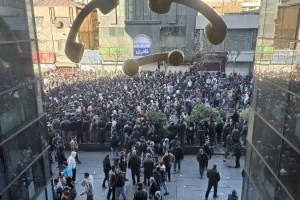
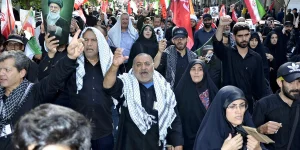
“You can see the difference from last time,” said exiled Iranian dissident, Gio Esfandeyari, with Lotus Advocacy, a think tank focused on freedom and democracy. “Before they called out, 'Women! Life! Freedom!' but this time they are more radical. They’re calling for regime change, for the leader of the revolution, Prince Reza Pahlevi. People in Tehran and in other big cities are calling for him, saying, 'Zandeh bad shah,' which means, 'Long live the king!'… People know who they want, and they call out in the middle of the street,” he said.
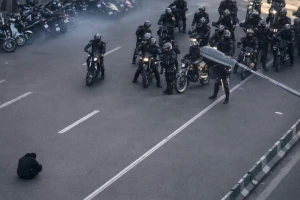
Esfandeyari continued, “The guy that sat in the front of the security forces, his solo protest was overwhelming and blowing my mind. The bravery of him is something else. He's a good example for everyone, I think.”
That one man’s seated protest brings to mind the man who faced advancing tanks in Tiananmen Square. Esfandeyari affirmed, “A lot of people compared that with what happened a few years ago in China. Yes, yes. They put pictures next to each other.” He reflected, “When you don't have anything to lose, it's better to fight with your enemy. What else is he gonna lose? That was the message I got from him.”
“Don't forget the Iranian passport was one of the strongest passports before 1979, and Iran was one of the richest countries in the region,” Esfandeyari said. “Even some of the European countries back in the day, in the 1970s, were struggling with inflation, but they had to come to Iran and ask the king and the prime minister back to borrow (sic), for a loan.”
“Iran changed the constitution and gave a right to women to vote before Switzerland. The country was quite advanced, very westernized, civilized.”
Conceding that there were also problems under the Shah, he said, “You can't find anywhere perfect, but considering the time in the '70s with the other countries in the Middle East, Iran was in a much, much better place than today.”
“People working at the Grand Bazaar, they all shut down their shops. And these people had a significant impact on the revolution in 1979. They were very religious back in the day. They called out for Khoumeni in 1979, but today you see the complete difference. They’ve changed. They want a regime change, but they want Pahlavi this time.”
According to Esfandeyari, the economic crisis, the water crisis, along with the constant human rights abuses are all pushing many to become more radical.
“Iran at the moment is struggling with the water shortage… and they execute so many people on a weekly basis and nothing's going to change so long as this regime stays in power. The country is going downhill and nothing is going to get better.”
Iran's currency is spiraling out of control, with 42,000 rial now worth just $1. The 12-day war with Israel broke the illusion of the regime’s power and it also broke the bank. Iranians want an end to the proxy war. Now people are calling out with courage and desperation, “No more poverty, no more tyranny!” The protests are non-violent, seeking peace and democracy, and an end to the Iranian Revolutionary Guard Corps (IRGC).
There are still some (lefties and Marxist Islamists, according to Esfandeyari) insisting that people don’t want Pahlavi, and that slow change is better than another revolution. However, he insists, “The message in the street is very clear. People want regime change and they want to go back to Pahlavi’s time.”
Esfandeyari claims that much of the negative conception of life under the Iranian monarchy is due to propaganda, an idea that comes through in Scott Anderson's new book about the fall of the Shah, “King of Kings” (2025), which describes how Iran fell from being rich and powerful into the Islamic terror state it has become today.
“After 44 years, Iranian people found out that whatever the Iranian regime told them about the Pahlavis, the royal family, they were all lies. The reason people are chanting in the street is because the Pahlavis, for Iranians, means reformation, restoration, equality, modernism, freedom, and back to the place that they had among the global family,” Esfandeyari explained.
Author and investigative journalist Ashley Rindsberg, who studies systemic bias on Wikipedia, noted that just as the platform tilted against Israel – removing mentions of Hamas terror attacks en masse – it is now doing the same in favor of the Islamic regime in Iran, systematically erasing widespread human rights abuses. Similar pre-Internet but equally subversive tactics of the time were employed to oust the Shah, Esfandeyari said. “Like what they’re doing today with Israel and Palestine, they do the same things with the Iranian regime. They tried to legitimize the extremists.”
“There wasn't enough information to educate people about the things happening inside the country,” he said, when asked what went wrong under the Shah. Pointing to the developments, infrastructure and social programs that were put in place but not advertised, he said, “If there is a bridge, there is a road, it’s because of Pahlavis. If there is art, if there is a culture, because of the Pahlavis.” But he believes the Iranian people were not aware of it. “They need to give public information to the people,” Esfandeyari said.
According to Esfandeyari, some of the disquiet that grew against the monarchy was ironically due to a program sending Iranian students to Western universities in Europe and the U.S. to “help with the progression and advancement” in Iran. “Instead, they turned their face against the king,” he said, adding that even a childhood friend of the king, Hossein Fardoust, turned on them after studying in Switzerland. He described a general breakdown of communication between the government and the people.
“Some people were opportunists, betraying the king and Iranians,” Esfandeyari said. “It’s very important to have people who are patriotic, who are really faithful to the king and to Iranians, to update him with the latest information, and things happening inside the bazaar, inside with hearts of Iranians in cities, towns and villages,” saying that while hearts had been turned against the monarchy, the king hadn’t been told the truth of what was going on.
Esfandeyari called for greater patriotism and stronger two-way communication between the government and its people.
“There should be enough information to educate people… That's going to close the door to propaganda. Otherwise, we're going to have Islamic Marxists with their lies come to brainwash the people again,” he warned. “If you want to give them freedom, you need to teach them a bit more about democracy.”
“In the 70s, Iran was a hotspot for the Europeans, (and) the Americans to travel,” said Esfandeyari, explaining how tourists would come to swim, ski and explore Iran’s rich culture. “The same thing now happening in Turkey and Dubai used to be the case in Iran. And God willing, it will be again one day, soon. This regime will go.”
“We will see a free Iran one day, hopefully – if God wills, very soon. I ask people in the West to support the Iranian cause, because if we support each other, we're stronger, and that's going to help us advance and bring change sooner.”
You might also like to read this: