As anti-regime protests in Iran continue into fourth day, security forces ramp up suppression with arrests and tear gas
Protests expand to universities, regime sharpens its tone toward protesters





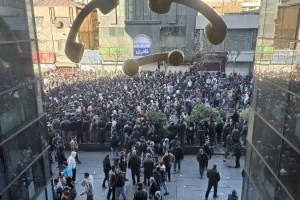
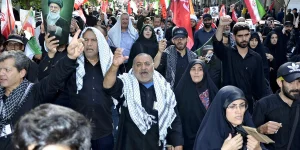
Anti-regime protests continued into early Wednesday morning across Iran, expanding to more parts of society after they began as economic protests by bazaar merchants in the capital of Tehran on Sunday.
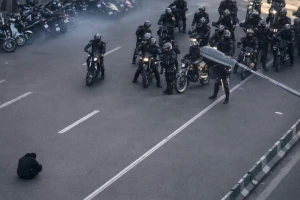
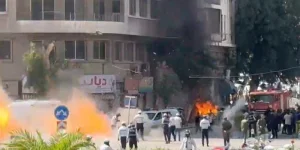
Opposition outlets said that tens of thousands of protesters marched on Tuesday, as the regime’s security forces intensified the crackdown with sweeping arrests and the use of tear gas that led to clashes with the protesters.
In the capital, large clashes erupted after regime forces and pro-government students imposed a full lockdown on the main campus of Tehran University.
🚨 “Death to the Dictator”
— Kasra Aarabi (کسری اعرابی) (@KasraAarabi) December 30, 2025
— the slogan chanted by students at Tehran’s Beheshti University.
Students are now joining the protests in Iran. What began as a reaction to economic turmoil is now transforming into anti-regime unrest, with the potential to spiral further. pic.twitter.com/k7b1TY8bdV
Other clashes were reported from the city’s central bazaar, while protesters in the western city of Kermanshah reportedly pushed back forces of the regime’s feared Basij paramilitary militia by throwing stones at them.
According to opposition-aligned outlet Iran International, demonstrations also took place in Hamadan, Arak, and Sabzevar on Tuesday night, with protesters chanting slogans for the return of monarchy.
The regime announced Tuesday that several government offices, universities, and workplaces would remain closed on Wednesday, citing efforts to conserve energy, without referencing the protests.
After President Masoud Pezeshkian on Tuesday struck a conciliatory tone toward the protesters, instructing the interior ministry to engage with the protesters and help the government “respond responsibly,” regime officials sharpened their rhetoric.
Judicial officials warned of firm legal responses to unrest, and Interior Ministry deputy Mohammad Bat’haei on Wednesday likened the protests to a “war” of social cohesion and described them as efforts to use financial pressure to fuel “hostile psychological operations.”
“Economic fluctuations are not just a matter of numbers and statistics; they directly affect people’s livelihoods, psychological calm and social relations.”
“Today the war is not only on the military field; the main war is the war of wills and social cohesion,” Bat’haei said.
🚨 IRGC sources have told us the regime has issued a “yellow” threat level in response to the Iran protests.
— Kasra Aarabi (کسری اعرابی) (@KasraAarabi) December 30, 2025
What happens if this escalates to “red” — a full state of emergency?@SaeidGolkar and I break down how the IRGC responds when a red threat level is triggered.
🧵👇1/ pic.twitter.com/xYnwPZakn8
Despite the protests being the largest in three years, Kasra Aarabi and Saeid Golkar from the think tank United Against Nuclear Iran wrote on 𝕏 that IRGC sources said the regime has so far only issued a “yellow” threat level in response to the protests.
This is the second of the regime’s national-security situational threat levels, indicating an “abnormal” situation. “Orange” indicates an “extraordinary“ situation, while “Red“ means the situation is “critical” for the regime’s stability.
During the 12-Day War in June, the highest alarm level was triggered. “Since 2007, the regime has built a vast suppressive network across all levels of Iranian society – largely ignored by foreign powers and the opposition. This extensive apparatus’s interventions are guided by the threat levels,” Aarabi wrote.
He went on to describe the security forces at the disposal of the Revolutionary Guard, noting they are “the biggest roadblock to regime change in Iran.”
“It has brutally & successfully suppressed protests in Iran. The weakening of this apparatus is critical to bringing change in Iran. It was largely left unscathed in the 12-day war,“ Aarabi added.
You might also like to read this: