Pentagon authorizes $8.6 billion contract for 25 F-15 fighter jets for Israel



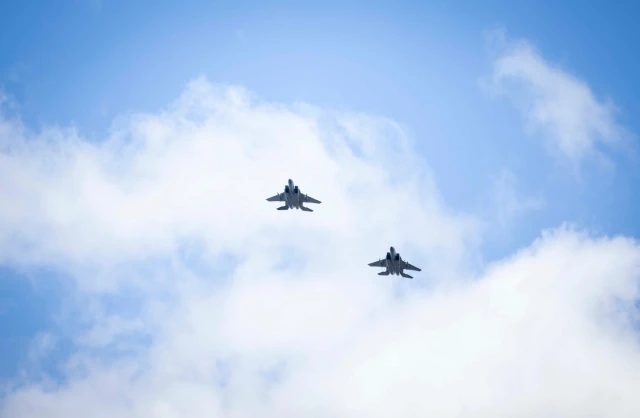
The United States Department of Defense (Pentagon) confirmed in a press release on Tuesday that it will provide $8.6 billion in funding to Boeing for “design, integration, instrumentation, test, production, and delivery of 25 new F-15IA aircraft for the Israeli Air Force.” The contract also keeps the door open for the potential production of additional F-15IA fighter jets for the Israeli Air Force (IAF).
In January 2023, the Israeli Defense Ministry reportedly requested to acquire 25 new F-15EX fighter jets from the United States to boost the Israeli Air Force’s offensive capabilities. The IAF's current offensive inventory consists of various F-16, F-15 and F-35 fighter jets.
The new F-15IA fighter jets are reportedly equipped with optimized engines and fly-by-wire avionics that slash operating costs per flight hour by 25%. The new technology means the IAF would likely need fewer aircraft to carry out various missions in the future. The new Boeing design also enables the planes to carry a payload of 13,380 kilograms (nearly 29,500 pounds). This includes 12 air-to-air as well as 15 air-to-ground or air-to-maritime strike weapons. The F-15IA fighter jets have a significant combat range of 4,000 kilometers (2,485 miles).
The combination of these features could be significant for long-range offensive missions against Iran or other hostile nations. By comparison, the fifth-generation F-35I stealth fighter jet is more limited in the weapons that it can carry due to its low radar signature priority.
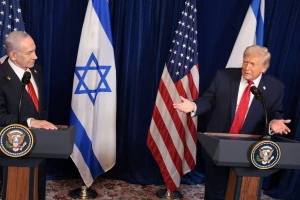
The Pentagon’s announcement of the contract for 25 F-15 fighter jets for Israel came after Israeli Prime Minister Benjamin Netanyahu met with U.S. President Donald Trump at the president’s private residence, Mar-a-Lago in Florida. Netanyahu also met with U.S. Defense Secretary Pete Hegseth and U.S. Secretary of State Marco Rubio.
Trump and Netanyahu held a meeting described as largely positive concerning bilateral relations and developments in the Middle East. During the discussions, Trump expressed support for a potential Israeli strike on Iran if the ayatollah regime continues developing nuclear and ballistic missile capabilities. He also warned the terrorist organization Hamas of serious consequences should it refuse to disarm, as stipulated in the U.S.-brokered Gaza ceasefire agreement.
In September, the IAF signaled willingness to upgrade its fleet of ageing F-16 “Barak” fighter jets that participated in the historic Israeli Operation Rising Lion against Iranian nuclear and missile facilities in June. Israel also used the iconic fighter jet when it bombed Iraq's nuclear reactor Osirak in June 1981.
IAF Commander Maj.-Gen. Tomer Bar revealed that it was the pilots themselves who convinced him to approve the use of F-16 fighter jets in the large-scale operation against Iran.
"You (the pilots) sat, you thought, you calculated, and you called me for a visit, which proved the opposite: 'We can get to Iran without refueling, we can do it at a high rate, non-stop,' that's what you told me,” Bar stated at a ceremony at the Ramat David Airbase. “It was possible with the maturity, professionalism, and experience of the airmen here."
You might also like to read this: