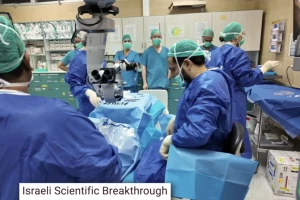
How 3D bioprinting is restoring sight – interview with CEO of Israel's Precise Bio




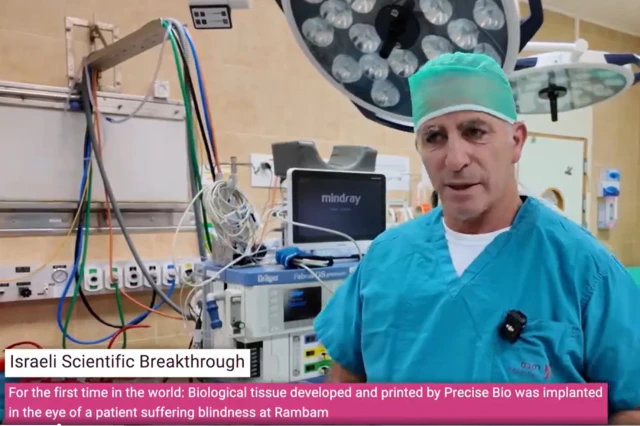
In a conversation with Christian journalist Paul Calvert, Aryeh Batt, co-founder and CEO of Precise Bio, explains how his team is using 3D bioprinting to address corneal blindness – and why a recent transplant in Israel is a milestone in regenerative medicine.
Batt says Precise Bio is doing something far more significant than simply showing that a 3D printer can print tissue, explaining, “It’s not science fiction, that you can biofabricate a tissue, transplant it, and it will function.”
The company combines cell biology, biomaterials, engineering and stringent quality systems to produce living tissue from human cells and natural materials.
Founded in 2015, Precise Bio has spent a decade developing and refining this platform, moving from laboratory research to regulated clinical application. The cornea can be produced rapidly, he said, while emphasizing that the reliable fabrication of transplantable tissue into patients’ eyes is an ever greater achievement.
When Calvert asked whether the technology can restore sight for people who are totally blind, Batt explained that Precise Bio’s first product targets corneal blindness. He described their first patient as a legally blind young woman whose cornea was damaged in a previous, unrelated procedure. After receiving the new, printed cornea, she was able to see again. Unlike traditional treatment, which relies on cadaver donor tissue and often involves long wait periods, Precise Bio’s approach allows corneas to be produced on demand. Batt said, “We do ‘Control-P’ and two minutes later a cornea comes out.”
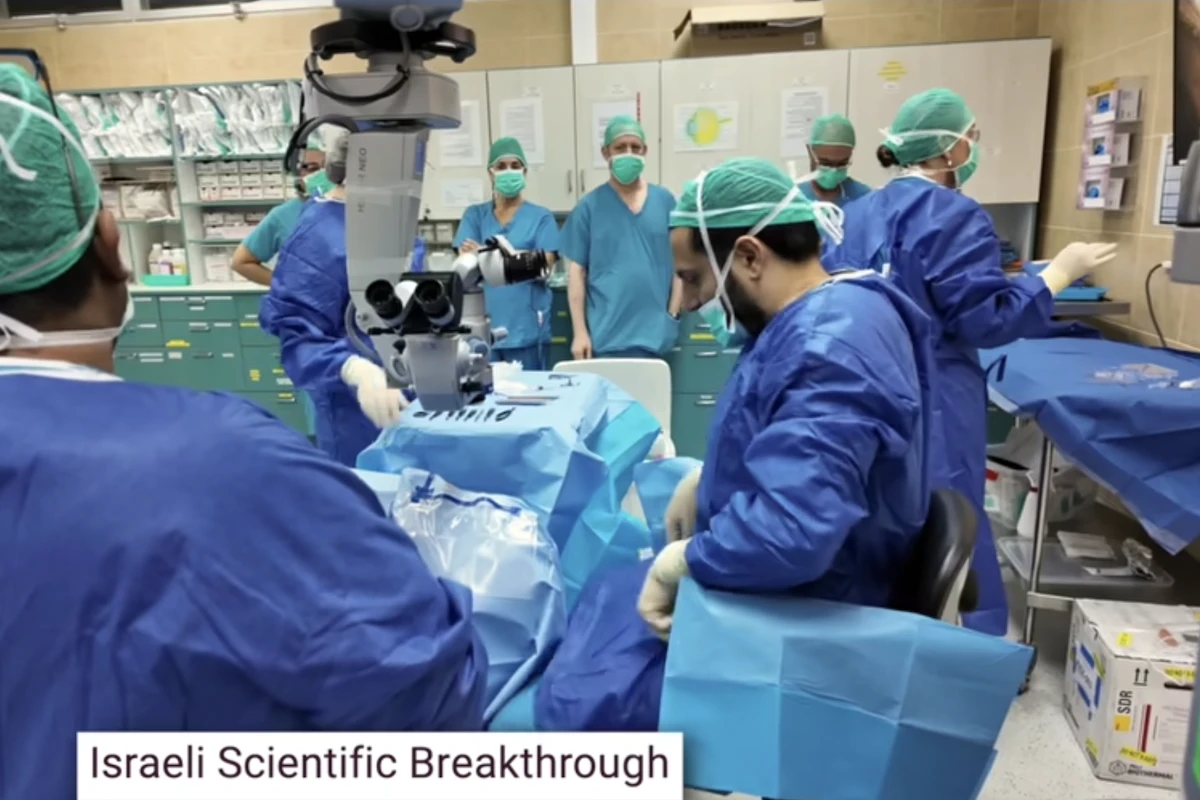
The team will continue to follow up with the same transplant patient to monitor how the printed cornea performs over time, with a primary endpoint set at six months in coordination with regulators, including the FDA and Israeli authorities.
Batt said the printed tissue behaves similarly to natural cornea, with expected “ups and downs,” while surgeons report that the procedure requires less surgical time and is simpler to implant than cadaver tissue.
Looking ahead, Batt said he expects the same approach will extend to other eye tissues, including the retina in cases of age-related macular degeneration, and eventually beyond ophthalmology. He called the transplant tangible proof that bio-fabricated tissue can function inside the human body, saying, “It’s really proving to the world that in a non-professional way, I would say that we can fabricate spare parts for the body.”
The medical breakthrough reflects Israel’s role in truly bringing light to the nations through practical acts of healing – restoring sight today while laying the groundwork for future life-saving therapies.
Click below for the full interview with Aryeh Batt to learn more about the breakthrough.
Want to help more people find our reporting from Israel? Leave a quick Google review of our website here.
You might also like to read this: