Rare gold coins, ring discovered in Judean Wilderness point to Byzantine Christian past
Byzantine-era gold coins and ring highlight Christian monastic activity




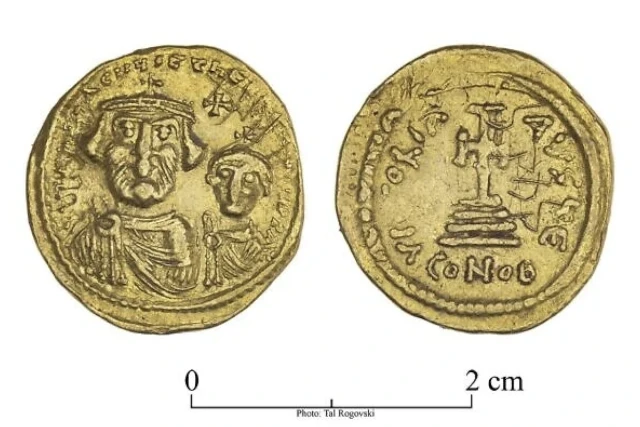
Two gold coins and a gold ring were recently uncovered by archaeologists working at the site of Hyrcania in the Judean Wilderness, Israel's Civil Administration’s Archaeology Unit announced earlier this week.
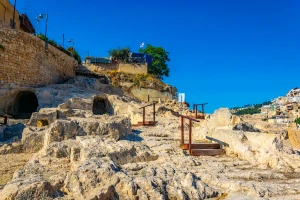
The finds were discovered at Hyrcania, a Hasmonean-era fortress site in the Judean Desert near the Dead Sea.
The discoveries were made during excavation, research, and conservation work conducted at the site by the Civil Administration’s Archaeology Unit, in collaboration with academic teams from the Hebrew University of Jerusalem. The project is aimed at protecting the site from antiquities looting and preparing it for public access.
The two gold solidus coins – a type of solid-gold currency introduced during the Byzantine Empire – bear the image of Byzantine Emperor Heraclius, who reigned in the early 7th century.
Recent excavations and research at the site have uncovered rare finds indicating both wealth and increased religious activity during the Byzantine period. Along with the gold ring found nearby, the coins suggest a renewal of activity at Hyrcania during this era, possibly associated with the development of desert monasticism in the region.
Hyrcania is a multi-layered archaeological site. The initial settlement of the site came at the end of the Hellenistic period, with the Hasmoneans constructing a fortress there. The site remained active during the Herodian period before being abandoned. During the Byzantine period, as Judean Desert monasticism expanded, a Christian monastery was established at the site. The monastery activities are associated with Saint Sabas, one of the founders of the desert monasticism movement in Judea, which operated in the area for centuries.
Saint Sabas was a 5th-century Christian monk, originally from Asia Minor, who founded the well-known Mar Saba Monastery in the Judean Desert, which now bears his name and became one of the largest in the land.
Archaeology Unit head, Benjamin Har-Even, said, “The finds that were uncovered at the Hyrcania ruins reflect an important chapter from the Byzantine period and the early Christian tradition in the area.”
He noted the exceptional quality of the coins and the ring for the time period.
“The coins and ring found at the site are exceptional findings in their quality, and testify to a well-established and active presence at the site during the Byzantine period,” Har-Even said.
He also spoke about the need for further archaeological excavations in order to preserve the site and prevent looting – a common concern for sites within Judea and Samaria. Sites in this area (West Bank) are often targeted by looters, who sell finds illegally on the archaeology black market. Other important Jewish sites in Judea and Samaria have been damaged due to nationalistic vandalism.
“After repeated damage to the site following the robbery of antiquities, we are working to preserve, protect, and prepare it for controlled public visits, while maintaining its archaeological value,” Har-Even said. “Our work is intended to protect the past, enable its study, and make it accessible to everyone.”
You might also like to read this: