How did David conquer Jerusalem? Can archaeology reveal the truth?





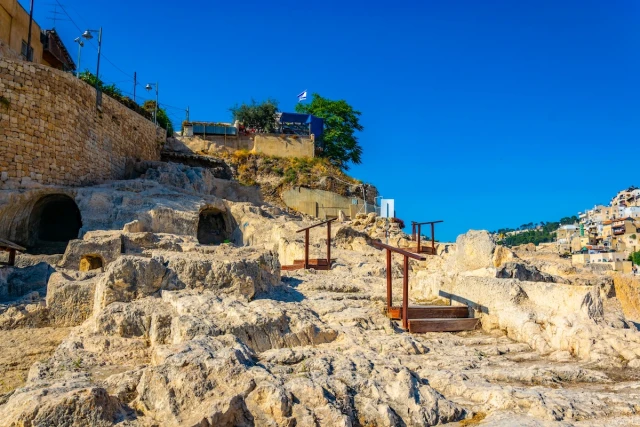
A silent battle in the City of Peace
Among the many dramatic conquests recorded in the Bible – Jericho’s walls crumbling, the ambush of the city of Ai, and countless other war chronicles – one victory stands out for its striking silence: the conquest of Jerusalem.
Unlike other battles that unfold with vivid action and detailed strategy, the capture of the most important city in Israel’s story is summarized in only a few short verses. And yet, it was a moment that would change history. David took the city that would become Israel’s eternal capital – Zion, the City of David – but the Bible barely tells us how.
Why is this climactic event so understated? What really happened that day? And can archaeology help us uncover what scripture left unsaid?
The mysterious account in 2 Samuel
The conquest is briefly described in 2 Samuel 5:6-8:
“The king and his men marched to Jerusalem to attack the Jebusites, who lived there. The Jebusites said to David, ‘You will not get in here; even the blind and the lame can ward you off.’ They thought, ‘David cannot get in here.’ Nevertheless, David captured the fortress of Zion, which is the City of David. On that day, David had said, ‘Anyone who conquers the Jebusites will have to use the water shaft to reach those ‘lame and blind’ who are David’s enemies.”
The text raises more questions than it answers. Who were the “blind and lame”? What is the mysterious water shaft? And how exactly did David's men manage to take the fortress?
Unearthing Zion: The discovery of the City of David
For centuries, it was assumed that David’s city was located within today’s Old City walls. But in the 19th century, archaeologists made a game-changing discovery: the true City of David lay just outside those walls on a ridge south of the Temple Mount.
Since then, the City of David has become Israel’s most extensively excavated archaeological site. And one of the most intriguing questions driving this excavation has been: How did David’s forces capture such a heavily fortified stronghold from the Jebusites?
Clues in the text: The enigma of the “water shaft”
The Bible gives us two hints:
The Jebusites were so confident in their defenses that they taunted David, saying even the blind and lame could hold him off.
David mentioned a “tzinnor,” commonly translated as water shaft, as the path of entry.
But what is a tzinnor?
The Hebrew mystery
The Hebrew word tzinnor appears only twice in the Bible – here and in Psalm 42:7, where it likely means a powerful waterfall or flood:
“Deep calls to deep in the roar of your tzinnorim...”
Its meaning in the context of 2 Samuel is unclear. Modern translations render it as “shaft,” “gutter,” or “water tunnel,” but ancient translations (like the Septuagint and the Targum) interpret it differently – as a dagger or even a bar or lock on a city gate. Some medieval commentators imagined it was a bolt, a shield, or even a hook.
So what exactly did David mean?
Warren’s Shaft: An exciting possibility
In 1867, British explorer Captain Charles Warren discovered a hidden vertical shaft while exploring the water tunnels near the Gihon Spring. He nearly drowned before spotting a narrow opening above him that saved his life. This shaft – eventually named "Warren’s Shaft" – connected the spring to an ancient tunnel system above the spring, which led into the city.
Warren proposed an exciting theory: this was the route Joab used to conquer Jerusalem. He believed this was the tzinnor the Bible mentioned, and that Joab climbed the shaft, entered the city, and opened the gates.
For over a century, this became the leading theory. It was dramatic, plausible, and seemed to fit both the archaeology and the biblical account.
Warren’s Shaft (the vertical shaft) connects the system of tunnels descending from the city to the spring. According to Warren, this is the channel through which Joab ascended.
Reconsidering the theory: Could Joab really have climbed the shaft?
However, in the 1980s, archaeologist Yigal Shiloh tested the theory. His team attempted to climb Warren’s Shaft –but found it impossible without outside assistance. The shaft is 52 feet high and over 6 feet wide – too large to be scaled unaided. This led Shiloh to question whether Joab could have used it at all.
Later excavations by Israeli archaeologists Ronny Reich and Eli Shukron brought even more doubts. They discovered that Warren’s Shaft is a natural formation, not a man-made tunnel. Moreover, during David’s time, the shaft would have been sealed off and inaccessible. Their conclusion? Warren’s Shaft was not the biblical tzinnor.
The explanation of Reich and Shukron: In the upper image, Warren’s Shaft is concealed during the days of the Jebusites and David. In the lower image, the shaft is revealed by rock removal during the time of later kings of Jerusalem.
A new possibility: The Canaanite water system
Reich and Shukron didn’t just disprove a theory – they found something even more compelling.
They unearthed:
A massive Canaanite reservoir that collected water from the Gihon Spring.
An impressive fortification system surrounding the spring.
A hidden tunnel system that allowed access from the spring and the reservoir to the city.
This water system was used by the Jebusites—and possibly exploited by David’s men. Joab could have entered the city through one of these concealed tunnels, bypassing the walls entirely.
So what is a Tzinnor?
Most modern English translations render the word as a shaft, gutter, water pipe, or tunnel. But ancient translations into Greek and Aramaic offer completely different interpretations. The Septuagint and Targum Onkelos translate it as a dagger – a weapon. Medieval commentators interpreted it as a bolt or bar that locks a city gate. Other proposed meanings include a shield or a hook.
The truth is, the Bible deliberately keeps it vague.
But why?
Why so few details? The theology of silence
The conquest of Jericho spans across five chapters. Ai receives two. But Jerusalem – the most significant city in all of scripture – is captured in just three verses.
Perhaps this silence is intentional.
The name “Jerusalem” contains the root shalem – the same root as shalom, meaning peace. David’s son, who would build the Temple, was named Solomon (Shlomo) – a name also derived from peace.
And when Solomon built the Temple, we read this:
“In building the temple, only blocks dressed at the quarry were used, and no hammer, chisel or any other iron tool was heard at the temple site while it was being built.” (1 Kings 6:7)
The sound of chiseling with iron – which is the sound of war – was silenced in the house of God.
Likewise, the conquest of Jerusalem is not marked by noise or bloodshed. It is almost whispered into scripture. The city of peace would not be won with swords and chariots, but by strategy, silence, and the hand of God.
Jerusalem: A city of future peace
The quiet conquest of Zion hints at its future destiny. It would become a place where nations gather not to fight, but to worship; a city not defined by war, but by peace.
As Isaiah foretold:
“He will judge between the nations
and will settle disputes for many peoples.
They will beat their swords into plowshares
and their spears into pruning hooks.
Nation will not take up sword against nation,
nor will they train for war anymore.”
(Isaiah 2:4)
Is All Israel News’ faithful reporting important to you? Be part of it—help us continue by becoming a $5/month supporting partner.
You might also like to read this: