Netanyahu expected to set election date after US visit amid coalition uncertainty




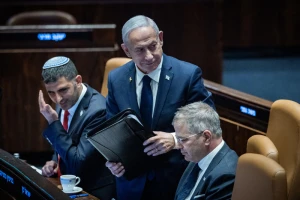
Israeli Prime Minister Benjamin Netanyahu will set a date for the next election after his upcoming visit to the United States, N12 News reported on Friday. Israel’s last elections were held on Nov. 1, 2022. Since elections in Israel must be held every four years, the next election is scheduled to take place in late 2026.
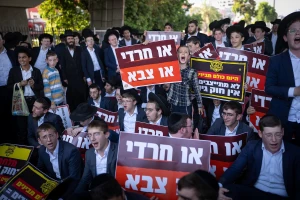
N12 reporter Daphna Liel explained on the program, "Ulpan Shishi," that the prime minister fears his government could collapse over legislation addressing ultra-Orthodox conscription into the Israeli military, as his coalition depends on the support of ultra-Orthodox parties.
The majority of the Israeli public believes that ultra-Orthodox (Haredi) men should contribute to national defense. Although a minority of ultra-Orthodox men serve in the military, much of the Haredi political and religious leadership remains ideologically and politically opposed to their integration into the IDF.
Netanyahu, who is scheduled to meet U.S. President Donald Trump, is reportedly seeking to use his diplomatic achievements abroad to strengthen his position ahead of the upcoming elections.
It is currently unclear whether Netanyahu would be able to form a new government. On Friday, a poll released by the Maariv news outlet indicated that Netanyahu’s Likud party would receive 25 seats if elections were held today. Furthermore, the Netanyahu-led coalition parties would only receive 50 seats – significantly less than the minimum 61 seats required for forming a government.
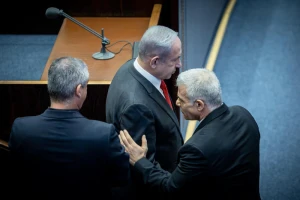
It is also unclear whether the political opposition would be able to form a government. The Maariv poll revealed that the party of former Prime Minister Naftali Bennett lost one seat to the conservative Yisrael Beitenu opposition party, led by Avigdor Liberman.
Bennett, who is considered the most likely candidate to challenge Netanyahu for the prime minister position, would only receive 22 seats if elections were held today. While Bennett’s party currently has three seats fewer than Netanyahu’s Likud, the opposition parties could together reach 60 seats, just one seat short of forming a government. The Arab-led parties would receive 10 seats.
In 2021, Bennett succeeded in replacing Netanyahu by forming Israel’s most diverse coalition government, which consisted of parties across the political spectrum, including the Arab party Ra’am led by the Arab-Israeli lawmaker Mansour Abbas.
Abbas has officially downplayed foreign policy issues and focused on advancing the socio-economic integration of Arab-Israelis into Israeli society. However, his Ra’am party is controversial due to its ties to the Israeli branch of the Muslim Brotherhood.
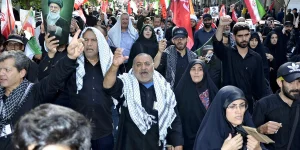
Following Trump’s decision last month to designate the Muslim Brotherhood as a terrorist-sponsoring organization, Netanyahu hinted that he considered potentially outlawing the Ra’am party in Israel.
“This is an organization that endangers stability throughout the Middle East and beyond the Middle East. Therefore, the State of Israel has already outlawed part of the organization, and we are working to complete this action soon,” Netanyahu said last month.
His statement followed Abbas’ call for the establishment of a new government in Israel to promote “peace and reconciliation.” While Abbas could once again choose to join a Bennett-led government, he is unlikely to join a Netanyahu-led coalition, leading some critics to argue that Netanyahu is seeking to ban the Ra’am party on political grounds to improve his prospects in the next election.
You might also like to read this: