Gaza, Syria and Iran on agenda as Netanyahu flies to Florida to meet Trump
Meeting at Mar-a-Lago attempts to address gaps between US and Israeli positions on several Middle East concerns




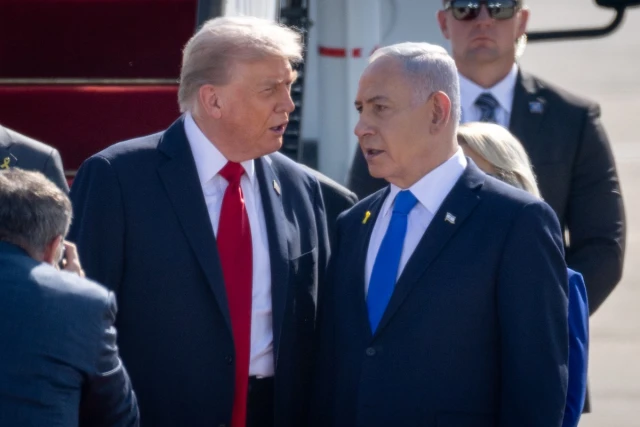
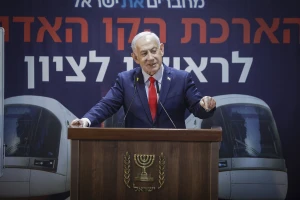
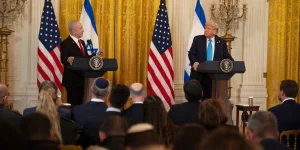
Israeli Prime Minister Benjamin Netanyahu departed for the United States on Sunday morning for meetings with President Donald Trump and several administration officials at Trump’s Mar-a-Lago estate in Florida.
According to the agenda sent by the Prime Minister’s Office, Netanyahu is scheduled to meet with Secretary of State Marco Rubio in the early afternoon on Monday, followed by a meeting with Trump at 3:30 p.m.
Heading the agenda for the Monday meeting between Netanyahu and Trump is the transition to the second phase of the Gaza peace plan, which the U.S. is eager to accomplish. The Israeli government has resisted attempts to move to the second phase, citing the failure of Hamas to hand over the remains of deceased hostage Ran Gvili, as well as Hamas’ refusal to disarm or accept the institution of the Gaza Peace Board and the international stabilization force (ISF), which the Trump peace plan calls for.
According to Hebrew media reports, significant gaps remain between the positions of Trump and Netanyahu on several key issues, including the Gaza peace process, the Iranian threat, the situation in Syria, and Turkey’s role in both Gaza and Syria.
President Trump is pushing for a quick shift to the second phase in order to maintain momentum. Israeli security officials do not believe that Hamas will voluntarily relinquish either its weapons or its authority in the Gaza Strip.
A report in Maariv noted that Netanyahu will offer a compromise, in which reconstruction can start within the Israeli-held areas of Gaza behind the Yellow Line, after the IDF has neutralized terror infrastructure, such as tunnels and underground facilities. This would probably begin in Rafah, which has largely been cleared of terror infrastructure and already has a small Palestinian presence under the protection of the Popular Forces, started by the late Yasser Abu Shabab.
Rehabilitating areas under Israeli control could create conditions in which Gaza’s population would prefer to relocate to those areas, thereby reducing Hamas’s ability to use civilians as human shields. Such a development could also increase pressure on Hamas to accept the full terms of a Gaza peace plan.
Under the Israeli proposal, the IDF would maintain a presence within the Yellow Line as long as Hamas does not disarm. Israeli officials recognize that the ISF would not engage Hamas directly, and therefore, the IDF must address security concerns directly.
Trump will likely announce the transition to the second phase of the peace plan sometime after his meeting with Netanyahu, according to Israeli media reports.
Netanyahu is also expected to reiterate Israel’s rejection of the participation of Turkey and Pakistan in the ISF, due to the hostile stance of both countries towards Israel, as well as the continued support that Turkey has given to Hamas leaders, including hosting meetings with Hamas leadership.
Regarding Syria, there are notable gaps between the position of Trump, who wants to see the country stabilize rapidly, and that of the Israeli government. Trump has strongly backed interim Syrian President Ahmed al-Sharaa, even canceling many sanctions against Syria and pushing Israel to reach a security arrangement with the new regime.
However, Israeli officials are not convinced that al-Sharaa has full control over the various militias that make up the new Syrian security forces, as demonstrated in the recent attack on U.S. soldiers by a Syrian security forces member. They also do not believe that al-Sharaa has completely abandoned his jihadist past, pointing to his failure to stop attacks on minorities, including the Alawites, Druze and Christians.
The fact that Syrian regime soldiers were seen wearing ISIS patches on their uniforms, and chanting slogans such as “To Jerusalem,” and “We are coming to Gaza,” indicates that Israel sees little reason to trust a security agreement with al-Sharaa’s government.
Netanyahu is expected to notify Trump that Israel is determined to continue holding the territory it seized after the fall of the Bashar al-Assad regime, and will continue to act to stop aggression directed at the Druze in the Syrian Golan Heights region.
Netanyahu is also expected to discuss the Iranian threat with U.S. officials. Israel has assessed that Iran is rapidly rehabilitating its capabilities, particularly its ballistic missiles and air defense systems. Although there is no clear indication of an Iranian intention to attack in the immediate future, Israeli security officials estimate that Iran is preparing for another round of conflict.
On Sunday, Iranian President Masoud Pezeshkian told Iranian state media that the nation is in a "full-scale war with the US, Israel and Europe; they don’t want our country to remain stable.” He also said that any further attack “will be met with a harsher response than the previous one.”
Also expected to be on the agenda is a discussion of the situation in Lebanon, where the Lebanese army has been slow to move against Hezbollah forces south of the Litani River. Netanyahu will likely insist on a continued IDF presence in southern Lebanon until Hezbollah has been disarmed there.
The expectation that the United States will seek concessions opposed by some of Netanyahu’s coalition partners has led some Israeli analysts to believe that Netanyahu could announce an election date after returning from his U.S. trip.
Two coalition ministers, Finance Minister Bezalel Smotrich and National Security Minister Itamar Ben Gvir, have threatened to withdraw from the coalition if Israel agrees to withdraw the IDF from key points in Gaza as part of the move to the second phase of the deal. This would collapse the coalition and force elections.
At the time of publication, no public events had been announced for Prime Minister Netanyahu on Tuesday. On Wednesday, however, he is scheduled to meet with Evangelical leaders at his hotel before later attending an event with his wife at the Shul of Bal Harbour in Miami. The gathering is expected to include members of Congress, Jewish and local community leaders, as well as students from the Miami area.
You might also like to read this: