Isaiah’s prophecy of Immanuel: The meaning of the virgin birth






One of the most well-known prophecies in the Bible regarding the identity of the Messiah is the prophecy of the virgin birth of Immanuel – “God with us” in Hebrew.
This unique prophecy, given by Isaiah, differs from many of his other prophecies. Prophecies of Isaiah (and of other writing prophets) appear in the various books of the Bible as part of the literary genre of “prophecy.” What characterizes this genre is its poetic language and distinctive style, which differ greatly from the language of other books in the Old Testament that belong to the narrative genre, such as the books of Joshua, Samuel and Kings.
However, within the Book of Isaiah, several chapters do not belong to the prophetic genre but rather to the narrative genre. One such chapter is chapter 7, which describes King Ahaz and the great distress he was in, and the special prophecy concerning Immanuel is woven into this story.
Ahaz, king of Judah, was the son of King Jotham and the grandson of Uzziah, two kings of whom it is written that they did what was right in the eyes of the LORD.
Concerning Ahaz, however, it is said that “he did not do what was right in the sight of the LORD” (2 Kings 16:2, NKJV).
Yet Ahaz, despite his rebellion against the LORD, was shown great grace from God in the form of the prophet Isaiah. Not every king had a prophet to whom he could turn in times of distress.
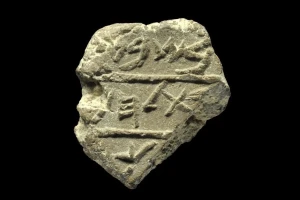
Ahaz reigned during a very difficult period for the kingdom of Judah. Assyria was becoming a regional superpower, and the smaller kingdoms in the area feared it. They saw it steadily conquering territory and preparing for further attacks. Rezin, king of Aram, allied with Pekah, the son of Remaliah, king of the northern kingdom of Israel. Together, they attempted to form a coalition to fight against Assyria. Ahaz did not join their coalition. So they tried to take him down in a political coup they arranged, attempting to recruit an opponent to the king known as 'the son of Tabel.'
They prepared to attack the kingdom of Judah from the north and conquer it.
King Ahaz of Judah was very troubled. He did not know whom he should fear more: the distant Assyrian Empire or the smaller but closer coalition of Aram Israel. There was only one figure whom Ahaz did not fear: the LORD.
In this dire situation, the people of Jerusalem felt that their end was near, and they behaved irrationally – they went out to celebrate. Isaiah describes the atmosphere of the festivities: “Let us eat and drink, for tomorrow we die!” (Isaiah 22:13, NKJV).
God called Isaiah and sent him on a mission. He was commanded to go to the king, together with his son Shear-Jashub, with an encouraging message: “Take heed, and be quiet; do not fear or be fainthearted for these two stubs of smoking firebrands, for the fierce anger of Rezin and Syria, and the son of Remaliah” (Isaiah 7:4, NKJV).
Isaiah reassured Ahaz that there was no reason to fear these two, for before long, they would be no more.
To prove the truth of his prophecy, Isaiah called to Ahaz and said to him, “Ask a sign for yourself from the LORD your God.” Ahaz was given the opportunity to ask for a sign, and the LORD announced in advance that He would fulfill it.
Ahaz was frightened, yet he declined to seek a sign. His faith was so weak that he was afraid to test it. He excused his refusal by claiming that men are forbidden to test God. But it was God Himself who had offered the sign! Wretched Ahaz – even when the opportunity lay before him and all he had to do was take God’s gift – he hesitated.
At this point, Isaiah declared that God would give a sign even if Ahaz did not ask for it. This would not be a sign to help Ahaz, since his faith was not sincere. It would be a sign that distinguishes between the true believer and the one who does not believe. It is a sign that, in the future, would distinguish between those who truly know God and those who merely pretend.
And this is the sign: “Therefore the Lord Himself will give you a sign: Behold, the virgin shall conceive and bear a Son, and shall call His name Immanuel” (Isaiah 7:14, NKJV).
What is the meaning of the prophecy? For many years, it was obscure – until it was fulfilled.
In the New Testament, Matthew tells us that Jesus was born to Mary, who was a virgin, so that what was spoken by the prophet Isaiah might be fulfilled.
And from that time until today, whoever believes that a virgin can conceive by the Holy Spirit and give birth to the Messiah is counted among those who believe in God and in His Son. All the others, the heirs of Ahaz’s path, continue to doubt God and His sovereignty – to nullify every sign of God and every miracle that God performs.
You might also like to read this: