UAE-backed southern Yemen separatist forces seek Israel’s support for independence



Forces in southern Yemen backed by the United Arab Emirates are significantly expanding their control at the expense of Saudi-backed forces and are now seeking Israel’s support, according to a report on Kan Reshet Bet Radio on Wednesday.
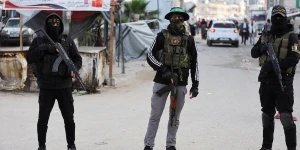
In southern Yemen, a region controlled by anti-Houthi forces, dramatic developments are unfolding, chief among them the takeover of vast areas by forces of the Southern Transitional Council (STC), which is backed by the United Arab Emirates.
This means that for the first time in years, a secessionist line is being heard more and more clearly, in contrast to the position led by the legitimate government in the south of the country, which is backed by Saudi Arabia and opposes the Houthi terror group.
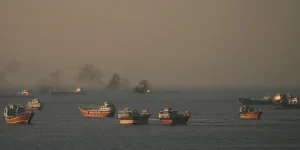
A diplomatic source in the UAE-backed administration in southern Yemen told Kan News that Israeli support for the establishment of a state in southern Yemen, with Aden as its capital, would strengthen the parties’ shared agenda: protecting international shipping lanes in the Gulf of Aden and the Bab al-Mandab Strait, combating Iranian arms smuggling to the Houthis, and fighting terrorism by the Muslim Brotherhood, which cooperates with the Houthis.
According to the diplomatic source, the UAE-backed forces require Israeli support across multiple fronts in order to develop the military, security, and economic sectors of the new state they seek to establish. “The enemies of peace and stability are the common enemies of Israel and the State of South Yemen,” he said.
In recent days, the British newspaper The Times reported that the Southern Transitional Council – the separatist organization seeking to achieve the independence of southern Yemen – sent representatives to meet with Israeli officials and conveyed a message that both sides share a common interest against the Houthis.
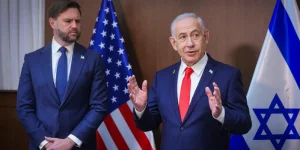
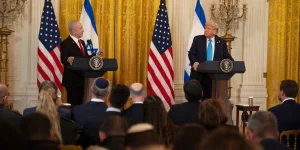
The Southern Transitional Council is also seeking support from U.S. President Donald Trump, who wants to expand the Abraham Accords normalization agreements and add more countries, and has even promised to recognize Israel once southern Yemen gains independence.
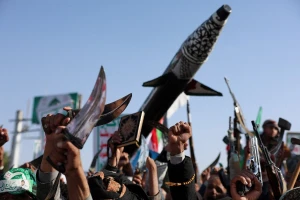
The Houthis control the northern part of the country and the capital, Sanaa. On the surface, the fragmentation of the camp opposing them in southern Yemen should please them. However, they are watching with concern as the UAE-backed transitional forces take control of large parts of the east and south of the country.
The Houthis fear that a larger move is taking place behind the scenes, in which the UAE is pushing for more aggressive action against them compared to Saudi Arabia.
Another potential development that concerns Houthi leadership is the closure of arms-smuggling routes to them in the south of the country – a move that could encircle and even “choke” them.
You might also like to read this: