Fmr PM Bennett proposes ramping up state benefits for IDF soldiers & reservists, cutting benefits for 'draft dodgers'
Proposed law will be condition for anyone willing to join his gov't, says Bennett




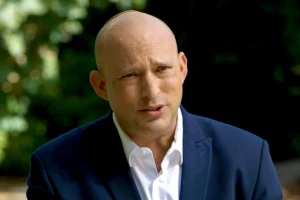
Amid ongoing criticism of the coalition’s latest proposal for a new IDF Draft Law, which its critics dismissively dubbed the “Dodgers’ Law,” former Prime Minister Naftali Bennett on Monday presented his alternative plan, which he called the “Servants’ Law.”
Bennett has said he plans to run for prime minister in the coming elections, which will be held by October at the latest. He stressed that his law proposal will be “the flagship law of the next government,” and that anyone who seeks to join his government would need to support it.
Speaking to an audience of hundreds of reserve soldiers while presenting his proposal, Bennett said that his new model would function like a pyramid: “Those who serve will be at the top; those who evade will be at the bottom. This will be a condition for entering a government led by me.”
לפי תכנית "חוק המשרתים" של בנט,
— ינון מגל (@YinonMagal) January 5, 2026
אם הבנתי אותה נכון,
אז רק המליון ש"ח לדירה לכל מילואימניק.
כפול נגיד 170 אלף מילואימניקים
זה: 170,000,000,000
170 מליארד
או קי👍 pic.twitter.com/fNYWxzaf6S
Bennett claimed that the current system, which allows almost all ultra-Orthodox men to avoid military service, “this huge ecosystem, costs the economy more than 100 billion shekels.”
His proposed new system will “free up 100 billion shekels that are currently being burned in the evasion apparatus,” Bennett vowed.
The new model would grant those categorized as “active reservists” one million shekels for the purchase of a first home; free daycare for children up to age three; free after-school and summer programs; and state services like electricity, water, municipal taxes (arnona), public transportation, and vehicle inspections at half price.
Additionally, those who completed military or national service would receive benefits such as priority in state housing tenders; a monthly grant of NIS 1,000 for daycare for children under age three; free after-school programs and summer schools; free public transportation for several years; a free bachelor’s degree for all who served, and a free master’s degree for combat soldiers, among others.
On the other hand, those who don’t serve would lose state benefits. “Whoever chooses not to serve – simply doesn’t receive,” Bennett said. “That’s the bottom level of the pyramid.”
The proposal quickly drew responses questioning its financial viability. Yinon Magal, a presenter on Channel 14 and a former party colleague of Bennett, wrote on 𝕏, “If I understood it correctly, then only one million ILS for an apartment for every reservist. Times, say, 170 thousand reservists. That's: 170,000,000,000. 170 billion. OK.”
Bennett responded, by explaining that this would apply only to “active reservists,” which is a narrowly defined group, who are without housing and are gradually entering the housing market “for example, someone who goes traveling in Thailand doesn't immediately buy an apartment.”
In addition, the one million shekels would be “spread over four years (which is the inventory pace we can generate). Then we're talking about amounts that are definitely feasible,” Bennett argued.
He also said that the necessary “sources of funding – beyond stopping stipends for yeshiva students and daycare subsidies, which together amount to billions – is the “loss of land income” in Israel Land Authority (ILA) revenues, which over the past four years totaled around 30 billion shekels.”
“This represents a deep conceptual shift. For years we’ve grown accustomed to seeing all subsidies on the side of a sector that neither serves nor works, and it has seemed completely natural to us… After we pass the law and it comes into force, it will seem completely natural to see subsidies directed toward those who serve,” he concluded.
Bennett revealed during an event at Yeshiva University in November that he is “running for prime minister” , after registering a new party in March under the name “Bennett 2026.”
Since then, he has gradually increased public criticism of the Israeli government on a range of issues. After Monday’s speech presenting his proposal, he added that he would establish a state commission of inquiry “in the first minute of the government. It’s unbelievable that this even needs to be asked.”
A recent poll published by Channel 12 News on Thursday showed that Likud, led by Prime Minister Benjamin Netanyahu, would win 26 seats, while Bennett’s party, dropped by one seat to 21.
Overall, the opposition bloc would receive 59 seats, one shy of the necessary 60. The coalition would only win 51 seats, while the Arab parties would again be potential kingmakers with 10 seats, including five for Ra’am, which is already making moves to position itself for a potential entry into the government in the coming elections.
Asked about suitability for prime minister, only 34% said they prefer Bennett over Netanyahu, while 42% voted for the current prime minister. The remaining respondents answered “neither of them” or “don’t know.”
You might also like to read this: