








all israel edu Tel Afek and its pivotal place on Israel’s ancient trade route
Isaiah 19 envisions an ancient highway linking Middle Eastern nations
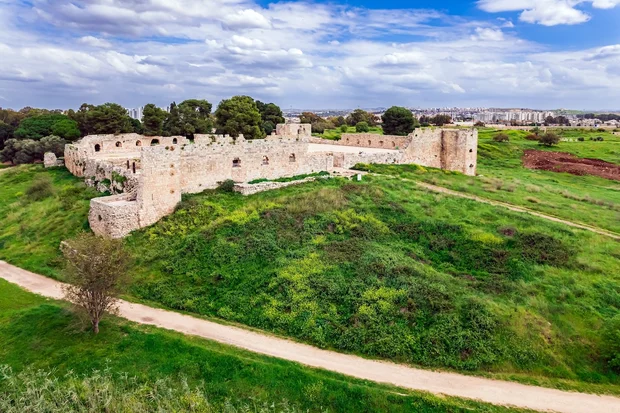
Tracing ancient trade routes reveals much about Israel’s history – the shifting dynamics and struggles between peoples, and how they once lived. Levi Simon takes ALL ISRAEL NEWS correspondent Oriel Moran to Tel Afek in central Israel, strategically situated along one of the Middle East’s ancient arteries.
Tel Afek lies along a route linking the Mesopotamian Empire in the northeast with the Egyptian Empire in the southwest, and was critically a site with abundant fresh water.
Trade routes travelled by way of the “fertile crescent,” also known as the “cradle of civilization,” which spanned from what is now Iraq through Syria, Lebanon, and down through Israel to north east Egypt. The crescent-shaped area of fertile land was sustained by the Tigris River in the north, the Nile in the south, and Israel’s water sources in between. It is in this region that human civilization first developed, and along this route that the Patriarch Abraham traveled from Ur in Iraq to Israel and Egypt.
Simon explained that the ancient people would travel along the fertile crescent, “because they had nowhere else to go.” He pointed out the less appealing options available: “It would either be on the sea,” with perils of its own, “storms and wind, pirates sometimes.” Alternatively there was the inhospitable desert route – not a realistic option for long haul journeys. “You couldn't go in the Jordan Desert… it would just be so barren with no water sources,” he explained pointing to the color-coded map, which shows the difference between verdant land and barren desert.
“The historic 'Via Maris' (the Way of the Sea) was an ancient route which many, many nations used to cross… going through Gaza, up around (modern Israeli) route number four, and then moving towards route number six and it would have stopped exactly where we are right now,” Simon elaborated, giving the reason why: “We have this big river called the Yarkon River that goes right through Tel Aviv which you couldn't cross with your camels, so you had to come to the source,” he said. ”Whoever controls this source of the Yarkon River would be able to tax ancient pilgrims. They'd be able to tax trade routes, they'd be able to then control all regions in this area,” he told Moran.
“The Philistines were in control of this region and the Judeans wanted to come and conquer it,” he said, before reenacting some of the moves that might have been involved in taking the stronghold – some of which is still standing tall today. Storming the fortress would have presented quite the challenge, but Simon and Moran were happy to ascend up to the tower by the visitors’ trail which winds its way up the hill. “All you have to do is pay an entrance fee now. No need to attack,” he says.
Simon continues, “3,200 years ago, God commanded the Jews to take over this land,” he says, referring to Joshua 12:18 which lists Afek (Aphek) as one of the kings they conquered. “Let's talk about one of the battles… where our arch enemies, the Philistines were on this border, they had this as a fort city and it was essential for us to then take over this land to secure the borders of our capital, which was in Jerusalem. Multiple battles happened after that. Sadly, Joshua Ben Nun doesn't manage to actually capture the place,” says Simon, relaying the battle described in 1 Samuel chapter 4 in which the Ark of the Covenant was temporarily stolen by their enemies. “We see this as a place of great loss for the Judean people and the Israelites in this region.”
However, he explained that there were later times in history when the Jewish people did gain control of the site. “Predating the Philistines, this was a Canaanite city called Afek mentioned in the Bible. The Canaanite city had to be captured by Joshua Ben Nun. So the Canaanites were here, the Egyptians were here… the Philistines were here, and afterwards the Judeans were here, all the way doing it through the Roman period,” Simon said.
Tel Afek also shows the handiwork of Herod, a maniacal king and prolific builder from 2,000 years ago. From that time on, it fell into insignificance until the Ottoman era when a fortress was built around the 15th or 16th century, to protect the water source. Today it is just ruins, but looking around the impressive structures including towers, walls, gates, and even water troughs for animals still visible today, Simon tells Moran, “We've found multiple important elements here that shows the strategic importance of this place. If this was a big trade route, we'd find things from the Acadians, from the Samaritans, from the Egyptians, from Mesopotamia, all the way down to the Great Nile River,” he says.
“This place is spectacular. I can't get enough of all these tall structures and remembering just how strong and brave you had to be to come and conquer places,” marveled Moran.
“This would also be a meeting point. Let's say traders wanted to then switch their products and go see their wife after three weeks instead of a month and a half, they would just meet at this location. They would trade their products and go back. So this was a well-known place.” And trade, as Trump discovered with the Abraham Accords, has a way of connecting people.
The idea of an ancient highway linking Middle Eastern countries is mentioned at the end of Isaiah 19, giving a wonderful vision of what God has in store:
“In that day there will be a highway from Egypt to Assyria, and Assyria will come into Egypt, and Egypt into Assyria, and the Egyptians will worship with the Assyrians.
In that day Israel will be the third with Egypt and Assyria, a blessing in the midst of the earth, whom the Lord of hosts has blessed, saying, 'Blessed be Egypt my people, and Assyria the work of my hands, and Israel my inheritance'" (Isaiah 19:23-25).
Popular article:
interview Easter message of resurrection hope amid war at Jerusalem's Garden Tomb
biblical commentary Let my people go: a Passover message for today
4 IDF soldiers killed, 2 wounded in fighting in southern Lebanon, as Israel eliminates dozens of Hezbollah terrorists

Receive latest news & updates
A message from All Israel News
Help us educate Christians on a daily basis about what is happening in Israel & the Middle East and why it matters.
For as little as $10, you can support ALL ISRAEL NEWS, a non-profit media organization that is supported by readers like you.
Latest articles:
all israel edu North American Jewish organizations to recruit 100 professionals to combat antisemitism

all israel edu ‘No need’ for pre-election Iran strike, IDF chief says as gov’t, opposition trade blame for potential escalation – report
terror attack 2 Israeli soldiers killed, 2 terrorists eliminated in Hebron shooting; IDF says much larger attack was prevented
analysis A people dwelling securely? Israel’s strategic standing, 3 years after Oct 7
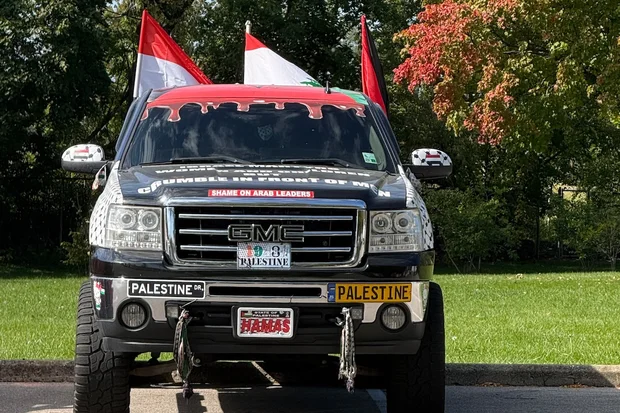
all israel edu Hamas on wheels: What I found in Dearborn reveals a troubling history and a battle over Israel