








ANALYSIS Why President Trump insists on Turkey’s involvement in Gaza: Paybacks … and oil
'Its payback time and Trump needs to give Erdoğan what he wanted,' says one analyst
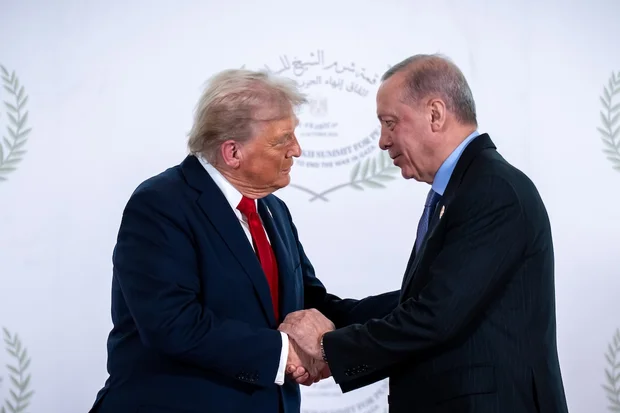
As the formation of the Gaza Board of Peace (BoP) steams ahead with invitations to a diverse collection of individuals and politicians from around the world, Israel is laser-focused on two specific recipients: Turkey and Qatar.
Why is Trump seemingly ignoring virulent Israeli opposition to a Turkish presence in Gaza specifically?
“The answer to this question is very clear: Everything is because of Syria,” Turkey expert Hay Eytan Cohen Yanarocak, PhD, told ALL ISRAEL NEWS. “When you compare his first term to his second term, you see the U.S. could never have penetrated Syria in its entire history.”
A friendly rapport between U.S. President Donald Trump and Turkey’s president, Recep Tayyip Erdoğan, makes American involvement in Syria now possible, explained Yanarocak, a researcher at the Moshe Dayan Center for Middle Eastern and African Studies at Tel Aviv University.
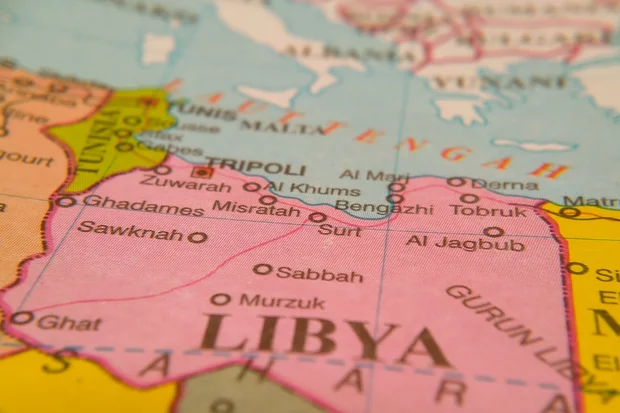
Syria was under Ottoman rule until 1918. Then the French stepped in, followed by the former Soviet Union, and then Iranian influence. With the fall of former Syrian President Bashar al-Assad and his regime in December 2024, Turkey has become the most prominent foreign nation in Syria.
This holds promise for Turkey’s allies of geographic and economic advantages – including access to oil – and likely is what accounts for a conciliatory U.S. foreign policy toward the nascent Syrian government under President Mohammed al Jolani (Ahmed al-Sharaa) and the lifting of sanctions. Jolani is formerly affiliated with both al-Qaeda and ISIS terrorist organizations.
“When Donald Trump hears about money and reconstruction and stability, he wants to strengthen the Syrian government,” Yanarocak said.
The fighting with the Kurds in Syria this month didn’t occur in a vacuum, Yanarocak noted. Syrian troops fighting U.S.-backed Kurdish forces seized control this week of the country's largest oil field, which had been under Kurdish control in the Deir Zor region.
“When Syrians began to attack the SDF (Syrian Democratic Forces), you did not hear any official U.S. condemnation because, as you see, all of the oil wells were passed onto the Syrian government,” he noted.
PAYBACKS
Another factor that all but ensures America’s invitation to Turkey: payback.
Despite Israel’s opposition to Turkey’s invitation to join the board, Trump viewed its inclusion as part of the deal, citing Erdoğan’s role in bringing Hamas to the negotiating table for a ceasefire last year.
“With Erdoğan, he convinced him to ease Hamas demands to finish the war in October,” said Eldad Ben Aharon, senior researcher at Peace Research Institute Frankfurt (PRIF). “He really put pressure on Erdoğan back then to pressure Hamas to accept his 20-point agreement.”
“At the same time, he knew that Erdoğan wouldn’t give anything for free. Now it's payback time and he needs to give Erdoğan what he wanted.”
And what does Erdoğan want?
“He wants to be a player in Syria and also in Gaza and Trump knew it – this is the deal he’s always talking about,” Ben Aharon told ALL ISRAEL NEWS. “Its never a one-way street.”
From Turkey’s perspective, a presence in Gaza feeds its Ottoman-inspired foreign policy of territorial expansion. Zoom out from the tiny coastal enclave of 2 million to the wider region and you will see that Turkish involvement extends beyond Syria, including part of the Mediterranean, the Caucasus and even Africa. A presence in Gaza would serve to widen Turkey’s circle around Israel.
“International politics is a very messy thing. We tend to think about it as a puzzle, but sometimes the pieces in the puzzle don’t fall into the right place,” Ben Aharon said.
“Trump has to manage the expectations and make everything possible to manage his relationship with both Erdoğan and Netanyahu at the same time – and he knows that their interests in the Middle East are colliding,” he continued. “It’s the reality, but it doesn’t mean it can’t be balanced somehow, and that’s how he is doing it.”
Israeli Prime Minister Benjamin Netanyahu didn’t walk away empty-handed either.
“Trump forced Netanyahu to end the war in Gaza in October 2025 but paid him back by launching a campaign to cancel his trial and by pressuring the Israeli president to grant him amnesty,” Ben Aharon said. “There is always a trade-off.”
BACKGROUND
Trump will likely also need Turkey and Qatar to persuade Hamas to give up their weapons.
But at the Knesset, Netanyahu reiterated, “Turkish or Qatari soldiers will not be in the Strip.”
Netanyahu’s office issued a statement saying that the “announcement regarding the composition of the Gaza Executive Board, which is subordinate to the Board of Peace, was not coordinated with Israel and runs contrary to its policy.”
The Gaza Board of Peace is the main piece of Phase 2 of the U.S. brokered Israel-Hamas ceasefire involving reconstruction of the Strip and a transitional government for Gazans. Trump has been eager to move on to this next step after the release of all living Israeli hostages, all but one deceased hostage, and Palestinian prisoners in Israeli jails.
On Wednesday, Israel announced that Netanyahu would accept Trump's invitation to join the BoP. Turkish Foreign Minister Hakan Fidan and Qatari official Ali al-Thawadi, both of whom have expressed strong anti-Israel positions, were also invited to the board.
In an article published in Zman Yisrael, Yanarocak warned that Turkey is operating from a position in which it considers Israel “a menace to regional order.”
“Turkey positions itself as a guarantor state for the Palestinians, but in practice acts as one who seeks to replace the international system and establish a new regional order in which Israel has no basic legitimacy,” he wrote.
The challenge for Israel, as Yanarocak explains, is that if Turkey succeeds in creating a broader regional coalition, Israel could face additional enemy states.
“Ankara is not operating in a vacuum. It is building regional coalitions, strengthening its position in the Muslim world, and managing to position itself in the eyes of large parts of the international community as leading a ‘moral’ struggle against Israel,” Yanarocak wrote.
Popular article:
interview Easter message of resurrection hope amid war at Jerusalem's Garden Tomb

biblical commentary Let my people go: a Passover message for today
4 IDF soldiers killed, 2 wounded in fighting in southern Lebanon, as Israel eliminates dozens of Hezbollah terrorists

Receive latest news & updates
A message from All Israel News
Help us educate Christians on a daily basis about what is happening in Israel & the Middle East and why it matters.
For as little as $10, you can support ALL ISRAEL NEWS, a non-profit media organization that is supported by readers like you.
Latest articles:
ANALYSIS North American Jewish organizations to recruit 100 professionals to combat antisemitism
ANALYSIS ‘No need’ for pre-election Iran strike, IDF chief says as gov’t, opposition trade blame for potential escalation – report
terror attack 2 Israeli soldiers killed, 2 terrorists eliminated in Hebron shooting; IDF says much larger attack was prevented
analysis A people dwelling securely? Israel’s strategic standing, 3 years after Oct 7
ANALYSIS Hamas on wheels: What I found in Dearborn reveals a troubling history and a battle over Israel