Peace with Saudi Arabia? Those seeking normalization shouldn’t support an ideology that attacks Israel, says PM Netanyahu
Israel is ‘following’ kingdom’s rapprochement with Turkey & Qatar, Netanyahu says






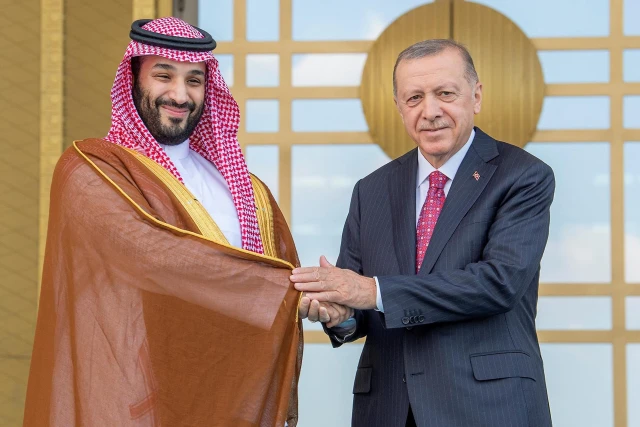
Israel is following the strategic regional realignment of Saudi Arabia, Israeli Prime Minister Benjamin Netanyahu said on Tuesday, marking the first public comments by a senior Israeli official on the issue.
His remarks came after several recent moves by the Saudi leadership that are widely seen as a rapprochement with former regional rivals, Qatar and Turkey, which are viewed as hostile states in Israel.
The growing collaboration has been raising eyebrows across the region, particularly in the United Arab Emirates, which has been the kingdom’s closest ally for the past few decades but has been the target of several political moves and a ferocious Saudi and Qatari media campaign these past months.
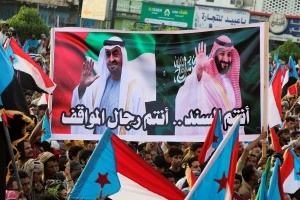
In the most dramatic event of this brewing conflict, Saudi and Emirati forces almost clashed in Yemen, before Saudi Arabia completely banished the Emirati presence.
Netanyahu on Saudi Arabia pic.twitter.com/1HYyQRwaAa
— Amichai Stein (@AmichaiStein1) January 27, 2026
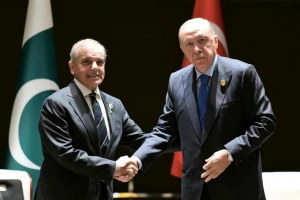
There were even reports of negotiations for Turkey to join Saudi Arabia and Pakistan’s existing defense pact, giving rise to a “Muslim NATO” in the region, while Saudi Arabia and Qatar signed several agreements and discussed deepening their defense cooperation late last year.
During a press conference on Tuesday evening, Netanyahu was asked by the Times of Israel whether a peace agreement is feasible in the near future, given the Saudi outreach to states seen as hostile in Israel and its distancing from the UAE, Israel’s closest regional ally.
“I don’t want to be Saudi Arabia’s analyst – we follow these things as well, we don’t ignore them,” Netanyahu said.
“And it is clear that we expect from anybody who wants normalization or peace agreements with us, that they not participate in efforts steered by forces or ideologies that want the opposite of peace,” the prime minister said, likely a reference to the Muslim Brotherhood (MB) ideology.
These ideologies “attack the State of Israel, deny its legitimacy, and nurture all kinds of organizations that attack the State of Israel,” he continued.
“I think that is obvious, and so I would be happy if we’ll have a normalization and peace agreement with Saudi Arabia, assuming Saudi Arabia wants a normalization and peace agreement with a strong and secure Israel.”
One of the experts who has been drawing attention to the Saudi pivot is Hussain Abdul-Hussain, a research fellow at the Foundation for Defense of Democracies.
Writing in The National Interest, he explained that “Saudi Arabia is undergoing a major regional realignment, abandoning the pursuit of an integrated Middle East with a thriving knowledge economy and dusting off the kingdom’s old rhetoric against Zionism and [turning] in favor of the Muslim Brotherhood.”
Hussain listed several recent events highlighting this shift, including the expulsion of Emirati forces in Yemen, its financing of weapons for Muslim Brotherhood-affiliated Abdel-Fattah al-Burhan in Sudan, and reportedly lobbying against a U.S. strike in Iran.
The political shift has been accompanied by a media campaign from Saudi and Qatari outlets, described by critics as carrying antisemitic overtones, targeting Israel and the UAE.
After Israel’s recognition of Somaliland, whose largest supporter is the UAE, Riyadh “took out its venom on the UAE, accusing the two countries of implementing a ‘Zionist project’ that aims at partitioning Arab and Muslim countries to weaken them and dominate them,” wrote Hussain.
“Saudi columnists, all of whom print the government’s views, started arguing that normalization between Muslims and Jews is impossible unless one side changes its views and converts to the religion of the other.”
An expansion of the Abraham Accords to Saudi Arabia had seemed imminent before Hamas’ attack on Oct. 7, 2023, and some experts argue that stymying this agreement was among the terror group's key motivations in launching the surprise attack on Israel.
Throughout the war, the Saudi Kingdom has voiced support for the Palestinian cause, reinforcing its demand for a two-state solution as a precondition for normalization, after Saudi Crown Prince Mohammed Bin Salman (MBS) previously signaled he could accept an Israeli commitment to a “pathway” toward statehood in exchange for peace.
After a “tense” meeting last October, U.S. President Trump was reportedly taken aback and disappointed after MBS rejected the normalization of relations with Israel.
You might also like to read this: