Why Saudi Arabia and UAE nearly fighting over Yemen sends worrying signals for entire region
Former allies' interests diverge in Sudan, Somaliland, and, most prominently – Yemen




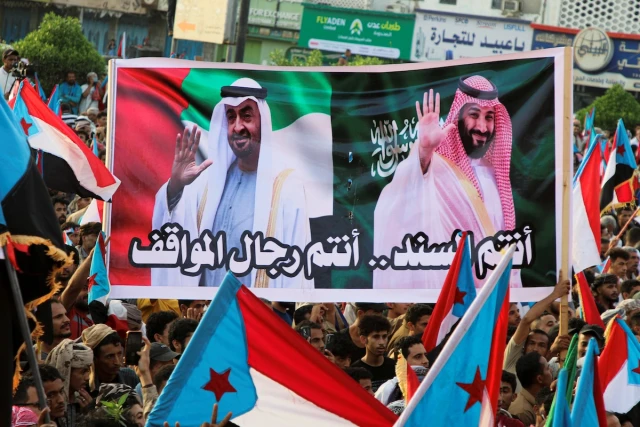
If you haven't followed the news closely throughout the holiday season, or were distracted by developments in Venezuela and Iran, you might have missed that Saudi Arabia and the UAE almost came to direct blows in Yemen.
After a short proxy war, it seems Saudi Arabia has expelled Emirati influence from the region for now. Meanwhile, this conflict did not even involve the Houthi terrorists, the main reason for both countries’ military presence in the area. The Houthis instead watched from the side as the alliance against them crumbled.
The fracture of the Saudi-UAE axis, the formerly iron-clad allies leading the so-called “moderate Sunni alliance”, could have massive implications for the future of the broader region, and particularly for Israel’s plans to expand the Abraham Accords to Saudi Arabia.
The situation at the outset
So how did this happen so fast, and why?
The situation had simmered for months before exploding into full view at the end of December. At the time, the situation in Yemen had been relatively clear, as the civil war that had plagued the country since 2014 had settled into a years-long stalemate.
Ignoring some of the complexities, we can state that the more important and popular regions in northwestern Yemen, including the capital Sana’a, were (and still are) controlled by the Iran-backed Houthi terrorists.
The rest of the country was largely controlled by the Saudi-led anti-Houthi alliance, which had been created to support the internationally recognized government of Yemen.
This government is currently known as the Presidential Leadership Council (PLC) and is based in the southern port of Aden.
However, the council combines two main factions, with the main one led by Rashad al-Alimi representing the north of the formerly divided country, which only united in 1990. The other faction is the Southern Transitional Council (STC), an umbrella for several groups, which openly call for independence for the southern regions.
الرئيس الزُبيدي يشهد عرضا عسكريا مهيبا للقوات المسلحة الجنوبية احتفاءً بالعيد الـ58 للاستقلال الوطني 30 نوفمبرhttps://t.co/tSbXCNGcWq pic.twitter.com/8w5JWXhQqd
— المجلس الانتقالي الجنوبي (@STCSouthArabia) November 30, 2025
Over the last years, the PLC’s northern faction developed close relations with Saudi Arabia, while the STC, which was set up with support from the UAE, grew dependent on weapons and equipment shipments from the Emirates.
The end of the anti-Houthi alliance
The UAE had once been the most prominent member of the Saudi alliance against the Houthis, and a staunch partner in the kingdom’s fight against radical Islamist groups and Iranian proxies across the region throughout the post-Arab Spring period.
However, it is now clear that this strategic alignment has been fracturing for a while, as the two states’ interests have diverged in a number of arenas, including Sudan, Somaliland, and most prominently, in Yemen.
In the preceding months, several media reports suggested that the STC was intensifying efforts to seek independence and was even reaching out to allies of the UAE – like Israel – to receive recognition. The situation closely resembled the Israeli recognition of Somaliland, another region of close cooperation between Israel and the UAE.
Tensions behind the scenes exploded into full view in December, when the forces of the STC decided to take control of two key provinces, Hadramaut and Mahra, which partly border Saudi Arabia and also contain oil reserves.
The STC claimed that this wasn’t meant as a hostile move toward the rest of the PLC but rather intended to improve its forces' ability to fight the Houthis, as well as the other terror groups active in the region, like ISIS, al-Qaeda and others.
This was a step too far for Saudi Arabia. Already feeling threatened by the UAE’s growing net of naval outposts along the Red Sea (Somalia, Eritrea, south Yemen), and support for various separatist factions across the region (Somaliland, Sudan, Libya), the kingdom declared that this move, apparently designed as a first step towards declaring independence, had crossed a “red line.”
The Saudi leadership then embarked on a series of power moves straight out of a mafia movie, ruthlessly asserting its status as the regional power and effectively expelling the UAE from Yemen.
The Saudi backlash
It began by publishing an unusually strongly worded letter protesting the UAE’s move, stressing that its national security was a “red line” and “that the steps taken by the sisterly United Arab Emirates are extremely dangerous,” giving it a deadline to withdraw its troops.
Then, the Saudi Air Force bombed a shipment of armored vehicles in the port of Mukalla, which it said was intended for the STC’s forces – an unprecedented escalation in the relations between the UAE and Saudi Arabia.
The Emirates denied that the shipment had been intended for the STC but agreed to withdraw the rest of its own forces from the country, framing this step as a reassessment of its operations rather than a retreat.
But Saudi Arabia pressed its advantage, and PLC forces launched an operation to retake the Hadramaut and Mahra provinces. The Saudi Air Force accompanied them with airstrikes that the STC claimed killed at least 80 of its fighters.
With news of the STC leaving Aden and their president fleeing to another country, it must be said that they made an incredibly ballsy gamble in December that failed
— Delta9250 (@deltaIV9250) January 7, 2026
They spent a decade seizing most of South Yemen, won all of it in December, then lost it all in a week
Crazy pic.twitter.com/t2oj1IRNmP
By the start of the new year, the PLC forces had retaken control of the presidential palace in Aden and the key eastern port of Mukalla, along with most of the southern territory.
Still, Saudi Arabia apparently decided not to stop until the threat of southern Yemeni independence under an unfriendly regime was buried. In a scene reminiscent of a Hollywood movie, the Saudis invited a delegation of STC leaders to come to Riyadh on Jan. 7 to settle all outstanding issues.
The STC said Saudi officials had threatened to bomb the city of Aden if its leader, Aidarous al-Zubaidi, didn’t join the delegation. But when the delegation reached Riyadh, Zubaidi was nowhere to be found.
In addition, the STC said shortly afterwards that contact with the delegation had been lost after its members had been “arbitrarily detained and taken to an unknown location.”
The next day, Saudi Arabia claimed that Zubaidi had fled to the Emirati capital of Abu Dhabi on a military flight from Somaliland, after being spirited out of Yemen on a boat.
The Presidential Leadership Council then expelled Zubaidi, charging him with treason.
On Jan. 8, the STC delegation’s head emerged in Riyadh to claim that a meeting with the Saudi Ambassador to Yemen had been “fruitful.”
The next day, Secretary-General al-Sebaihi announced that the STC was dissolving itself, praising “the measures taken by the Kingdom of Saudi Arabia and the solutions it has provided.”
Sign language in politics : The delegation of the Southern Transitional Council (STC) detained in Saudi Arabia is under pressure and threats.#Aden #south_arabia pic.twitter.com/XdJOoUl0mh
— م. بشير البريكي (@basheralburaiki) January 9, 2026
As reasons, he cited internal disagreements and mounting regional pressure – and indeed, internal disagreements quickly became obvious as a STC spokesman came out in Abu Dhabi to reject the announcement, stressing that only the full council could take such a decision and that it would deliberate as soon as the delegation returned from Riyadh.
On Jan. 10, Rashad al-Alimi, head of the PLC, which remains the internationally recognized government of Yemen, declared his forces had retaken full control of the south, completing the Saudi move to establish control over non-Houthi-held Yemen.
Saudi – UAE tensions cast shadow over the region
The whole episode resembled the infamous 2017 affair where Lebanese Prime Minister Saad Hariri abruptly announced his resignation after arriving for a visit in Saudi Arabia. At the time, it was claimed that he had been detained by Saudi forces and coerced into resigning.
شعب الجنوب في مليونية "الوفاء والصمود" يؤكدون رفضهم المساس بالإرادة الشعبية والسيادة الوطنية الجنوبيةhttps://t.co/XHfnTNCb1j pic.twitter.com/Ryart6OhG4
— المجلس الانتقالي الجنوبي (@STCSouthArabia) January 10, 2026
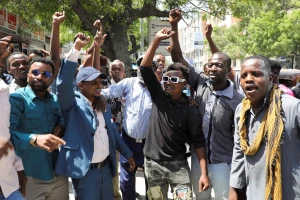
On Jan. 10, thousands of Yemenis gathered in Aden to show support for the STC, demonstrating that, despite the successful Saudi moves, independence for southern Yemen is not a fully defeated movement yet.
Saudi Arabia, however, announced that outstanding issues would be resolved at a conference it intends to convene soon and Defense Minister Khalid bin Salman, brother of Crown Prince Mohammed Bin Salman, said the southern issue is now on a “real path nurtured by the kingdom and endorsed by the international community.”
Amid the chaos, the Houthis were allowed to sit back and watch the alliance against them ostensibly tear itself apart. The Saudis now remain without their most important ally in Yemen.
However, Yemen now appears to be united under the leadership of the PLC, which already vowed to return to fighting the Houthis.
While Yemen is in itself an important arena, the Saudi-UAE clash there will have much broader implications for the region.
Surprise, surprise! The global Muslim Brotherhood supports Saudi “confronting” the UAE and opposing Yemen’s Southern Transitional Council (STC) secession plan, insisting that the part of Yemen not under Houthis remains under the control of the Presidential Leadership Council… https://t.co/43q7T4EUF6
— Hussain Abdul-Hussain (@hahussain) December 30, 2025
After years of simmering tensions, the two former allies have now openly clashed. Several experts have pointed out that Saudi Arabia has made several overtures toward Turkey and Qatar in recent months, indicating that a broader strategic shift is afoot.
Most crucially for Israel, if Saudi Arabia were to disband the moderate Sunni axis in favor of a reorientation toward Turkey and Qatar – together with the possible collapse of the Iranian regime – the basic logic of the Abraham Accords, which were built on cooperation between the axis and Israel to counter Iran, would be upended.
These are developments that have the potential to radically reshape power relations in the Middle East for decades to come.
Want to help more people find our reporting from Israel? Leave a quick Google review of our website HERE .
You might also like to read this: