Saudi imam denounces Israel at Mecca mosque, signals Saudi-Israel peace isn’t imminent
Imam praises 'heroic Palestinian children' while condemning 'brutal Zionist enemy'



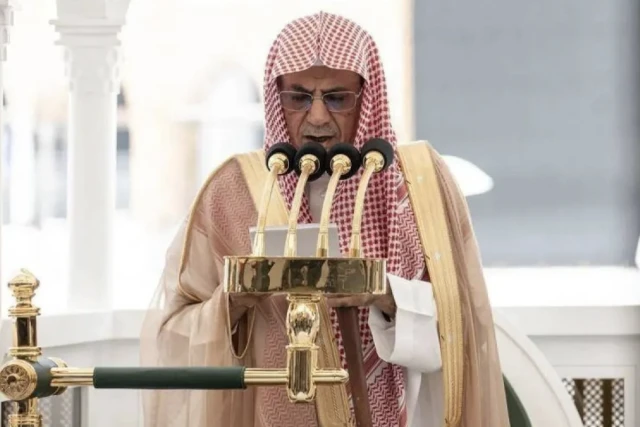
An imam at the Grand Mosque in Mecca, Saudi Arabia, recently condemned Israel during his Friday sermon, underscoring stalled prospects for Saudi–Israel normalization.
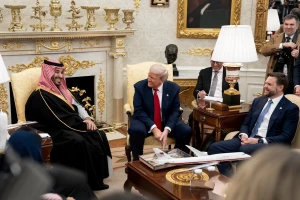
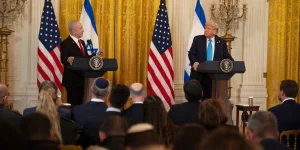
This comes after U.S. President Donald Trump was reportedly “disappointed and angry” with Saudi Crown Prince Mohammed bin Salman (MBS) after he rejected normalizing relations with Israel during his recent visit to the White House.
Despite having been informed ahead of the discussion that Trump expects progress toward normalized ties, which has been in the works since the Abraham Accords were signed in 2020, MBS reportedly pushed back, arguing that he isn’t opposed to making peace but that the widespread anti-Israel sentiment among the Saudi public would not allow such a significant step at this time.
He also stated, “We want to be part of the Abraham Accords, but we want also to be sure that we secure a clear path to a two-state solution.”
Friday sermons at the holiest mosque receive wide attention throughout the Muslim world, and its nine imams are employed by the government and generally seen as expressions of the state’s messaging. Therefore, Sheikh Saleh bin Abdullah bin Humaid’s remarks last Saturday were another negative signal for relations with Israel, whom he called the “oppressive and brutal Zionist enemy.”
“Among the most joyful examples and noble images are the young children of Palestine,” said bin Humaid, “heroic children whose fathers were killed while they watched and whose homes were demolished while they witnessed. Jerusalem and Palestine will remain high and lofty in the hearts of Arabs and Muslims.”
The imam, who also serves as a senior advisor to the royal court, added that the “blood of the martyrs, the stances of men and the steadfastness of heroes will, by God’s will, yield proud souls and hearts that refuse humiliation.”
The Jewish Insider cited Hussain Abdul-Hussain, a research fellow at the Foundation for Defense of Democracies, who explained, “Preachers in most Gulf countries are government employees, and their sermons often reflect official talking points.”
“Sheikh bin Humaid’s speech suggests that Hamas leader Yahya Sinwar succeeded in one of the goals of his Oct. 7 attack on Israel by halting normalization between Saudi Arabia and Israel,” he argued.
Despite reports suggesting that Saudi state media censored this part of bin Humaid’s sermon in its official coverage, his comments about Israel followed several other indications that peace with Israel is currently not on MBS’ agenda.
Two weeks ago, Saudi Arabia’s former intelligence chief and ambassador to the U.S., Prince Turki Al Faisal, said onstage at the Milken Institute’s Middle East Summit in Abu Dhabi that Israel was “definitely” a greater risk to regional stability than Iran.
“We’ve seen that Iran has been dealt a strong hand [a strong blow] by the US,” he said, adding that “Events in Lebanon… obviously affected Iran’s ability to affect and influence events in the broader Middle East.”
In contrast, he accused Israel of “bombing Syria on almost a daily basis, continuing to bomb Palestinians – whether in Gaza or the West Bank and also in Lebanon, where there’s supposed to be a ceasefire.”
“That is definitely not a harbinger of peace in our part of the world. In my view, it is Israel now that is the troublemaker and should be reigned in,” he concluded.
My take on prospects for Israeli-Saudi normalization after a visit to Riyadh. Not in 2026, maybe in 2027, with plenty of caveats. pic.twitter.com/mlzEHWZHZV
— Dan Shapiro (@DanielBShapiro) December 12, 2025
Former American ambassador to Israel, Dan Shapiro, also assessed that Saudi-Israeli normalization is “not imminent” despite the kingdom being “open to it.”
“I think it’s unlikely that it could happen in 2026,” Shapiro said in a video published on 𝕏, “[MBS] wants to see progress toward a stable future in Gaza, but I do think the crown prince sees that there’s value for his wider regional project to have Saudi Arabia be part of a group of integrated moderate states.”
“Public opinion in Saudi Arabia is not extremely supportive right now, after two years of what they’ve seen on the streets of Gaza,” Shapiro said.
He also noted that Saudi Arabia is busy with the “relentless pursuit of the Crown Prince’s Vision 2030,” including business ventures across numerous areas.
“Israeli normalization in that context might be a ‘nice to have’ and provide some extra stability for the region, but it may not be as much of a priority as it is for Americans and Israelis, and they may be too busy to make it a priority.”
You might also like to read this: