Joel Rosenberg warns on Iran: Trump 'has three choices – and I think he picks number two'







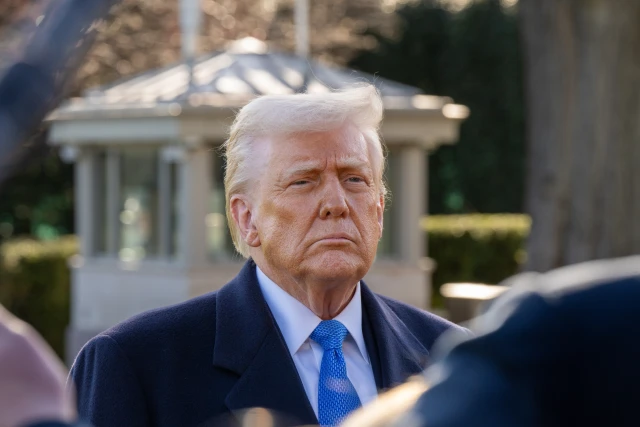
Tensions are rising across the Middle East and all eyes are on U.S. President Donald Trump as he decides whether or not to strike Iran. The issue has prompted sharp criticism and deep divisions among political analysts and commentators. Some warn of escalating regional conflict, while others argue limited force may be necessary to deter Tehran and protect Americans and U.S. allies, which include Israel, among others.
During a recent debate, ALL ISRAEL NEWS Editor-in-Chief Joel Rosenberg sat down with Mario Nawfal, who hosts the largest show on 𝕏 (formerly known as Twitter), and Prof. Glenn Diesen to debate Trump’s next move. To strike or not to strike, that really is the question – and people around the globe are awaiting the answer.
The debate highlighted three potential options facing Trump: pursuing diplomacy without military action, launching a large but limited strike aimed at punishing the Iranian regime, or escalating toward sustained attacks designed to trigger regime change.
Rosenberg predicted that a limited strike is the most likely outcome, arguing that Trump’s credibility could be at stake after strong rhetoric toward Iran and promises of support for anti-regime protesters.
“He has three choices,” Rosenberg said. “He could do nothing… he could do a large but limited strike… or he could go all in for regime change,” he added, “I think he’s going to pick most likely number two.”
Supporters of military action have framed Iran as a long-standing threat to U.S. interests and regional allies, arguing that a targeted strike could degrade missile capabilities and deter further aggression. While some have acknowledged that regime change might be desirable, they have cautioned that such an objective would be difficult to achieve through air power alone.
Prof. Diesen, however, opposes military action, warning that even a limited strike “would escalate the conflict, push Iran toward nuclear deterrence, and risk a regional war driven by security competition.”
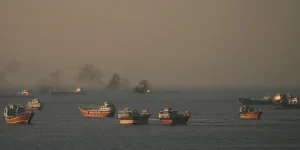
Critics have argued that Iran would likely retaliate forcefully against U.S. assets and shipping lanes, potentially shutting down the Strait of Hormuz – a key global energy route through which the majority of oil from Saudi Arabia, Iraq, Kuwait, Qatar, and Iran moves. “No, I don’t think Trump should attack. I think it’s very likely that he will,” Diesen said, adding that Iran could “go all out” in response.
The debate also reflected deep disagreements over whether Iran represents an inherently hostile adversary or a regional power responding to security pressures. Some have argued that U.S. and Israeli policies have fueled tensions and that greater diplomatic engagement could ease hostilities. “If we stop threatening them, perhaps we can get something in return,” Diesen said.
Rosenberg disagreed, arguing that the Iranian regime has made itself an enemy through decades of anti-American rhetoric, proxy warfare and regional destabilization. “They don’t have to be an enemy, but the Iranian regime has decided they’re the enemy,” he replied.
There are some concerns from Gulf states, which fear being drawn into a wider conflict even as some regional leaders privately support strong action against Iran. Some political analysts have warned that internal divisions within Iran could make regime collapse unpredictable and potentially destabilizing for the broader region.
At the end of the debate, Nawfal asked whether Trump would strike Iran, and both Rosenberg and Diesen predicted he would, in fact, ultimately “pull the trigger."
The world now waits to see if that unified prediction will come true.
You might also like to read this: