Former CENTCOM deputy chief says Iran ‘playing poker’ with US, regime collapse ‘imminent’




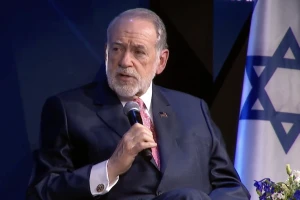
A former deputy commander of U.S. Central Command (CENTCOM) said on Thursday that the Islamic Republic of Iran is nearing a point of collapse and is “playing poker” with the United States and the international community at very high stakes.
CENTCOM's former vice admiral, Robert Harward, also said the ayatollah regime is unprepared for a regional war against the U.S. and potentially also Israel.
“If they were to escalate and kind of their last remaining spear, be it missiles, be it strategic or tactical, dependent on the range, that would really bring escalation to the point that Iran is not prepared to deal with… so they're playing poker,” he told The Jerusalem Post.
Harward, an advisor of the Jewish Institute for National Security of America’s "Iran Policy Project," said that despite its weakness, the regime’s aggressive policies toward Washington and its allies is “the same game plan Iran has had for decades.”
U.S. forces recently downed an Iranian drone that approached the U.S. aircraft carrier Abraham Lincoln. Washington condemned Tehran’s move as “very aggressive” toward U.S. naval forces. Harward said Iran has “always harassed US warships in the region. And some of this is just a continuation, but some of it is clearly aligned to what's going on with either the negotiations and the anticipation of strikes or other actions against Iran.”
“These are all somewhat tactical operations intended to harass and reinforce the limited power that the Iranian government and the IRGC [Islamic Revolutionary Guard Corps],” he added.
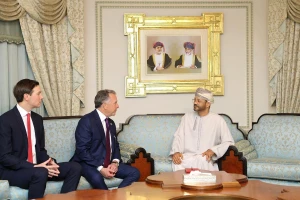
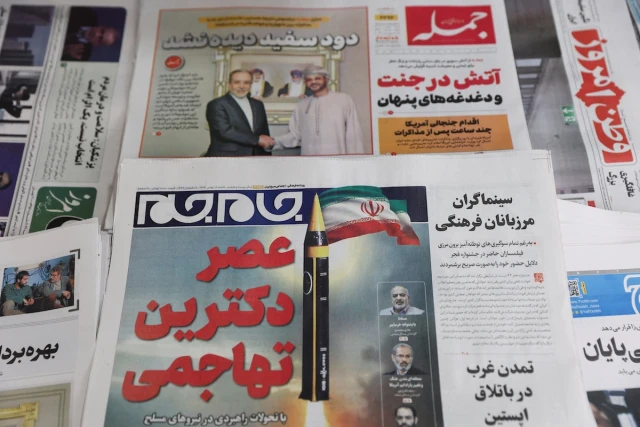
The U.S. and Oman resumed negotiations in the Omani capital, Muscat, on Friday. The Gulf state hosted talks between the U.S. and Iran in 2025, prior to Israel's Operation Rising Lion military offensive, which degraded much of Iran’s military leadership, missile and nuclear assets.
Oman's Foreign Ministry announced that the current focus of the talks is to create conditions for viable diplomatic negotiations.
“The consultations focused on preparing the appropriate conditions for resuming diplomatic and technical negotiations, while emphasizing their importance, in light of the parties’ determination to ensure their success in achieving sustainable security and stability,” the foreign ministry stated.
However, Jason Brodsky, policy director of the think tank United Against Nuclear Iran, warned, “The regime in Iran will say and do enough to earn another meeting. That’s the goal here with its friends the ‘mediators’ – to lure the U.S. into a process that thwarts military action. Tehran will say it will be flexible on the nuclear program, but on other non-nuclear topics, they will dig in.”
U.S. President Donald Trump said he was optimistic about the talks and confirmed that the next round would continue at the beginning of next week. However, the regime has reportedly refused to discuss limits on its missile arsenal, uranium enrichment and support for regional terrorist proxies, such as Hezbollah in Lebanon and the Houthis in Yemen.
Despite the negotiations, Harward believes Washington is keeping its options on the table, including a potential military strike on Iran. He assessed, “In my humble opinion, regime collapse is imminent. It's no longer a matter of if. It's just a matter of when.”
You might also like to read this: