Shortcomings with US air defense systems in the Middle East
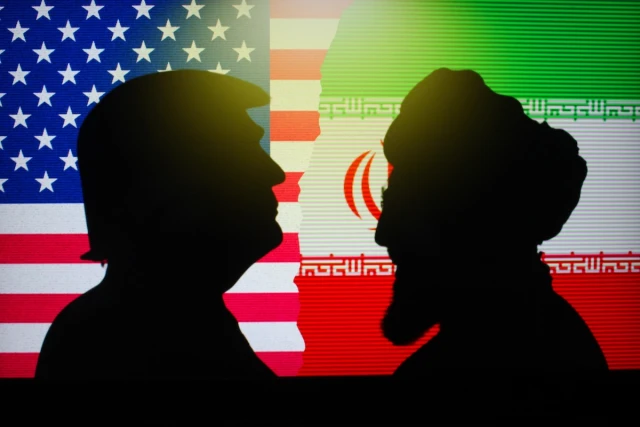
The President of the United States has boasted that the United States has the best military equipment in the world. This statement is self-serving for business in the defense industry. As of May 2025, U.S. multi-billion dollar deals have been made with Saudi Arabia, Qatar, and the United Arab Emirates for U.S. Military equipment. It is likely that shortcomings with U.S. air defenses in the Middle East has been a contributing factor to the withholding of military strikes in Iran, despite the Iranian regime having crossed the threshold of killing protestors as delineated by the POTUS (see Iran uprising: Biblically and militarily). Matthew 24:4 says take heed that no one deceives you.
Rightly interpreting current events involves clarity through objective assessment, biblical comparison, and resolute discernment.
Military and Economic Considerations
In contemporary warfare, air defensive capabilities are crucial. Every air defense system unit, also known as a battery, consists of a command-and-control center, launchers, detection radar, and engagement radar. The U.S. THAAD (Terminal High Altitude Area Defense) system is comparatively very costly and has demonstrated limited effectiveness. Procurement of a single THAAD battery is US $2.73 billion and each THAAD interceptor costs US $12.7 million. There are only eight THAAD batteries, one of which was deployed to Israel in late 2024 [1]. Operational performance indicates that the U.S. THAAD system is inferior to the Israeli Arrow 3 for intercepting ballistic missiles [2, 3]. The Israeli Prime Minister recently said Israel wants to be fully independent of U.S. military aid within the next ten years [4]. This prospect is indicative of a trending shift militarily and economically.
History of the Patriot PAC-3 Air Defense System
Aside from THAAD, the U.S. has the Patriot system for defense against ballistic missiles. The Patriot system is relatively old and has undergone several upgrades throughout the years in an effort to overcome problems and enhance capabilities [5]. The initial version of the Patriot system was fielded in 1984 and upgraded 1988 [5]. Despite several improvements and modifications in its development, the first combat use (during the Gulf War) demonstrated the need for further improvements [6]. The Patriot PAC-3 upgrade was approved for engineering and manufacturing development in 1994 [6], and it was declared combat ready in 2002 [7]. The upgrade known as Missile Segment Enhancement (MSE), which increased capable altitude by 50% and range by 100%, was fielded in 2016 [8]. There has been uncertainty with the operational effectiveness of Patriot PAC-3 from lack of combat performance [9]. Iran’s June 23, 2025 attack on the Al Udeid Air Base in Qatar, which has a persistent U.S. military presence and two Patriot PAC-3 batteries, was the largest engagement of the Patriot system to date [3]. In total, 30 interceptor missiles were used, with 13 of 14 ballistic missiles intercepted, and one hitting and damaging a communications dome [3]. These results call into question the confidence level in the Patriot PAC-3 against contemporary Iranian ballistic missiles.
Some Trust in Chariots and some in Horses…
Psalm 20:7 “Some trust in chariots and some in horses, but we trust in the name of the Lord our God”. The words “chariots” and “horses” are distinguishable in that “chariots” refers to equipment for war, while “horses” refers to strength in the general sense. In parallel here is Zechariah 4:6 which says “Not by might, nor by power, but by My Spirit, says the Lord”. Linguistically there are two words with overlapping meaning as repetition for emphasis and with distinguishable aspects, or nuances, for a more comprehensive description. Interestingly, the phrase “peace through strength” has been revived with the current U.S. administration and, aside from being used by the Reagan administration, is actually ancient Roman Empire philosophy.
References
[1] Feickert, A. 2025, September 15. The Terminal High Altitude Area Defense (THAAD) System, Document IF12645. Congressional Research Service.
[2] Fabian, E. 2025, May 9. Source: Houthi missile shot down by Arrow after US THAAD missed for 2nd time this week. The Times of Israel.
[3] Cicurel, A. 2025, July 21. Missile and Interceptor Cost Estimates During the U.S.-Israel-Iran War. The Jewish Institute for National Security of America.
[4] TOI Staff. 2026, January 10. Netanyahu says he aims to end US military aid to Israel within a decade. Times of Israel.
[5] Hawley, J. K. 2017. Patriot Wars: Automation and the Patriot Air and Missile Defense System. Center for a New American Security.
[6] O’Reilly, P. and E. Walters. 1996. The Patriot PAC-3 Missile Program – An Affordable Integration Approach. Defense Technical Information Center.
[7] Walker, J., L. Bernstein, and S. Lang. 2003. Seize the High Ground: The U.S. Army In Space and Missile Defense. U.S. Army Space and Missile Defense Command.
[8] United States Government Accountability Office. 2016. Patriot Modernization: Oversight Mechanism Needed to Track Progress and Provide Accountability, GAO-16-488.
[9] Hildreth, S. A. 2007. Kinetic Energy Kill for Ballistic Missile Defense: A Status Overview, Document RL33240. Congressional Research Service.
You might also like to read this: