Iran uprising: Biblically and militarily



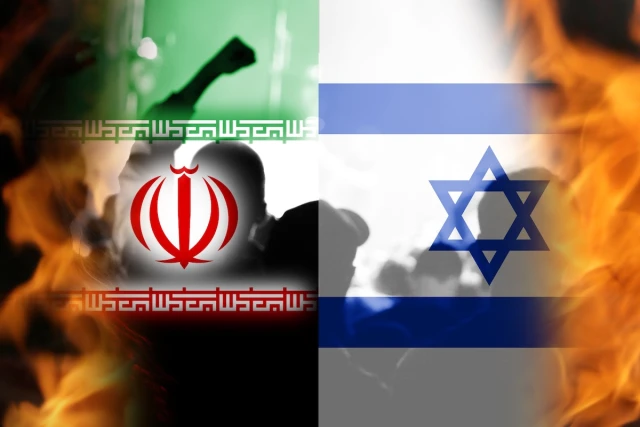
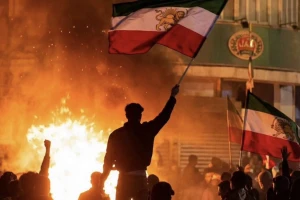
The uprising that has been occurring in Iran started as protests on December 28 reportedly because of worsening economic conditions [1]. The President of the United States has said that there would be intervention if the Islamic Republic regime kills protestors. Indeed, it is reported that hundreds of protestors have already been killed [2]. While there has been no sign of an U.S. imminent attack [2], it seems Israel would again be making the attack on Iran. It is interesting that the POTUS assumes control over Israel as a proxy. Militarily, there are several considerations based on experiences from the Twelve-Day War last June.
Iran’s Inventory of Launchers
The firepower of Iran depends on their number of missile launchers. In the Twelve-Day War, each Iranian ballistic missile launch revealed the location of the launcher, and though the launchers are mobile, Israeli surveillance enabled tracking and targeting of the launchers [3]. Based on estimates from the Israel Defense Forces (IDF), Iran’s number of launchers was reduced from 350 to about 100 launchers [3]. Iran may have adapted its tactics to use longer-range ballistic missiles that can be fired from further away in central Iran, instead of from western Iran where Israeli attack aircraft were targeting launchers. Transporter erector launchers are used because they are mobile [4] and can be disguised as civilian trucks [5]. Because these launchers are simple, low-cost modifications of commercial trucks in Iran, inventory could be increased relatively quickly [4].
Air Defense Systems
In defense of Iran’s ballistic missile attacks on Israel, both Israel’s Arrow system and the United States’ THAAD system were used [6]. In periods where THAAD represented most of the interceptors used, Iran’s successful hit rate increased [6]. THAAD (Terminal High Altitude Area Defense) was developed by Lockheed Martin and the first battery was activated in 2008 [7]. Israel began developing the Arrow 3 in 2008, despite the U.S. urging Israel to instead purchase the THAAD system [8]. The Arrow system was developed by Israel Aerospace Industries with financial support from the United States [9]. Arrow 3 was successfully tested in 2014 [9], and has been operational since 2017 [10]. Arrow 3 interceptors are assembled in Israel, by Israel Aerospace Industries, but Boeing is responsible for 40-50% of the components [11]. Israel Aerospace Industries is one of Israel’s largest industrial companies and an important part of Israel’s economy [12]. Cost per interceptor [6], and range/altitude [13] are given below:
Air Defense System | Cost per interceptor (US $) | Range (km) | Altitude (km) |
Arrow 3 | 2-3 million | 2,400 | 100 |
Patriot PAC-3 | 3.7 million | 70 | 24 |
THAAD | 12.7 million | 200 | 150 |
On June 23, Iran launched ballistic missiles at the Al Udeid Air Base in Qatar [14], which has a persistent U.S. military presence [15]. In that attack, the two Patriot PAC-3 batteries used about 30 interceptors in total against 14 Iranian ballistic missiles [16]. The results were 13 of 14 ballistic missiles intercepted, and one hitting and damaging a communications dome [16]. The fourteen ballistic missiles were reciprocal in number to the fourteen bombs dropped by U.S. B-2 stealth bombers on June 21 [17].
Kingdom Against Kingdom
What is happening in Iran is a perfect example of kingdom rising against kingdom (Matthew 24:7). In this case the uprising is not between nations but between “kingdoms”. The Islamic Republic of Iran came to power after the Iranian Revolution in 1979, which overthrew the autocratic monarchy ruled by the shah [14]. The Islamic Republic has features of a democracy but in practice is an authoritarian government based on Shia Islam and ruled by an ayatollah as Supreme Leader [18]. The exiled crown prince Reza Pahlavi, son of the deposed shah, has arisen as a leading figure in contrast to the current regime [19]. Pahlavi’s support of and from Israel is strategic [19]. However, whatever happens, Iran (Persia) will still have animosity towards Israel according to Ezekiel 38.
References
[1] Wells, K., B. Rezaei, A. Fattah, B. Schmida, C. Moorman, A. Borens, K. Campa, and A. Ganzeveld. Iran Update, December 30, 2026. Institute for the Study of War.
[2] Wells, K., Z. Wakilzada, B. Schmida, A. Parry, and A. Ganzeveld. Iran Update, January 11, 2026. Institute for the Study of War.
[3] Cicurel, A. 2025, June 26. Iranian Ballistic Missile Estimates. The Jewish Institute for National Security of America.
[4] Atashjameh, M. 2025, October. Ballistic Missile Launchers: A Case Study of Iran (Built for Survival, Not Luxury). MCU Insights 16(5). Marine Corps University Press.
[5] Barrie, D., N. Childs, J. Dempsey, E. Sabatino, and T. Wright. 2023. Watching Iran: the ISR Gulf. The International Institute for Strategic Studies.
[6] Cicurel, A. 2025, July 21. Missile and Interceptor Cost Estimates During the U.S.-Israel-Iran War. The Jewish Institute for National Security of America.
[7] Feickert, A. 2025, September 15. The Terminal High Altitude Area Defense (THAAD) System, Document IF12645. Congressional Research Service.
[8] Sharp, J. M. 2025, May 28. U.S. Foreign Aid to Israel: Overview and Developments since October 7, 2023, Document RL33222. Congressional Research Service.
[9] Samaan, J. L. 2015. Another Brick in the Wall: The Israeli Experience in Missile Defense. US Army War College Press.
[10] Arrow Weapon System: The World’s Most Advanced Missile Defense System. 2022. Israel Aerospace Industries. MLM Division.
[11] Boeing Defense, Space & Security. 2013. Backgrounder: Arrow Weapon System.
[12] Matthew, D. and S. Mesilati. 2024. Israel Aerospace Industries Ltd. Affirmed at ‘A-‘ on Strong Operating Performance; Outlook Stable. S&P Global.
[13] Cicurel, A. 2025, August. Shielded by Fire: Middle East Air Defense During the June 2025 Israel-Iran War. The Jewish Institute for National Security of America.
[14] Thomas, C. and J. Zanotti. 2025, June 26. Israel-Iran Conflict, U.S. Strikes, and Ceasefire, Document IF13021. Congressional Research Service.
[15] Nicastro, L. A. and A. Tilghman. 2024. U.S. Overseas Basing: Background and Issues for Congress, Document R48123. Congressional Research Service.
[16] Cicurel, A. 2025, July 21. Missile and Interceptor Cost Estimates During the U.S.-Israel-Iran War. The Jewish Institute for National Security of America.
[17] Eisenstadt, M. 2025, June 25. Iran’s Retaliation: Choreography, Escalation Management, and the Mirage of “All-Out” War. The Washington Institute for Near East Policy.
[18] Thomas, C. T. 2025, May 22. Iran: Background and U.S. Policy, Document R47321. Congressional Research Service.
[19] Gambrel, J. 2025, January 10. Iran’s exiled crown prince Pahlavi takes on leading role urging protests in former homeland. The Times of Israel
You might also like to read this: