








Iran announces Mojtaba Khamenei, ‘apocalypse-obsessed’ son of former leader, as new head of Islamic Republic
Supreme Leader is top political authority, commander of armed forces, judiciary chief and highest Shia Muslim authority
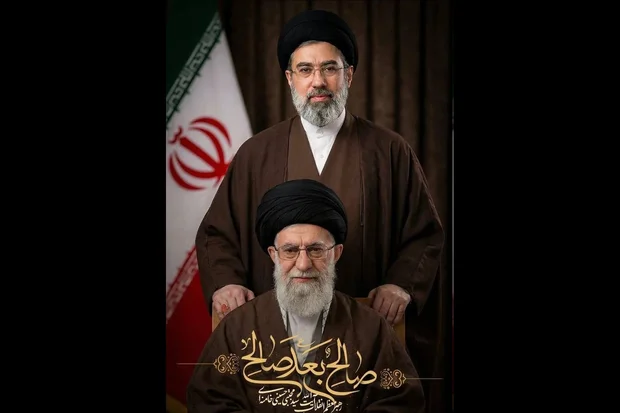
Iranian authorities announced that Mojtaba Khamenei, 56-year-old son of slain Supreme Leader Ali Khamenei, was selected on Sunday as his father’s successor.
Iranian state media reported that the 88-member Assembly of Experts chose Khamenei for the lifelong post that is the Islamic Republic’s top political authority, the commander of the country’s armed forces, its judiciary chief, while also claiming ultimate religious authority over the world’s roughly 200 million Shia Muslims.
Khamenei’s appointment came after U.S. President Donald Trump had warned that he was “unacceptable” as the new leader, and after Israel had threatened to eliminate “whoever” was chosen to lead the Islamic Republic.
Unlike when Mojtaba Khamenei's father Ali Khamenei became supreme leader in #Iran, Mojtaba, apart from a selection of photos from regime parades, does not have an extensive public profile. The first video of him speaking on camera only appeared in 2024 (see below). And it was a… pic.twitter.com/ABEwj45DJX
— Jason Brodsky (@JasonMBrodsky) March 8, 2026
The appointment marks the first time in the regime’s history that power is being transferred from father to son, a practice the Islamic Republic’s founder, Ruhollah Khomeini, had explicitly condemned as a “sinister, evil system of government” and one of the reasons for launching the Islamic Revolution in the first place.
Despite reports of a power struggle beforehand, Iran’s governing institutions and remaining leaders quickly declared their allegiance to the new Supreme Leader, who has never held public office but was widely reported to hold powerful sway over key institutions and maintain close relations with many senior officials in the Islamic Revolutionary Guard Corps (IRGC).
As expected, Mojtaba Khamenei has been named the Islamic Republc of Iran’s new Supreme Leader, succeeding his father. This is what the father of the 1979 revolution, Ayatollah Khomeini, had to say about hereditary succession. https://t.co/nJF1vRqNDT pic.twitter.com/70wCQyRpcr
— Karim Sadjadpour (@ksadjadpour) March 8, 2026
Iran experts warn that the younger Khamenei’s elevation is a worrying signal for the future. “His ascendance to the supreme leadership points to a dark turn for the Islamic Republic,” said Jason Brodsky, policy director at the United Against Nuclear Iran think tank.
Janatan Sayeh of the Foundation for Defense of Democracies (FDD) wrote in National Interest that Khamenei “embodies his father’s legacy and all of the Islamic Republic’s defining pathologies: theocratic rule, human rights abuses, destabilizing foreign policy ambitions, and kleptocracy.”
“Should he assume the role of supreme leader, his growing dependence on the IRGC would further cement the unholy alliance between clerical authority and military power, tightening repression at home while escalating confrontation with the U.S.,” he wrote.
Mojtaba Khamenei is the embodiment of the worst excesses of #Iran's regime: coverups, corruption, nepotism, repression, unaccountability, and aggression. pic.twitter.com/C15hK6yKeN
— Jason Brodsky (@JasonMBrodsky) March 8, 2026
Sayeh also explained that Khamenei was chosen not just because of his connections. “The role carries the expectation of leadership across the Shia world and stewardship over Tehran’s so-called Axis of Resistance against the United States and Israel. Domestically, it requires balancing the Islamic Republic’s rival institutions while maintaining the IRGC’s support. Khamenei is the closest the regime has to meeting those criteria.”
Iranian exile and former IRGC operative Jaber Rajabi recently told The Atlantic that he studied with Khamenei, who is only a mid-ranking cleric, in the holy city of Qom. He described him as an extreme ideological zealot and “uniquely dangerous.”
Khamenei is “apocalypse-obsessed,” Rajabi said. “He thinks there are milestones on the path to the end of the world and he himself will have a special part in hastening humanity down that path.”
“Mojtaba is more dangerous than 50 nuclear bombs,” the former IRGC operative stressed.
After the announcement, videos showing Iranians chanting "Death to Mojtaba" were circulated on social media. Khamenei has reportedly pushed for brutal crackdowns on dissent and protests in the past, making him deeply unpopular among regime critics.
Residents of Tehran are already chanting "Death to Mojtaba." pic.twitter.com/hUZCoJGrBK
— Ariel Oseran أريئل أوسيران (@ariel_oseran) March 8, 2026
Despite a reported power struggle over Khamenei's appointment, power brokers quickly lined up behind him. Ali Larijani, who is said to have been the most important wartime leader in the regime, declared his support despite reportedly backing his brother, a senior cleric, for the role.
“Ayatollah Sayyed Mojtaba Khamenei has been nurtured in the Leadership Seminary. Inshallah, his presence will be a source of goodness and blessings,” he wrote on 𝕏, granting him the honorific “ayatollah” despite his not having attained that clerical rank.
“With the teachings he has learned from his esteemed father, he can guide the country. Our wish is that during the leadership of Ayatollah Sayyed Mojtaba Khamenei, Iran will be placed on the path of development,” he added.
Parliament speaker Mohammed-Bagher Ghalibaf, another key leader, wrote on 𝕏: “The proud and martyr-nurturing nation of dear Iran, by the grace of God and with the favor of His Holiness the Awaited Imam (may God hasten his noble revelation), has been blessed with the gift of a faithful and pious, revolutionary, popular, brave, competent and prudent, time-aware, enemy-knowing, and simple-living leadership.”
He also noted that Khamenei held “the medal of honor for being the child, sibling, and spouse of martyrs,” apparently confirming reports that his father, mother, wife and one of his sons were killed in Israeli airstrikes.
Official statements also said Khamenei had been wounded in the war, confirming prior reports. Ghalibaf also referred to Khamenei as “ayatollah.”
According to the opposition-linked Iran International news outlet, Ayatollah Mohsen Heidari, a member of the Assembly of Experts, said that several clerics were not informed about the meeting at which Khamenei was chosen.
“Some of the members were not informed about the meeting and could not make it to the session even though they were in the city of Qom,” Heidari said, adding that Khamenei received around 85% of the votes.
The Assembly of Experts is constitutionally responsible for appointing and overseeing Iran’s supreme leader; however, its members are selected by the supreme leader or by bodies under his influence.
Popular article:
interview Easter message of resurrection hope amid war at Jerusalem's Garden Tomb
biblical commentary Let my people go: a Passover message for today
4 IDF soldiers killed, 2 wounded in fighting in southern Lebanon, as Israel eliminates dozens of Hezbollah terrorists
Receive latest news & updates
A message from All Israel News
Help us educate Christians on a daily basis about what is happening in Israel & the Middle East and why it matters.
For as little as $10, you can support ALL ISRAEL NEWS, a non-profit media organization that is supported by readers like you.
Latest articles:
Israeli fighter jets flew to Iranian border in ‘power projection,’ deterrence exercise ahead of elections next week
Israel targets nuclear fusion leadership as AI drives soaring energy demand

Israel's Sheba Medical Center climbs to 6th in global smart-hospital rankings
Israeli intel chief Zini travels to France to give counterterrorism advice amid violent riots – report
Founding trustee of Oxford’s Islamic studies department believed Muslims should ‘continue the work of Hitler’