The Islamic Republic: A theocracy misread by the West



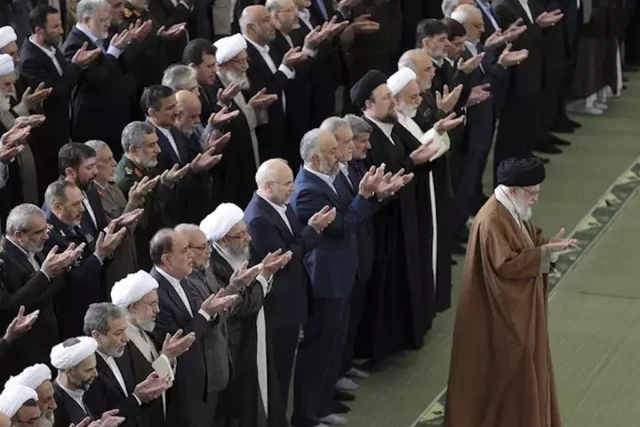
For nearly half a century, Western policy toward Iran has rested on a foundational misreading: the assumption that the Islamic Republic behaves like a conventional nation-state pursuing rational interests. It has never been one. By design, by constitution, and by the lived reality of its citizens, Iran is a theocracy in which the mosque is the state, the Qur’an provides constitutional logic, and eschatology shapes foreign policy. The regime’s national resources are not directed toward economic development or social prosperity, but toward advancing a transnational Shia ideological project rooted in divine mandate.
This misunderstanding has had catastrophic consequences. Western governments negotiated with Tehran as though it were a hostile but ultimately pragmatic state with negotiable grievances, rather than a messianic system animated by theological imperatives. This category error enabled Iran to wage a revolutionary campaign across the Middle East, destabilize multiple states, and project military power through proxies from Lebanon to Yemen—all while Western diplomacy misread theology as rhetoric.
The Secular Blind Spot
Western policymakers, shaped by Enlightenment assumptions and the separation of church and state, believe governments respond primarily to material incentives: sanctions, relief, investment, diplomatic isolation. This logic collapses when applied to a system that claims its legitimacy from divine revelation.
Western analysis treats religious language as ornamental, not operational; symbolic, not strategic. Yet Iranian leaders routinely justify policy through explicit theological reference. These are not metaphors—they are the blueprint. By filtering Iran’s behavior through secular categories, Western policymakers project their own worldview onto a system that rejects it entirely. The regime behaves consistently, but its consistency is theological, not geopolitical.
Ideology, Not Grievance
A major source of misinterpretation lies in Tehran’s adept use of Marxist political vocabulary—“resistance,” “struggle,” “anti-imperialism.” These terms resonate deeply with Western activists and institutions, creating the illusion of shared political language. But the terminology is camouflage. The regime’s true motivations are written plainly in its constitution, clerical literature, and military doctrine: they are religious, not material. Negotiation is not a path toward moderation but a tool for delay. Diplomacy buys time for an ideology whose end goal is expansion, not coexistence.
The Constitution: Theology as Statecraft
Western officials rarely read Iran’s constitution. If they did, decades of strategic misjudgment could have been avoided. It is not a bureaucratic charter; it is a theological operating manual for governing a modern theocracy.
Article 5 - The Supreme Leader as the Mahdi’s Representative . “During the Occultation of the Walial-‘Asr (may Allah hasten his reappearance), the wilayah and leadership of the Ummah devolve upon the just [‘adil] and pious [muttaqi] faqih…”
The Supreme Leader is not a political executive. He rules as the guardian of the global Islamic community until the return of the 12th Imam. His authority is eschatological, not electoral; divine, not democratic.
Article 11 - The Islamic Nation, Not Iran. The constitution declares that all Muslims form a single nation. Khomeini reinforced this: “Nationalist people are of no use to us.” With this declaration, Iran ceased to be a state defined by geography and became the headquarters of a global Islamic mission. Secular identity markers were replaced with Islamic ones; dissent became religious betrayal; society was re-engineered around revolutionary theology.
Articles 152–154 - Mandatory Export of Revolution. These articles obligate Iran to support “the struggles of oppressed peoples” worldwide. Far from humanitarian language, these clauses codify ideological expansionism. A Western government may change foreign policy with elections; a theocracy cannot. Its mandate is anchored in divine obligation.
The IRGC: A Revolutionary Army. The constitution defines the IRGC as responsible…“for guarding and preserving the frontiers of the country, but also for fulfilling the ideological mission of jihad in Allah’s way; that is, extending the sovereignty of Allah’s law throughout the world (this is in accordance with the Qur’anic verse “Prepare against them whatever force you are able to muster, and strings of horses, striking fear into the enemy of Allah and your enemy, and others besides them” [8:60]).
This is not the language of a national army. It is the job description of a transnational revolutionary force. This is why the IRGC operates in Lebanon, Syria, Iraq, Yemen, and Gaza with religious fervor: its battlefield is wherever theological purpose demands.
Eschatology in Action
Iran is the first modern state to embed apocalyptic theology directly into governance. Khomeini believed purifying society and confronting Israel were prerequisites for the Mahdi’s return. Under Khamenei, this Mahdist orientation has intensified:
Ballistic missiles named after early Islamic battles with Jewish tribes.
IRGC indoctrination centered on Mahdaviat (Mahdiism).
Proxy militias trained in apocalyptic warfare narratives.
Weeks before October 7, IRGC Chief of Staff Bagheri assembled tens of thousands of troops at the Jamkaran Mosque—a site associated with the Mahdi—calling them “the army of the Mahdi in waiting.” Drone footage revealed “Israel must be erased” written in Hebrew and Farsi across the ground. None of this corresponds to material grievance. It is eschatology expressed through statecraft.
A Parallel Crisis: The Sunni World’s Theological Reordering
While Iran’s Shia revolution has dominated attention, Western analysis has missed an equally consequential transformation reshaping the Sunni world. From Turkey to Qatar, from Egypt to Syria, and increasingly within Saudi Arabia, a range of Sunni political currents—many connected to or influenced by the Muslim Brotherhood—are reframing political life through theological worldviews.
The Brotherhood, like Iran’s clerical elite, blends religious ideology with statecraft. Yet Western governments continue interpreting these movements through secular assumptions, as if economic development and political reform will moderate deeply rooted theological ambitions.
Israel learned this mistake firsthand. The doctrine was called Conceptzia: the belief that economic stability, jobs, and improved living standards would neutralize radical ideology. This proved catastrophically wrong with Hamas, Hezbollah, the Houthis, and the IRGC—and there is no reason to believe it will succeed with the Muslim Brotherhood, whose theological polity is distinct but similarly expansionist.
Just as Iran wraps religious aims in Marxist political vocabulary, Sunni Islamist movements adopt the language of democracy, civil rights, and social justice to mask spiritual-political ambitions. The West, blinded by secular frameworks, mistakes ideology for socioeconomic frustration.
The result is the emergence of a new ring of fire surrounding Israel:
Turkey’s neo-Ottoman Islamism.
Qatar’s ideological sponsorship.
Egypt’s persistent Brotherhood undercurrents.
Syria’s sectarian restructuring.
Saudi Arabia’s tension between reform and Wahhabi legacy.
The Middle East, once divided between secular nationalism and monarchies, is now being reshaped by competing theocratic visions—Shia and Sunni alike—while Western governments continue interpreting these dynamics as political turbulence rather than ideological realignment.
The Cost of Misreading a Theocracy
For 47 years, Western engagement strengthened a regime that openly preaches eliminationist doctrine. Hezbollah entrenched itself in Lebanon; Hamas was emboldened in Gaza; Shia militias shaped Iraq’s political future; Assad survived in Syria; the Houthis destabilized Yemen. These developments are not isolated. They represent the cumulative effect of misreading ideological actors as rational states.
This same misreading now clouds Western understanding of Sunni Islamist expansions. The region is not undergoing mere political shifts; it is experiencing a theological reordering that secular policymakers cannot interpret because they lack a conceptual vocabulary for religiously driven statecraft.
A Warning for North America
The analytical failure that blinds Western governments abroad is now unfolding domestically. A political movement rooted in political Islam is emerging across North America, mirroring the communication strategy perfected by Tehran and the Brotherhood: Islamist objectives expressed through Marxist vocabulary.
Terms such as “decolonization,” “intersectionality,” “racial justice,” and “resistance” are deployed to embed religious-political ambitions within secular activist language. Policymakers, assuming the Western model of religious privatization is universal, misinterpret these movements as civil-rights campaigns rather than ideological programs.
The risk is not only misunderstanding but institutional capture. Universities, media outlets, municipal governments, and advocacy organizations have adopted ideological frameworks without recognizing their originating worldview. A society that cannot identify the nature of a challenge cannot defend itself against it.
Conclusion: See the Theocracy for What It Is
The Islamic Republic has always been explicit about its nature. Scripture, sermons, doctrinal texts, and military doctrine all point to the same worldview. The failure has never been a lack of information but a lack of imagination—the inability to grasp that a modern state can be governed by theology rather than material interest.
Understanding the Islamic Republic, and the Sunni movements reshaping the region, requires taking their theology seriously—not as symbolism but as strategy. Only then can policymakers distinguish grievance from doctrine, politics from eschatology, and ordinary states from revolutionary theocracies.
To misread a theocracy is to empower it. To finally understand it is the first step toward countering it.
This article originally appeared on the Ideological Defense Institute and is reposted with permission.
You might also like to read this: