








Roaring Lion US & Israel said to weigh special forces op to secure Iran’s nuclear stockpile as Trump refuses to rule out use of ground troops
President Trump: 'Everything is on the table. Everything.'
The United States and Israel are discussing options to send in special forces to secure the Iranian regime’s nuclear stockpile, according to an Axios news report.
The report comes against the backdrop of U.S. President Donald Trump’s repeated refusal to rule out such an operation, as well as a recent New York Times report that noted the stockpile, despite being buried under rubble, could still be accessible.
Ending the possibility of the Iranian regime ever attaining a nuclear program is a stated goal of the U.S. and Israeli military campaigns. U.S. and Israeli officials say securing the estimated 450 kilograms of uranium enriched to 60% – material that could be converted to weapons‑grade within weeks – could be key to achieving that goal.
The uranium is stored in canisters in gas form and was buried during last June’s “Operation Midnight Hammer” that destroyed three nuclear sites, including nearly all the centrifuges needed to further enrich the material.
BRAKING: NYT: American intelligence agencies have determined that Iran or potentially another group could retrieve Iran’s primary store of highly enriched uranium even though it was entombed under the country’s nuclear site at Isfahan by U.S. strikes last year.
— World Source News (@Worldsource24) March 8, 2026
Officials… pic.twitter.com/ah8dkalJag
While most of the uranium is being stored in Isfahan, the rest is split between the sites at Natanz and Fordow. The U.S. and Israeli Air Forces recently conducted new strikes aimed at sealing the entrances to the sites in Natanz and Fordow, according to Axios.
According to the New York Times, citing multiple officials familiar with classified reports, U.S. intelligence services believe the uranium in Isfahan is theoretically accessible through a narrow tunnel.
U.S. officials told the newspaper that intelligence agencies have set up close surveillance of the site to prevent attempts to remove it, while the Trump administration is reportedly discussing various options to secure the material.
Among these options is a special forces raid that would presumably require a large-scale operation to secure the broader area before removing the uranium.
Meanwhile, President Trump reiterated that all options are being considered, telling ABC News on Sunday, “Everything is on the table. Everything."
The New York Times said officials estimated that the intense air campaign would need to continue for several more days before they could determine whether a ground operation is feasible. On Saturday, Trump appeared to allude to this, saying, “I would say if we ever did that, they would [have to] be so decimated that they wouldn’t be able to fight at the ground level.”
“Boots on the ground for Trump is not the same as what it means for the media,” a senior U.S. official told Axios, while another source mentioned a “small special ops raids – not a big force going in.”
“What has been discussed hasn't been thought of in terms of boots on the ground,” a third source explained to the outlet, appearing to downplay the scope of such a mission.
🎯 NUCLEAR WEAPONS DEVELOPMENT SITE STRUCK
— Israel Defense Forces (@IDF) March 3, 2026
The covert ‘Minzadehei’ compound was used by a group of nuclear scientists who operated to develop a key component for nuclear weapons.
Using intelligence, the IDF tracked the activities at this new location, removing a key component… pic.twitter.com/xwXQud49gN
“People think Fallujah. That's not what has been discussed,” he added.
A U.S. official explained that a ground operation, if launched, could include either the transport of the uranium or its dilution on-site.
“It would be a decision of the president and the Department of War, CIA, as to whether we wanted to physically transport it or dilute it on premises.” This would likely necessitate the participation of experts with special knowledge, including scientists from the International Atomic Energy Agency (IAEA).
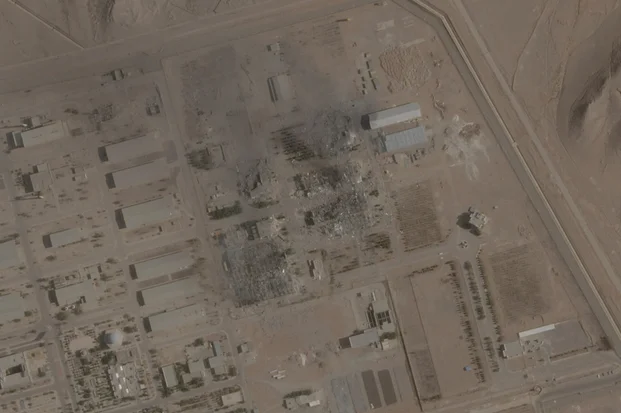
For perspective, here is a google earth image from 2025 that provides an overview of Min-Zadayi compound that was targeted by the IDF on March 3, 2026. According to the IDF, the site was involved in nuclear weapons development. pic.twitter.com/xHpoK9SpAN
— Inst for Science (@TheGoodISIS) March 7, 2026
Israeli Prime Minister Benjamin Netanyahu on Saturday said the timing of the war was influenced by the Iranian regime’s efforts to move its nuclear and missile projects so far underground that they would be “immune to any assault.”
On Tuesday, the Israeli military announced it had destroyed a formerly unknown underground site on the outskirts of Tehran, to which Iran had transferred much of its nuclear program after the war last June.
Following that war, in which Israel and the U.S. targeted Iranian nuclear sites, Iran “did not halt its military nuclear activity, and continued to develop the capabilities required for nuclear weapons, while transferring infrastructure to an underground site protected from aerial attack,” said IDF Spokesman Brig.-Gen. Effie Defrin.
A group of nuclear scientists operated covertly at a site called “Minzadehei” to develop a key component for nuclear weapons.
“The strike removes a key component in the Iranian regime’s capability to develop nuclear weapons and joins a series of strikes conducted during Operation ‘Rising Lion’ that were essential to eliminate the Iranian nuclear threat,” the IDF said.
Popular article:
interview Easter message of resurrection hope amid war at Jerusalem's Garden Tomb
biblical commentary Let my people go: a Passover message for today
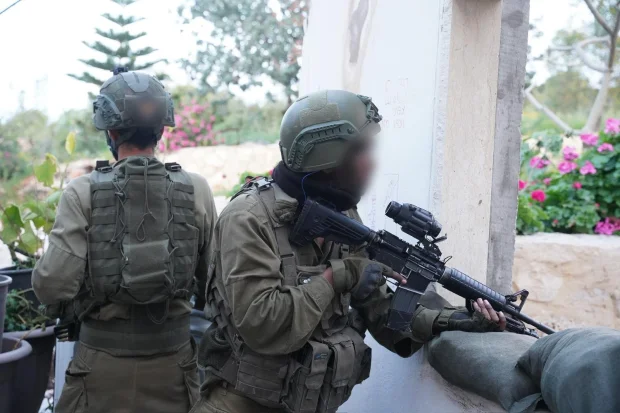
4 IDF soldiers killed, 2 wounded in fighting in southern Lebanon, as Israel eliminates dozens of Hezbollah terrorists

Receive latest news & updates
A message from All Israel News
Help us educate Christians on a daily basis about what is happening in Israel & the Middle East and why it matters.
For as little as $10, you can support ALL ISRAEL NEWS, a non-profit media organization that is supported by readers like you.
Latest articles:
Roaring Lion North American Jewish organizations to recruit 100 professionals to combat antisemitism
Roaring Lion ‘No need’ for pre-election Iran strike, IDF chief says as gov’t, opposition trade blame for potential escalation – report
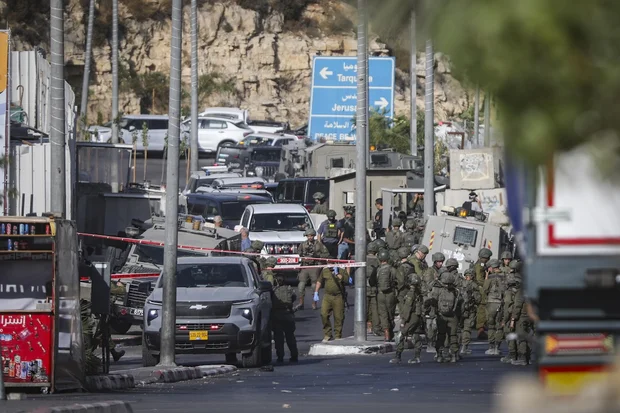
terror attack 2 Israeli soldiers killed, 2 terrorists eliminated in Hebron shooting; IDF says much larger attack was prevented
analysis A people dwelling securely? Israel’s strategic standing, 3 years after Oct 7
Roaring Lion Hamas on wheels: What I found in Dearborn reveals a troubling history and a battle over Israel