









ANALYSIS Could Israel’s fight with Iran accelerate Gulf-Israel cooperation?
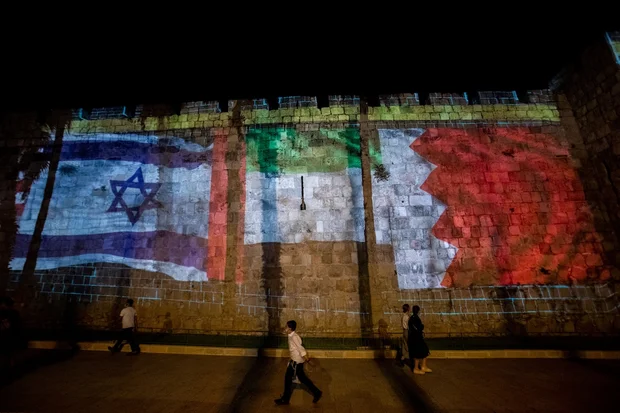
Israel’s exit strategy from the war with Iran must deliver more than battlefield victories. It must also reshape the strategic reality of the Middle East, according to Dr. Erel Margalit, a former member of the Knesset and the Knesset Foreign Affairs and Defense Committee.
Margalit contends that the conflict offers a unique opportunity to forge stronger partnerships among regional countries, especially with Gulf states, in security, technology, and economic development, pushing cooperation beyond wartime necessity.
“The need to defend ourselves, all of us in the region, creates an alliance,” Margalit, the founder and executive chairman of Jerusalem Venture Partners, said. “You need to share resources and strategies… I think our security alliances can go to the next level.”
Since the conflict began last Saturday (28 Feb), Iran has attacked installations in a dozen countries, drawing much of the region in. As a result, many countries are now working with Israel to strengthen air defenses and coordinate against the Islamic regime, which has long spread terror directly and through proxies.
Regional partners first demonstrated this potential cooperation in April and October 2024, when several countries worked together to help intercept hundreds of drones and missiles that Iran had fired at Israel.
Some analysts now argue that this growing coordination could accelerate a broader security architecture, linking Israel with Sunni Arab states that share concerns about Iran.
Margalit, whose venture capital firm is one of the largest in the region, said he envisions cooperation that extends beyond defense. He pointed to partnerships not only with Abraham Accords countries such as the United Arab Emirates and Bahrain, but potentially with Saudi Arabia and others.
He said collaborations are already underway in areas such as cybersecurity, anti-money laundering, and artificial intelligence for the insurance, banking, and defense industries.
“These collaborations could be taken to the next level,” he said.
Margalit’s experience informs his perspective. For more than three decades, he has worked at the intersection of business, security, and regional cooperation, advancing economic partnerships both before and after the Abraham Accords.
“I lead JVP in Jerusalem, but we also have big hubs in New York and Tel Aviv,” Margalit explained. “You have an ecosystem collaboration that is much larger than just a company-to-company collaboration.”
He said that effectively bringing the UAE into this ecosystem could open trade and partnerships with India and other countries in the region. Moreover, if a political and diplomatic agreement could be formed with the Saudis, it could be complemented by a much larger economic move.
“Saudi Arabia is very inspiring, and many people from there are talking to us or to some of our companies, and there's already some collaboration behind the scenes,” Margalit shared. “It's time to take it to the next level. And the next level means broader security collaboration, broader economic collaboration, and probably it's about time that Israel, in its next chapter, takes a proactive move diplomatically, just like it knows how to take proactive moves militarily.”
Margalit’s vision is for the Middle East to sit around the table as a major economic partner with the United States and Europe. He said many young people in the region are looking for their next chapter, and that future wealth need not come from oil but could come from major global strategies in areas such as artificial intelligence for healthcare, agriculture, and other industries.
“Israel is also a leader there, and we'd love to expand our collaboration on that level as well,” Margalit said.
He added that cybersecurity is also essential. While Israel and the United States fight Iran, much of the media is counting missile attacks. But what the public does not see are the cyberattacks targeting critical infrastructure across the region. Margalit warned that such attacks can cause damage almost as severe as physical strikes.
He said this is another area where regional collaboration is needed to protect people, banks, governments, insurance systems, and other key infrastructure.
He also highlighted additional areas for partnership, including data center technologies and cloud capabilities.
“We like the triangle between Israel, New York, and Europe,” Margalit said. “It would be so good to add the Gulf region into that, creating a quartet of capabilities.”
Ultimately, whether Israel and the region can translate short-term military coordination into lasting diplomatic and economic frameworks will determine if this moment catalyzes transformative Gulf-Israel cooperation, a central opportunity emerging from the war.
For now, the military war against Iran continues. But if Israel and the United States succeed, Margalit’s vision could become one of the most significant outcomes of the conflict.
Popular article:
interview Easter message of resurrection hope amid war at Jerusalem's Garden Tomb

biblical commentary Let my people go: a Passover message for today
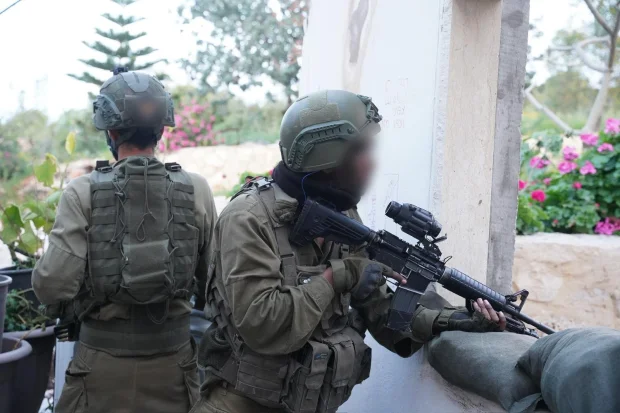
4 IDF soldiers killed, 2 wounded in fighting in southern Lebanon, as Israel eliminates dozens of Hezbollah terrorists
Receive latest news & updates
A message from All Israel News
Help us educate Christians on a daily basis about what is happening in Israel & the Middle East and why it matters.
For as little as $10, you can support ALL ISRAEL NEWS, a non-profit media organization that is supported by readers like you.
Latest articles:

ANALYSIS Israeli intel chief Zini travels to France to give counterterrorism advice amid violent riots – report
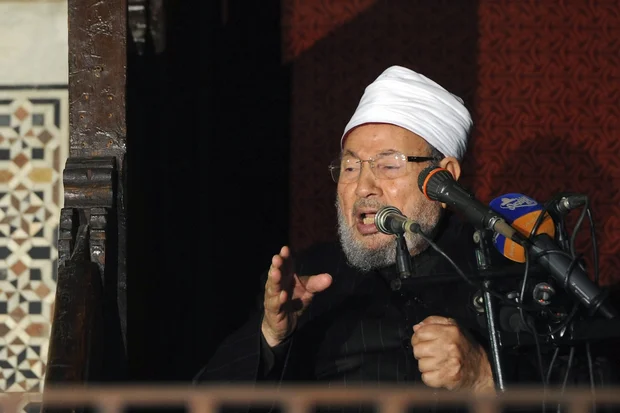
ANALYSIS Founding trustee of Oxford’s Islamic studies department believed Muslims should ‘continue the work of Hitler’
ANALYSIS 'Peaceful dialogue is not a crime:' Petition urges Lebanon to abolish its Israel Boycott Law
ANALYSIS Israeli defense companies expand global reach with new deals in Cyprus, Germany and Canada

ANALYSIS Netflix’s ‘The Diplomat’ appears to pay tribute to slain Israeli hostage Hersh Goldberg-Polin