








ANALYSIS Defections within Iran’s security forces creating ‘critical mass’ for rapid regime collapse
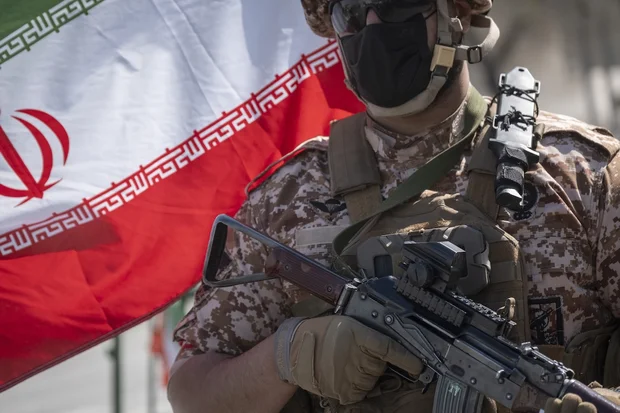
Rising defections among Iran’s security forces could trigger a rapid collapse of the Islamic Republic, according to opposition activists and security analysts who say the regime’s command structure is already showing signs of crumbling.
“We are beginning to see signs of defection and collapse within the middle levels of the repression forces,” said Maneli Mirkhan, a representative of the pro-democracy group, DORNA Iran. “If defections accelerate, the collapse of the regime could come very quickly.”
Mirkhan said sources inside Iran report “a clear sense of disorientation” among regime troops since U.S. and Israeli-led strikes began last Saturday. The attacks, she said, have heavily damaged intelligence, logistics and communications infrastructure.
“There is a lot of moral fatigue,” Mirkhan said. “For many of them, the only thing that still holds the system together is the regime’s propaganda.”
Many operatives in Iran and Iranian diplomats abroad are looking for a way out, she said.
“When you reach that critical mass, the collapse can come overnight,” Mirkhan told international reporters during a briefing.
Internal security units – including Basij militia – are struggling to maintain positions, according to DORNA.
“They no longer have clear command structures. They don’t have places to rest or resupply, their equipment has been hit and their communications are severely disrupted,” Mirkhan said. “They are in deep, deep trouble in terms of their equipment and communications.”
Former U.S. intelligence officer and Middle East analyst Michael Pregent said the strategy is not to dismantle the entire security system but rather to paralyze it – removing enough leadership to sow doubt within the ranks.
“You don’t need to eliminate every member of the security forces,” Pregent told ALL ISRAEL NEWS. “The key is to remove enough top leadership so the lower ranks realize the system is collapsing. Then you offer them a choice: defect and receive amnesty, or continue fighting for a regime that is losing control.”
Iran’s security apparatus, anchored by the Islamic Revolutionary Guard Corps (IRGC), relies on centralized leadership.
“If you remove enough of that leadership, the organization fragments,” Pregent explained.
This is what appears to be unfolding.
“Senior leadership has been targeted and removed. Their executive officers are gone as well, and many mid-level officers have also been killed,” he said. “Because of that, decisions are now being made at much lower levels – company-grade or battalion-grade officers.”
“That’s why we’re seeing one-off actions instead of coordinated operations,” he added.
REGIME CHANGE FROM THE GROUND UP
All of this is creating the perfect storm for regime change.
Mirkhan said some Basij officers are discarding their phones so their commanders assumed they were killed, while families urge their sons serving in security forces to stay home.
“We are working with different social networks and communities to show them that if they step away from repression and come back to society, there will be an exit,” she said.
Pregent also emphasized the importance of offering options and investing in future allies.
“Remove the hardline leadership, but give everyone else a path out,” he said.
“We made a major mistake in Iraq when we purged all members of Saddam’s military,” Pregent said, referring to the aftermath of the 2003 overthrow of Saddam Hussein. “Many of those people later joined the insurgency and made the war more deadly.”
While U.S. and Israeli forces aim to destroy nuclear assets and missile sites from the air, regime change will depend on movements inside Iran. With neither nation willing to deploy ground troops, allies such as the local Kurdish population are being supported.
The Iranian population is also expected to mobilize.
“The events of January showed that people are not simply waiting for external actors to change the regime. They were already willing to take risks themselves,” Mikhran said. “Right now, because of the ongoing bombings, it is not effective for people to gather in the streets. Even the Israeli military has advised civilians in targeted areas to stay home or evacuate temporarily. But that does not mean people will not return to the streets when the moment is right.”
She called on the international community to encourage diplomatic defections, provide exile options, and support those leaving the regime.
“The process needs to accelerate. Casualties among repression forces are reportedly significant,” Mikhran said. “All of these developments are contributing to a growing sense of collapse, which is giving hope to the broader population.”
Popular article:
interview Easter message of resurrection hope amid war at Jerusalem's Garden Tomb

biblical commentary Let my people go: a Passover message for today
4 IDF soldiers killed, 2 wounded in fighting in southern Lebanon, as Israel eliminates dozens of Hezbollah terrorists
Receive latest news & updates
A message from All Israel News
Help us educate Christians on a daily basis about what is happening in Israel & the Middle East and why it matters.
For as little as $10, you can support ALL ISRAEL NEWS, a non-profit media organization that is supported by readers like you.
Latest articles:
ANALYSIS Israeli fighter jets flew to Iranian border in ‘power projection,’ deterrence exercise ahead of elections next week
ANALYSIS Israeli intel chief Zini travels to France to give counterterrorism advice amid violent riots – report
ANALYSIS Founding trustee of Oxford’s Islamic studies department believed Muslims should ‘continue the work of Hitler’
ANALYSIS 'Peaceful dialogue is not a crime:' Petition urges Lebanon to abolish its Israel Boycott Law
ANALYSIS Israeli defense companies expand global reach with new deals in Cyprus, Germany and Canada