The sword that gives life - What the Iran negotiations are really telling us


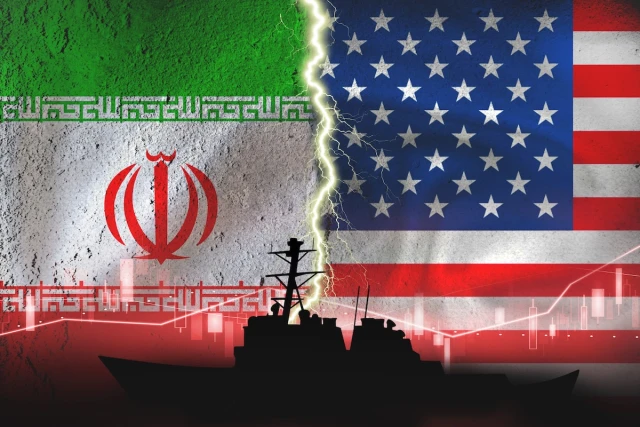
The seventeenth-century Japanese swordsman and philosopher Yagyū Munenori wrote: “The sword that takes life is the sword that gives life.” It was not a celebration of violence. It was an ethical framework—a recognition that force, rightly applied, can be the very instrument of preservation. To stop the man who would kill millions is to give life to those millions.
Keep that thought close. We will need it.
A Theocracy Meets Reality
In a previous analysis, we argued that the West has fundamentally misread the Islamic Republic for nearly half a century—projecting secular assumptions onto a system that is theological by design and constitutional structure. Western governments negotiated with Tehran as though it were a hostile but pragmatic state with negotiable grievances. It never was. Its constitution is a theological operating manual. Its foreign policy is eschatology in action. Its military is, by its own founding document, a transnational revolutionary force tasked with extending divine sovereignty across the earth.
That misreading has now collided with a moment of historical consequence.
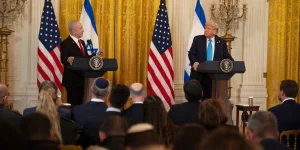
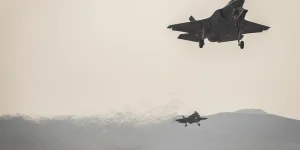
The Trump administration struck Iran’s three principal nuclear sites—Fordow, Natanz, and Isfahan—in June 2025 under Operation Epic Fury. The strikes entombed nearly a thousand pounds of highly enriched uranium deep underground. A ceasefire followed. Negotiations are now underway, and President Trump has stated that Iran has agreed to surrender that buried material—what he calls “nuclear dust”—with American and Iranian personnel working together to excavate it.
Read that again slowly.
American special operations forces. Inside Iran. Coordinating with Iranian counterparts. Physically removing the material that represented the regime’s ultimate guarantee of survival.
If this happens, it is not merely a diplomatic agreement. It is a civilizational rupture—one that exposes, more starkly than any analysis could, the central question now hanging over the entire region: can the ideological core of the Islamic Republic actually permit this? And if it cannot, what comes next?
What the Constitution Will Not Allow
To understand why the negotiations keep breaking down—why commitments are made and reversed, why the Strait of Hormuz opens and closes, why a deal that seems close keeps collapsing—you have to understand what the Islamic Republic was built to be.
Article 5 of the Iranian constitution codified the doctrine of Velayat-e Faqih—the Guardianship of the Islamic Jurist. The Supreme Leader ruled not as a political executive but as the Vicar of the Hidden Imam: the divinely authorized regent governing on behalf of the Mahdi, exercising delegated divine sovereignty. Article 11 declared all Muslims a single nation—making Iran not a state defined by geography but the headquarters of a global Islamic mission. Articles 152 through 154 codified the export of revolution as constitutional duty. The IRGC’s founding mandate charged it explicitly with extending divine sovereignty across the earth.
This is not background. This is the operating system.
A government deriving legitimacy from electoral mandate can lose an election and reform. A government deriving legitimacy from divine mandate cannot negotiate it away without ceasing to be itself. Permanent confrontation with the United States—the “Great Satan”—was never a policy position. It was a theological commitment woven into the system’s constitutional identity. The revolution did not merely oppose American power. It defined itself against it.
To invite American forces onto Iranian soil to remove the nuclear program is not, within this framework, a strategic concession. It is an act of apostasy—the negation of everything the revolution claimed to be.
This is why the negotiations keep failing. Not because the diplomats are incompetent. Because the ideology cannot survive what the agreement requires.
Two Systems, One Breaking Point
The regime Khamenei built over forty years was never one thing. It was two things uneasily cohabiting inside the same institutions. The first is the theological system—the Mahdist revolutionary vision in which confrontation with the enemies of Islam is eschatologically required, martyrdom is honorable, and no material calculation overrides the divine timeline. The second is the institutional system—the IRGC’s military and economic empire, the intelligence services, the judiciary, the machinery of a deeply embedded security state.
Khamenei held these two systems together. With his death, the tension between them is now fully exposed.
The institutional layer—the pragmatists who understand that the economy is failing and that time is measured in months, not years—wants to deal. They are the ones at the table. But they do not control the system they represent. The IRGC’s ideological core answers to a different logic entirely. Not statecraft. Doctrine. A conviction that divine victory is assured regardless of material reality—and that any leader who surrenders the revolution’s identity for economic relief has betrayed something far larger than a negotiation.
A deal is reached. The ideological core reverses it. This is not confusion. This is two systems inside one state in open conflict—and the one animated by theology refusing to yield to the one animated by economics.
The “nuclear dust” proposal makes this fracture undeniable. The institutional pragmatists may be willing to allow American forces in to excavate the buried uranium. The IRGC ideologues—who regard that uranium as the material expression of divine mandate—cannot be. The same institution. Irreconcilable positions. No Khamenei to hold the contradiction together.
The Trump Paradox
Here is what makes this moment historically remarkable—and what most analysis misses entirely.
Donald Trump is, by temperament and stated conviction, a dealmaker. He does not want war with Iran. He has said so repeatedly and demonstrated it in action. Before the twelve-day war, he sought negotiation. He offered terms. He asked for peaceful surrender. When that failed and strikes became unavoidable, he limited their scope and immediately returned to the table. After the ceasefire, he sought negotiation again. He is seeking it now. The same offer, made repeatedly: come to terms, open the Strait, surrender the nuclear program, and we will deal.
The pattern has repeated itself at every turn—not because of Trump’s choices, but because of theirs.
And this is the paradox that history may record as this era’s defining irony: a president who has tried harder than most to avoid regime change may be forced, by the logic of the ideology he is facing, to deliver it. Not as preference. As consequence.
Because the only deal Trump can actually get—the one that holds, the one where the Strait stays open, the one where American and Iranian personnel genuinely stand together in the rubble of Fordow—requires the removal of the very force that keeps reversing every agreement. The IRGC’s ideological core will not sign. It will not hold. It will reverse, delay, and escalate, because its theology demands it and its institutional power enables it.
The deal requires the regime change. The regime change is the deal.
To get the surrender he wants, Trump may have to deliver the death blow he has sought to avoid — not to Iran, but to Khamenei-ism as an institutionalized force. The removal of the theological-ideological layer embedded in the IRGC is not a byproduct of resolution. It is the precondition for it. Without it, nothing fundamentally changes. The same actors remain. The same doctrine remains. The same mechanisms of reversal remain. And the world returns, inevitably, to the same cycle.
This is not a diplomatic problem. It is a theological one. And it has only one resolution.
The People Waiting Beneath the System
There is a force that Western analysis consistently underweights: the Iranian people themselves.
The Islamic Republic never achieved genuine popular consent. What it achieved was compliance—enforced by the morality police, the judiciary, mass surveillance, and the memory of what happened to those who resisted. The Mahsa Amini protests were not a political eruption. They were a civilizational declaration: we do not consent, we never consented, and we reject the system imposed on us. The women who removed their hijabs in the streets were not making a fashion statement. They were making history.
This population understands something the outside world is only beginning to grasp: that a genuine opening with the United States would do more than relieve sanctions. It would crack the ideological architecture that has governed every dimension of their lives for forty-seven years. And they understand that the IRGC understands this too.
A war can be framed theologically—as the confrontation the Mahdi’s return requires. But American boots on Iranian soil, working alongside Iranians to dismantle the nuclear program—that cannot be framed this way. It is the visual refutation of everything the revolution promised. The ideological core fears that image more than it fears the bombs.
The flip-flop is not a negotiating tactic. It is the theological system choosing potential war over certain irrelevance.
What Falls With the Regime—and What Can Fill the Void
The stakes extend far beyond Iran’s borders, and this is where the analysis must be fully honest.
The Islamic Republic has never been merely a state. It has been the proof of concept—the living demonstration that political Islam could seize state power, resist the world’s dominant superpower for decades, and sustain a revolutionary order in deliberate defiance of liberal modernity. For Islamist movements worldwide, from the Muslim Brotherhood to movements reshaping Turkey, Qatar, and sub-Saharan Africa, Tehran functioned as the anchor of ideological confidence. This influence reached Western universities and political institutions—the regime’s revolutionary theology wrapped in Marxist vocabulary, its theological ambitions expressed through the language of decolonization and resistance, made legible to audiences who could not see the eschatology beneath the terminology.
If the Islamic Republic falls—not merely weakens, but falls—the proof of concept fails. The ideological confidence that sustained movements from Tehran to Toronto weakens at its source. The network loses its center. The narrative that positioned political Islam as the tide of history loses its most powerful exhibit.
But here is what that moment also creates: a void.
For nearly half a century, the Islamic Republic offered an answer—however violent, however false—to the deepest human questions about meaning, order, justice, and transcendence. When that answer collapses, the questions do not disappear. They remain. And they demand a response.
This is the opportunity—and the responsibility—that the Judeo-Christian tradition now faces. Not to impose. Not to replace one ideological project with another. But to offer, into a space that is about to open, what it has always claimed to possess: a vision of human dignity, ordered liberty, and transcendent meaning that does not require the subjugation of women, the export of violence, or the machinery of theocratic enforcement to sustain itself.
The fall of the Islamic Republic is not only the end of something. It is the opening of something. The question is whether the civilization that has the answer is prepared to offer it.
The Judgment Already Underway
“He changes times and seasons; he removes kings and sets up kings.” (Daniel 2:21)
A system that claimed divine authority is being measured against the reality it produced—forty-seven years of repression, exported violence, and a population that has quietly, at great cost, largely stopped believing. The eschatology it weaponized has turned against it. The confrontation it framed as redemptive revealed its limits. The promise did not materialize.
What is unfolding in the negotiating rooms, in the streets of Tehran, in the question of whether American and Iranian personnel will stand together in the rubble of Fordow—this is not merely a political crisis. It is the possible end of the most consequential experiment in modern political Islam as a governing system. Not theorized. Decided. In history. In real time. Now.
The question for policymakers, for church leaders, for all who bear responsibility for understanding this moment: do they see it clearly?
Not a rogue state to be managed. Not a negotiating partner to be appeased.
The end of an ideological era. And the beginning of whatever, by the grace of history and the courage of a long-silenced people, the wisdom of those who govern, and the readiness of a civilization that knows what it believes—comes next.
This article originally appeared on the Ideological Defense Institute and is reposted with permission.
You might also like to read this: