Uncertainty abounds as Trump vows no extension of Iran ceasefire, while regime keeps mum on participation in Pakistan talks
Hardline faction in IRGC insists on ending US naval blockade before renewing talks



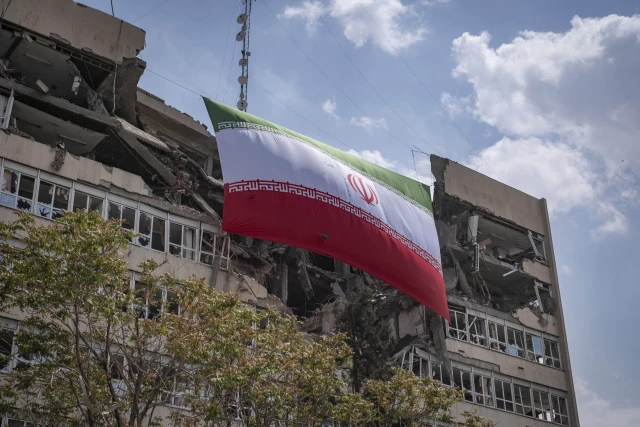
Uncertainty continued to surround the future of the U.S.-Iran war on Tuesday morning, with U.S. President Donald Trump signaling he won’t extend the ceasefire and sending Vice President JD Vance to negotiate, while the Iranian side refused to confirm its participation in the planned second round of talks.
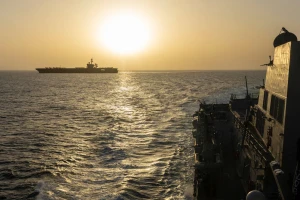
Trump said he won’t “be rushed into making a bad deal” while speaking to Bloomberg on Monday. Despite Iranian threats, he added that the Strait of Hormuz would stay blockaded, and “I’m not opening it until a deal is signed.”
Writing on Truth Social, Trump stressed that “THE BLOCKADE, which we will not take off until there is a “DEAL,” is absolutely destroying Iran. They are losing $500 Million Dollars a day, an unsustainable number, even in the short run.”
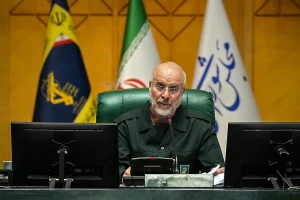
This came after Iran’s Parliament Speaker, Mohammad-Bagher Ghalibaf, wrote on 𝕏 that Trump’s blockade and alleged ceasefire violations were meant to “turn this negotiating table… into a table of surrender or to justify renewed warmongering. We do not accept negotiations under the shadow of threats,” Ghalibaf warned.
NEW: Iranian Parliament Speaker Mohammad Bagher Ghalibaf appears to be engaged in a serious intra-regime debate with Islamic Revolutionary Guards Corps (IRGC) Commander Major General Ahmad Vahidi and other senior regime officials opposed to negotiations with the United States.… https://t.co/nknibWaPoE pic.twitter.com/ZlgWAFq9y7
— Institute for the Study of War (@TheStudyofWar) April 21, 2026
Nevertheless, Vance was set to leave for Islamabad, Pakistan, on Tuesday morning to attend the second round of talks, three U.S. sources told Axios, with Trump’s envoys Jared Kushner and Steve Witkoff expected to accompany him.
Trump even signaled he could participate in the talks directly, if needed. “I have no problem meeting them,” he told the New York Post. “If they want to meet, and we have some very capable people – but I have no problem meeting them.”
A Pakistani source later confirmed that Trump could participate if the talks continue to an advanced stage, according to Reuters.
However, Axios reported that the White House was still waiting for a signal from Iran that its negotiating team, which was led by Ghalibaf last time, would travel to Islamabad as well, amid reports by state media outlets that the regime insists on the U.S. lifting the naval blockade as a precondition.
“We’re supposed to have the talks,” Trump told the New York Post, “so I would assume at this point nobody’s playing games.”
In recent days, several reports indicated that the regime’s internal power dynamics are experiencing another shift, away from Ghalibaf and toward a more hardline faction of the IRGC, led by its commander, Ahmad Vahidi.
Axios cited a source saying that the IRGC is pressuring the negotiators to refuse a meeting without an end to the blockade; however, the source also said that the Supreme Leader, Mojtaba Khamenei, gave his approval for the delegation to attend the talks, which hadn’t been confirmed at the time of publication.
Foreign Ministry spokesman Esmail Baghaei said on Monday that there were “no plans for the next round of negotiation, and no decision has been made,” accusing the U.S. of “behaviors that do not in any way indicate seriousness in pursuing a diplomatic process.”
Citing U.S. and Iranian officials, Bloomberg said the conservative faction around Vahidi have interpreted Trump’s decision to impose and maintain the naval blockade as a signal he can’t be trusted and is pushing for an uncompromising negotiating stance.
On the other side, a faction that is being described as “moderate,” or at least, “less ideological,” is pushing for a ceasefire, citing concerns of an economic collapse. However, representatives of this group, like President Masoud Pezeshkian and Foreign Minister Abbas Araghchi, have reportedly been totally sidelined from the decision-making process.
Pezeshkian was quoted by the state news agency IRNA as supporting negotiations while cautioning that mistrust in the U.S. is an “undeniable necessity.”
On Tuesday morning, Ali Abdollahi, commander of Khatam al-Anbiya, the central military headquarters of the regime, stressed the military is ready to deliver an “immediate and decisive response” to any renewed hostile action.
Abdollahi stressed that Iran had kept the “upper hand” including over the Hormuz Strait, vowing not to allow Trump to “create false narratives over the situation on the ground,” according to the semi-official, IRGC-affiliated Tasnim news agency.
You might also like to read this: